

Maddy summaryThis bill creates a new USDA program to directly connect fresh produce producers with community food programs serving low-income individuals. It requires the Secretary of Agriculture to contract with eligible entities (like farms, distributors, and nonprofits) to buy U.S.-grown fresh produce - ensuring at least seven varieties per delivery, locally sourced when possible, and aligned with dietary guidelines - and distribute it to qualifying organizations (such as food banks, schools, and tribal programs) facing food insecurity. The program prioritizes contracts with beginning farmers, socially disadvantaged farmers, veteran farmers, and small/mid-sized family farms, while mandating 30% upfront payment and requiring annual reports on distribution metrics and program effectiveness to Congress. It aims to strengthen local food supply chains, reduce farm waste, and improve access to fresh produce for vulnerable communities.
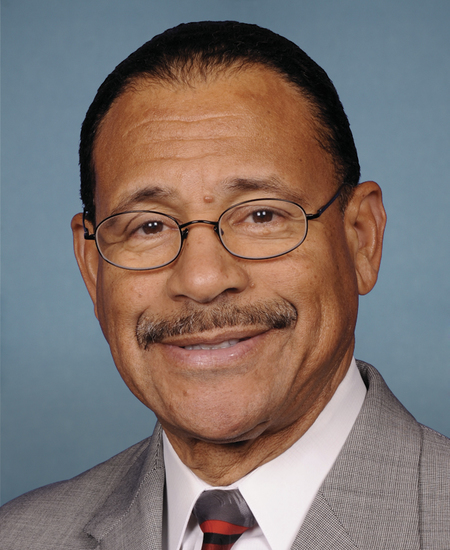
Rep. Sanford D. Bishop, Jr.
Sponsored bills
Maddy summaryHRES 955 is a resolution commending Taiwan for its democratic election history and supporting Taiwan's democratic institutions. It recognizes Taiwan's transition to democracy since the late 1980s, including 7 presidential and 9 legislative elections held since then, all deemed free and fair. The resolution specifically expresses support for Taiwan's upcoming January 13, 2024, elections and condemns interference by the Chinese Communist Party. It affirms U.S. commitment to a strong partnership with Taiwan across multiple domains and supports Taiwan's self-defense and liberty. As a procedural resolution, it does not create new law but formally expresses congressional support for Taiwan's democratic development.
Maddy summaryThe Affordable Connectivity Program Extension Act of 2024 allocates $7 billion in funding for the Affordable Connectivity Program (ACP) during fiscal year 2024. The ACP provides subsidies to low-income households to help cover the cost of internet service and connected devices like laptops or tablets. This funding ensures the program can continue supporting eligible households throughout the year, with the money remaining available until fully spent. The bill extends existing program funding without changing eligibility criteria or service requirements.
Maddy summaryThis is a ceremonial resolution (HRES 945) passed by the U.S. House of Representatives. It formally congratulates Kappa Alpha Psi Fraternity, Inc., on achieving 113 years of service to communities across the U.S. and internationally. The resolution recognizes the fraternity’s work in supporting collegiate men, providing scholarships, community programs like food drives, and partnerships with organizations such as Habitat for Humanity and St. Jude Children’s Research Hospital. It does not create new laws or allocate funds, but expresses congressional support for the fraternity’s mission.
Maddy summaryThe Small Business Contracting Fairness Act clarifies the definition of a small business concern within the Infrastructure Investment and Jobs Act by explicitly referencing the Small Business Act. This change directly affects government contracting programs that use these definitions to determine eligibility for set-aside contracts and other benefits. The bill removes ambiguity by aligning the terminology used in the Infrastructure law with the established definition in the Small Business Act. No new funding or program changes are introduced; the legislation only standardizes existing language to ensure consistent application across federal contracting rules.
Maddy summaryThe Brittany Clardy Missing and Murdered Black Women and Girls Act establishes a new Office within the Department of Justice to address the disproportionate rates of missing and murdered Black women and girls in the U.S. The Office will collect and analyze data on these cases - including case resolution times, Amber Alert usage, and trafficking links - and create a public dashboard for tracking. It also creates a grant program for community organizations to provide culturally appropriate prevention services, law enforcement training, and victim support. The Office must submit biennial reports to Congress with findings and recommendations to improve the criminal justice response to these cases. This bill directly affects Black women and girls facing violence, law enforcement agencies, and community organizations providing related services.
Maddy summaryHR 6720 creates a grant program administered by the U.S. Department of Agriculture to provide stabilization payments to farmworkers, meat processing workers, and grocery workers affected by natural or other disasters designated by the Secretary. Eligible entities - such as labor unions or membership organizations representing these worker groups - can apply for funding to support affected workers. The program is authorized to spend up to $50 million, with the Secretary required to report on its outcomes within four years. This bill directly affects workers in specific food industry sectors during disaster events, offering financial stabilization through grants administered by the Agricultural Marketing Service.
Maddy summaryThis bill authorizes the posthumous presentation of a Congressional Gold Medal to honor Marshall "Major" Taylor, a pioneering Black cyclist who broke racial barriers in the late 19th and early 20th centuries. It recognizes his athletic achievements, including world records and international championship wins, as well as his advocacy for equality in sports. The medal, designed by the Treasury Secretary, will be presented to Taylor's great-granddaughter, Karen Donovan, following the congressional authorization. As a commemorative act with no policy changes, it serves solely to honor Taylor's legacy as a trailblazer and role model.
Maddy summaryThis bill requires the Secretary of Labor to pay black lung benefits to eligible miners within 60 days if a liability determination (who is responsible for payment) hasn't been made. It directly affects miners diagnosed with black lung disease (pneumoconiosis) who face delays in benefit processing. The key mechanism is a 60-day deadline: if liability isn't determined by then, benefits are paid immediately from the existing trust fund. Operators later found liable must still repay the benefits, so the bill doesn't eliminate their financial responsibility. The change aims to prevent prolonged delays in critical health benefits for miners.
Maddy summaryThe Inclusive Democracy Act of 2023 protects voting rights for people with criminal convictions in federal elections, ensuring they can register and vote while incarcerated, on probation, or on parole. It requires states to notify individuals about their voting rights at key points (during conviction, on probation/parole, and in carceral settings), and mandates carceral settings to provide voter registration forms, absentee ballot applications, and voting information. The bill establishes procedures for transmitting registration and ballot applications with expedited processing near election deadlines, requires states to accept applications and ballots postmarked within 2 days of deadlines, and prohibits prosecution for voting in non-federal elections when registered for federal elections. The law applies to federal elections starting with the 2024 general election.