

Maddy summaryHR 3875, the Expanded Telehealth Access Act, expands Medicare coverage for telehealth services by adding new healthcare professionals to the list of providers eligible for payment. It specifically includes licensed audiologists, occupational therapists (and their assistants under supervision), physical therapists (and their assistants under supervision), and speech-language pathologists. The bill ensures these providers are paid the same rate for telehealth services as they would be for in-person care under Medicare. This change directly affects Medicare beneficiaries seeking remote therapy services and the new provider types who can now offer these services via telehealth.
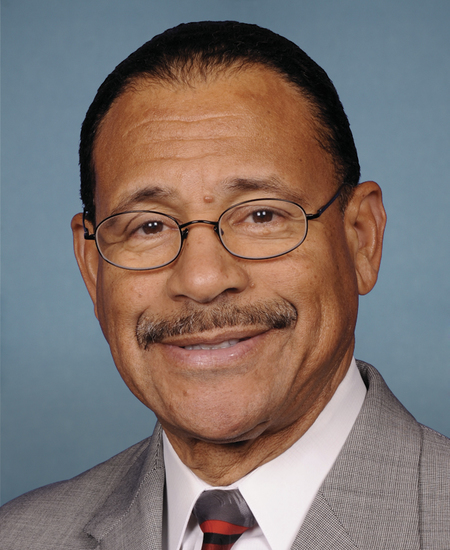
Rep. Sanford D. Bishop, Jr.
Sponsored bills
Maddy summaryThis bill requires Medicare to cover genetic counseling services provided by licensed genetic counselors at 85% of the physician payment rate. It defines "genetic counselor" as a state-licensed professional (or meeting federal criteria in non-licensing states) and mandates a new billing modifier for these services starting January 1, 2024. Medicare beneficiaries seeking genetic counseling would gain expanded access to these services under this coverage. The policy change applies to services furnished on or after the effective date, with implementation via interim rule.
Maddy summaryThis bill changes Medicare coverage for colorectal cancer screenings. It eliminates out-of-pocket coinsurance costs for these screenings starting in 2026, requiring Medicare to cover 100% of the cost instead of the previous 85% for that year. The change applies to all subsequent years and directly affects Medicare beneficiaries seeking routine colorectal cancer screenings. The key provision amends Medicare Part B to remove the coinsurance requirement for these specific preventive services.
Maddy summaryThis bill would add acupuncture services to Medicare coverage for beneficiaries, specifically defining "qualified acupuncturist services" as those provided by state-licensed acupuncturists or physicians trained in acupuncture. It establishes payment rules allowing these services to be billed under the physician fee schedule, included in hospital inpatient billing, and provided under a doctor's supervision. The bill requires the Secretary of Health and Human Services to set standards for non-licensed practitioners, mirroring nationally recognized certification. It would take effect 270 days after enactment, expanding access to acupuncture for Medicare-covered seniors.
Maddy summaryHR 3086, the "Find It Early Act," requires health insurance plans to cover breast cancer screenings with no cost-sharing for certain individuals at higher risk of breast cancer. The bill affects people with increased risk (based on medical criteria or dense breast tissue) or those needing screening due to factors like age, race, ethnicity, or family history. Key provisions mandate coverage for 2D/3D mammograms, ultrasounds, MRI, and other technologies without frequency limits for these groups. This applies to group health plans, Medicare, Medicaid, TRICARE, and VA healthcare systems starting January 1, 2024. The law aims to improve early detection by removing financial barriers to necessary screenings.
Maddy summaryThe I CAN Act (Improving Care and Access to Nurses Act) expands healthcare access by removing barriers for nurse practitioners, clinical nurse specialists, physician assistants, certified registered nurse anesthetists, and certified nurse-midwives within Medicare and Medicaid programs. Key provisions include allowing these professionals to provide cardiac and pulmonary rehabilitation services, prescribe certain diabetic shoes, and deliver hospice care without unnecessary physician supervision. The bill also clarifies reimbursement for services provided by certified nurse anesthetists and improves access to home health services through certified nurse-midwives. These changes directly affect Medicare and Medicaid beneficiaries by potentially increasing access to care and healthcare providers by expanding their scope of practice. The bill aims to improve healthcare delivery by leveraging the skills of advanced practice nurses across multiple care settings.
Maddy summaryHR 2667, the "Fighting Trade Cheats Act of 2023," increases penalties for importers who commit customs fraud or gross negligence. It triples civil penalties for fraudulent violations (to three times the domestic value) and raises gross negligence penalties to ten times, while adding five-year import bans for fraud and two-year bans for gross negligence. The bill also allows U.S. businesses, unions, or trade groups harmed by such violations to sue violators in federal court for triple damages, attorney fees, and injunctions against further imports. Additionally, it excludes violators and their affiliated companies from the Importer of Record program, with special rules to block shell companies evading customs laws. This directly affects importers who violate customs laws and U.S. businesses competing with those imports.
Maddy summaryHR 2474, the "Strengthening Medicare for Patients and Providers Act," changes how Medicare pays physicians for services. It replaces the previous two-part payment system (used through 2025) with a single annual payment rate update starting in 2024. This update will be based on the Medicare Economic Index (MEI), which tracks costs for medical providers. The change directly affects Medicare-certified doctors and clinics who receive payments under the physician fee schedule.
Maddy summaryThis bill would require Medicare to cover FDA-approved blood tests that screen for multiple cancers simultaneously (like breast, lung, or colorectal cancer) for beneficiaries. It directly affects Medicare recipients aged 65+ who could access these new screenings once per year, without prior authorization. The key provision adds "multi-cancer early detection screening tests" to Medicare's covered services under Part B, defining them as blood tests analyzing cell-free DNA, while maintaining existing coverage for standard screenings like mammograms. The bill does not change current coverage for individual cancer screenings but ensures Medicare keeps pace with new medical technology.
Maddy summaryThis bill expands Medicare Part B coverage to include specific pharmacist services, directly affecting Medicare beneficiaries and pharmacists who provide these services. It adds new coverage for pharmacist evaluations and treatments related to certain illnesses (like COVID-19, flu, or strep throat) and public health emergencies, requiring payment at 80% of the lesser of actual charge or 85% of physician payment rates (100% during emergencies). The bill also prohibits balance billing for these services, ensuring beneficiaries pay only the standard Medicare copayment. These changes aim to improve access to pharmacist care during health crises while aligning payment with existing physician service frameworks.