

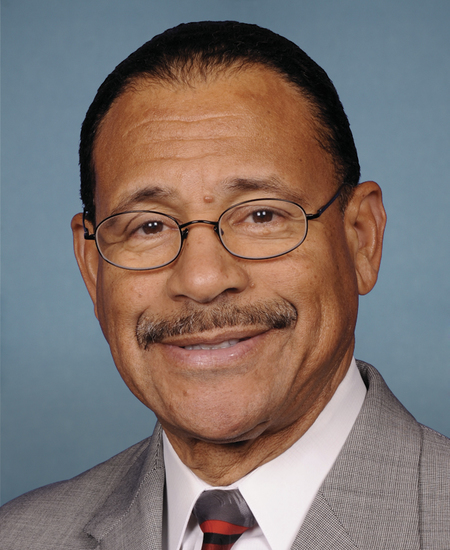
Photo of Sanford D. Bishop, Jr.
D United States House · District 2 · Georgia On the 2026 ballot

Rep. Sanford D. Bishop, Jr.

Compare
Total votes
2,837
all sessions
Attendance
99%
34 missed
Near the chamber average
With party
97%
of cast votes
Lower than 79% of chamber peers
Bipartisan score
2%
crosses aisle rarely
Higher than 78% of chamber peers
Sponsored
1,335
bills & resolutions
Near the chamber average
Committees
4
assignments
1,335 bills and resolutions

Sponsored bills

Total
1,335
Primary
27
Co-sponsor
1,308
This page
1,335
matching current filters
Co-sponsor HRES 1625
In committee · United States House · Co-sponsor
Supporting the recognition of "World Basketball Day", celebrated globally on December 21 each year, and honoring the contributions of basketball to global unity, international sports diplomacy, and the transformative impact of the sport on communities across the world.

Maddy summaryHRES 1625 is a symbolic resolution supporting the recognition of "World Basketball Day" on December 21 each year, following a 2023 UN resolution. It does not create new laws or directly affect specific groups, but formally honors basketball's role in fostering global unity, sports diplomacy, and community impact. The resolution highlights basketball's worldwide reach (over 585 million annual players), the NBA's international diversity (125+ players from 43 countries in 2024), and its humanitarian contributions. It encourages continued growth of basketball programs that build community leadership and opportunities globally. The resolution is purely ceremonial, expressing the House's support for the sport's unifying values.

In committee Dec 19, 2024 1 co-sponsor
Co-sponsor HR 3269
In committee · United States House · Co-sponsor
Law Enforcement Innovate to De-Escalate Act

Maddy summaryHR 3269, the Law Enforcement Innovate to De-Escalate Act, exempts specific less-than-lethal projectile devices from federal firearm taxes and National Firearms Act restrictions. The bill defines these devices as those firing projectiles at under 500 feet per second and designed not to cause death or serious injury. This directly affects law enforcement agencies using such devices and manufacturers producing them, by removing tax burdens and registration requirements. The key change is creating a clear legal exemption for these devices under federal law, streamlining their use for de-escalation purposes.

In committee Dec 18, 2024 1 co-sponsor
Co-sponsor HR 2989
In committee · United States House · Co-sponsor
Save Our Sequoias Act

Maddy summaryThe Save Our Sequoias Act establishes a coordinated approach to protect giant sequoia groves in California from wildfires, insects, and drought. It creates a Giant Sequoia Lands Coalition including federal agencies, state governments, and the Tule River Indian Tribe to assess grove health, develop protection projects, and recommend forest management activities. The bill streamlines implementation of certain projects through categorical exclusion from environmental reviews, authorizes $10-40 million annually for conservation efforts, and establishes a fund for philanthropic support of sequoia protection.

In committee Dec 18, 2024 1 co-sponsor
Co-sponsor HR 9096
In committee · United States House · Co-sponsor
Pharmacists Fight Back Act

Maddy summaryThe Pharmacists Fight Back Act (HR 9096) sets new rules for Pharmacy Benefits Managers (PBMs) working with federal health care programs like Medicare Part D and Medicaid. It requires PBMs to reimburse in-network pharmacies at a rate covering the drug's actual cost plus a small fee (capped at $25), and to reduce patient cost-sharing by at least 80% of rebates received from drug manufacturers. The bill bans PBMs from steering patients to specific pharmacies, charging patients more than pharmacies are paid, or using rebates to lower pharmacy payments after claims are processed. It also mandates public reporting of drug pricing data to improve transparency, ensuring patients and pharmacies receive fairer treatment under federal health programs.

In committee Dec 17, 2024 1 co-sponsor
Co-sponsor HR 9001
In committee · United States House · Co-sponsor
Physician Led and Rural Access to Quality Care Act

Maddy summaryThis bill creates an exemption from certain physician self-referral rules for specific rural hospitals. It defines a "covered rural hospital" as one located more than 35 miles (or 15 miles in mountainous terrain) from another hospital or critical access hospital, primarily affecting rural facilities in remote areas. The bill also removes restrictions preventing physician-owned hospitals from expanding their services. These changes directly impact rural hospitals meeting the new distance criteria and physicians owning hospitals in those areas, while leaving most existing Medicare self-referral rules unchanged.

In committee Dec 17, 2024 1 co-sponsor
Co-sponsor HR 7304
In committee · United States House · Co-sponsor
Protecting the Families of Our Fallen Patriots Act

Maddy summaryThe Protecting the Families of Our Fallen Patriots Act changes Social Security rules to help military families. It exempts certain survivor benefits from the income test that normally reduces Social Security payments for people who earn money while receiving benefits. Specifically, surviving spouses and surviving divorced parents who receive benefits based on a service member's earnings (if the service member died while on active duty) will no longer see those benefits reduced due to their income. This change applies to benefits paid starting from the bill's enactment date.

In committee Dec 17, 2024 1 co-sponsor
Co-sponsor HR 6961
In committee · United States House · Co-sponsor
Nutrition CARE Act of 2024

Maddy summaryThe Nutrition CARE Act of 2024 expands Medicare Part B coverage to include medical nutrition therapy services for beneficiaries diagnosed with eating disorders. It directly affects Medicare beneficiaries with eating disorders - particularly an estimated 420,500-560,700 Black, Indigenous, and People of Color seniors - by requiring coverage for 13 hours of initial care (including assessment) and 4 hours annually for ongoing management. The bill amends Medicare law to specify that these services must be provided by registered dietitians or nutrition professionals following referrals from physicians or psychologists. Coverage applies to all eating disorders as defined by the DSM-5, addressing a gap where Medicare previously excluded this critical treatment component. This policy change aims to improve access to evidence-based care for a condition linked to high mortality and significant healthcare costs.

In committee Dec 17, 2024 1 co-sponsor
Co-sponsor HR 6790
In committee · United States House · Co-sponsor
New Era of Preventing End-Stage Kidney Disease Act

Maddy summaryHR 6790 establishes National Institutes of Health centers to advance research, early detection, and public awareness of rare kidney diseases, with a focus on rural and underserved communities. It mandates a federal study on genetic testing barriers, treatment patterns, and public awareness for rare kidney diseases affecting disproportionately impacted populations, including barriers to insurance coverage and access to specialists. The bill also funds nephrology training programs to increase specialists serving these communities and requires experiments to delay or prevent the need for dialysis and transplants. Total funding of $7 million is authorized for fiscal years 2024-2028 to support these research, education, and early intervention efforts.

In committee Dec 17, 2024 1 co-sponsor
Co-sponsor HR 6394
Passed · United States House · Co-sponsor
Semiquincentennial Congressional Time Capsule Act

Maddy summaryThis bill directs the Architect of the Capitol to create a time capsule for the U.S. Semiquincentennial (250th anniversary of independence). Congressional leadership will determine its contents, including representative materials about the Semiquincentennial, copies of key legislative milestones, and a message to future Congress. The capsule will be sealed on the Capitol's West Lawn by July 4, 2026, and remain unopened until July 4, 2276, when it will be presented to the 244th Congress for their consideration. The bill is procedural and does not affect citizens or change existing laws.

Passed Dec 17, 2024 1 co-sponsor
Co-sponsor HR 5644
In committee · United States House · Co-sponsor
End Diaper Need Act of 2023

Maddy summaryThe End Diaper Need Act of 2023 creates a federal program that will provide free diapers and incontinence supplies to low-income families with infants, toddlers, medically complex children (3+ years old with chronic health conditions), and low-income adults with disabilities. It allocates $200 million annually from 2024-2027 to fund this assistance through states and community organizations, making medically necessary diapers eligible for reimbursement through health savings accounts and other health benefit programs. The legislation requires integration with existing services like Medicaid, WIC, and TANF, and includes annual reporting requirements and an evaluation of the program's effectiveness within two years.

In committee Dec 17, 2024 1 co-sponsor
Showing 411 to 420 of 1,335 bills
Previous 1 … 41 42 43 … 134 Next