

Maddy summaryHR 7740, the African American History Act of 2026, authorizes $4 million annually for the National Museum of African American History and Culture to develop educational resources and support teaching about African American history. The bill directs the museum to create digital and print materials, provide teacher training, and expand access to curriculum resources for K-12 and college classrooms. It requires annual reports to Congress on fund usage and expires in 2030. This program directly affects educators and students by enhancing classroom materials and professional development on African American history.
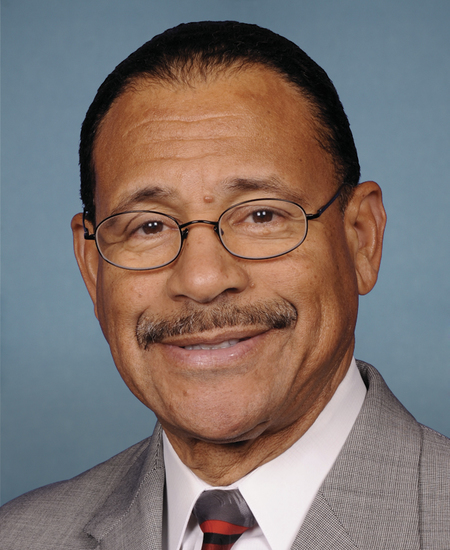
Rep. Sanford D. Bishop, Jr.
Sponsored bills
Maddy summaryHRES 1082 is a symbolic resolution recognizing 250 years of Polish-American friendship and affirming U.S. support for Poland’s democracy, sovereignty, prosperity, and security. It specifically calls for continued U.S. military stationing in Poland to support defense coordination and training with Polish forces, and expresses gratitude for Poland’s historical and ongoing partnership, including recent support for Ukraine. The resolution highlights key milestones like Poland’s NATO membership, defense investments, and refugee assistance for Ukrainians. As a non-binding resolution, it does not change laws but formally strengthens diplomatic recognition of the alliance.
Maddy summaryHRES 1080 is a symbolic resolution recognizing and celebrating Black History Month 2026, focusing on its theme "A Century of Black History Commemorations." It highlights historical figures and events central to Black history, including Carter G. Woodson’s founding of Negro History Week (the precursor to Black History Month), Juneteenth, and key moments like the 1865 Charleston commemoration. The resolution emphasizes how Black history commemorations counter historical erasure and affirm Black contributions to U.S. history, referencing figures like Mary McLeod Bethune and W.E.B. Du Bois. As a ceremonial resolution, it has no binding effect but aims to raise awareness of Black achievements through official recognition.
Law-Enforcement Innovate to De-Escalate Act This bill removes less-than-lethal projectile devices (e.g., certain TASERs) from regulation under the Gun Control Act. The term less-than-lethal projectile device means a device that (1) is not designed or intended to expel (and may not be readily converted to discharge) commonly used ammunition or projectiles exceeding a velocity of 500 feet per second; (2) is designed and intended to be used in a manner not likely to cause death or serious bodily injury; and (3) does not accept (and cannot be readily modified to accept) an ammunition feeding device. The bill also requires the Bureau of Alcohol, Tobacco, Firearms and Explosives to determine whether a device satisfies the definition of a less-than-lethal projectile device within 90 days of a request.
Maddy summaryHRES 1073 is a non-binding resolution designating February 21-28, 2026, as "National FFA Week" to recognize the National Future Farmers of America (FFA) Organization’s role in developing agricultural education leaders and to celebrate the 50th anniversary of Alaska’s State FFA Association. It does not create new laws or affect any specific groups or policies; instead, it formally expresses the House’s support for this commemorative week. The resolution highlights FFA’s mission to prepare students for leadership and careers in agriculture, food, and natural resources. As a symbolic gesture, it has no direct legislative or financial impact on constituents.
Maddy summaryThis bill requires states receiving federal education funds to establish concussion safety plans for public schools by 2028. It mandates schools to educate staff and parents about concussions, immediately remove students showing symptoms from activities, require written medical clearance before returning to sports, and provide academic accommodations for students recovering. Schools must post concussion information based on CDC guidelines and create recovery plans involving health professionals and school staff. States failing to comply face progressive funding cuts of 5% in the first year and 10% in subsequent years from their Elementary and Secondary Education Act funds. The law directly affects all public school students, coaches, and staff in participating states.
Maddy summaryHR 7600, the Postal Supervisors, Managers, and Postmasters Fairness Act of 2026, requires the U.S. Postal Service to formally negotiate pay and benefits changes with unions representing supervisors, managers, and postmasters. Specifically, it mandates that the Postal Service provide written proposals to these unions 60 days before existing pay decisions expire or after new collective bargaining agreements affect these roles. The bill also shortens the dispute resolution timeline, requiring binding decisions from panels within 15 days after recommendations. This bill directly affects the Postal Service, the supervisors’ organization, and the postmasters’ organization by standardizing their negotiation process for pay and benefits.
Maddy summaryThis resolution (HRES 1063) is a symbolic measure designating February 2026 as "Career and Technical Education Month" to recognize the importance of career and technical education (CTE) programs. It does not create new policies or funding but formally supports CTE's role in preparing students for high-demand jobs by encouraging educators and parents to promote CTE as a valid educational pathway. The resolution references CTE's alignment with workforce needs and cites bipartisan support from past legislation like the 2018 Strengthening Career and Technical Education Act. It affects no specific individuals or programs, serving only as a non-binding statement of support.
Department of Homeland Security Appropriations Act, 2026 This bill provides FY2026 appropriations for various agencies and offices within the Department of Homeland Security (DHS), except for U.S. Immigration and Customs Enforcement (ICE), U.S. Customs and Border Protection (CBP), and management and oversight activities of the Office of the Secretary. Specifically, the bill provides appropriations to DHS for the Federal Protective Service, the Office of Inspector General, the Transportation Security Administration, the U.S. Coast Guard, the U.S. Secret Service, the Cybersecurity and Infrastructure Security Agency, the Federal Emergency Management Agency (FEMA), U.S. Citizenship and Immigration Services, the Federal Law Enforcement Training Centers, and the Science and Technology Directorate. The bill does not provide appropriations for some agencies and activities that have been funded in prior DHS appropriations acts, including ICE, CBP, and management and oversight activities of the Office of the Secretary.
Maddy summaryThe PART Act requires new vehicles to have catalytic converters marked with a unique identification number that links directly to the vehicle's identification number, stored in a law enforcement-accessible database. It establishes a $7 million grant program to help repair shops, dealers, law enforcement, and fleet owners purchase equipment for marking converters with visible, durable identifiers (using die or pin stamping and high-visibility paint). The bill also mandates that businesses buying catalytic converters keep detailed seller records (including vehicle information) for two years and use traceable payments, banning cash or cryptocurrency transactions. Additionally, it creates new federal criminal penalties for stealing or trafficking in catalytic converters, with potential sentences of up to five years in prison.