

Maddy summaryThe Laken Riley Act (HR 7511) would require federal authorities to detain non-citizens charged with or convicted of burglary, theft, larceny, or shoplifting offenses. It also creates new legal standing for state attorneys general to sue federal immigration officials in federal court if they believe immigration enforcement decisions (like releasing aliens or granting parole) cause financial harm exceeding $100 to the state or its residents. The bill amends immigration laws to expand detention requirements for certain property crimes and allows states to seek court orders to enforce immigration policies. It does not create new criminal penalties but modifies existing immigration enforcement procedures. The bill’s findings and political language about the Laken Riley case are not part of its policy provisions.
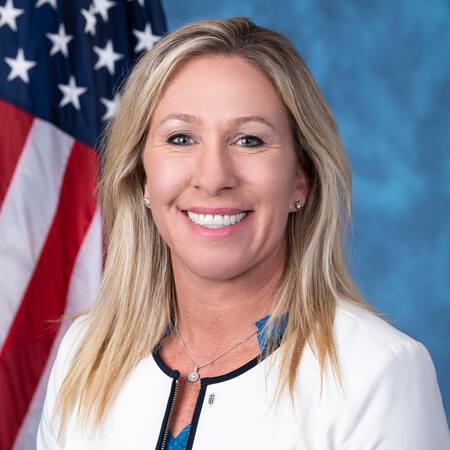
Rep. Marjorie Taylor Greene
Sponsored bills
Maddy summaryThe Appropriations Transparency Act of 2024 requires the Congressional Budget Office to provide detailed cost breakdowns for bills reported by the House and Senate Appropriations Committees. Specifically, these estimates must include total budget authority, comparisons to spending allocations, outlay projections, rescissions, offsetting receipts, changes to mandatory programs (CHIMPs), direct spending, and categorization details. The bill directly affects the Appropriations Committees by mandating these specific disclosures in all cost estimates for their reported bills. This aims to clarify how funding is allocated and spent, though it does not change actual funding levels or program provisions. The bill also adjusts House Rule XIII to ensure these detailed estimates are not blocked by procedural rules.
Maddy summaryThis bill prevents the detention of individuals charged only with nonviolent protest-related offenses (defined as offenses arising from political protests that are not violent crimes). It requires speedy trials for such cases, allows civil lawsuits for wrongful detention, and restricts the use of national security authorities against U.S. citizens not acting as foreign agents. The bill directly affects people prosecuted for nonviolent political demonstrations who face detention or lengthy legal proceedings. Key provisions include mandatory release pending trial for qualifying cases, new remedies for unjust detention, and limits on surveillance investigations of citizens.
Maddy summaryHRES 1031 is a non-binding House resolution declaring the U.S. southern border situation an "invasion," citing three specific claims: over 8 million migrant crossings since 2021, a 1,000% rise in watchlist entries, and drug-related deaths. It does not create new laws or affect individuals, as resolutions like this only express legislative sentiment. The bill formally states the House's viewpoint through these cited statistics without proposing policy changes. As a symbolic gesture, it has no legal force or impact on border policy.
Maddy summaryThis bill (HR 7356) proposes that any U.S. Senator or Representative who publicly advocates for providing military support to Ukraine must enlist in one of the U.S. military branches (Army, Navy, Air Force, Marines, Space Force, or Coast Guard) and serve at least six months on active duty in a military operation designated as a "contingency operation." It defines a "contingency operation" as military action against an enemy or during a declared war or national emergency. The bill directly affects members of Congress who support Ukraine military aid by imposing a personal service requirement. (Note: This appears to be a hypothetical or satirical proposal, as no such bill has been introduced in Congress.)
This resolution expresses the sense of the House of Representatives that former President Trump did not engage in insurrection or rebellion against, nor give aid or comfort to the enemies of, the United States.
Maddy summaryThis bill prohibits U.S. real estate purchases by nationals or entities tied to specific foreign governments designated as "adversaries," including China, Russia, North Korea, Iran, Cuba, Venezuela (under Maduro), and certain foreign terrorist organizations. It directly affects foreign governments and their agents (like trustees or fiduciaries) seeking to buy public or private U.S. property. The President is directed to take necessary actions to enforce this ban, overriding other existing laws. The prohibition covers all U.S. states, territories, and possessions, including Puerto Rico and Guam.
Maddy summaryThis bill, titled "SAFER Voter Act" but focused on firearms, amends federal law to require federal firearms licensees to verify that buyers of handguns (not shotguns or rifles) are at least 21 years old. It directly affects gun dealers and individuals under 21 seeking to purchase handguns. The key provision removes existing exceptions allowing sales of handguns to those under 21, requiring licensees to confirm age before transferring handguns. The bill does not address voting rights or voter registration, despite its misleading title. (Note: The bill's title conflicts with its actual provisions, which relate to firearm age restrictions.)
This resolution expresses the sense of the House of Representatives that regular journalistic activities, including the obtainment and publication of information, are protected under the First Amendment and that the federal government should drop all charges against and attempts to extradite Julian Assange.
Maddy summaryHR 6734 prohibits the use of federal funds to finalize, implement, or enforce the Bureau of Alcohol, Tobacco, Firearms, and Explosives' (ATF) proposed rule (2022R-17) defining "engaged in the business as a dealer in firearms." This bill directly affects the ATF by blocking funding for this specific regulatory rule, which was proposed in August 2023. The legislation does not create new requirements but prevents federal resources from being used to advance this particular ATF regulation.