

Maddy summaryHR 8785, the Tax Free Tips Act of 2024, reclassifies tips as gifts rather than taxable income for workers in service industries like restaurants and hospitality. It removes tips from income tax calculations, Social Security taxes, unemployment taxes, and wage withholding requirements. The bill repeals existing rules requiring employers to report tips (Section 6053) and eliminates related tax credits (Section 45B). Tips will no longer be counted as income for tax purposes, effective for tips received after the bill's enactment date. This directly affects tipped employees by eliminating tax obligations on their gratuities.
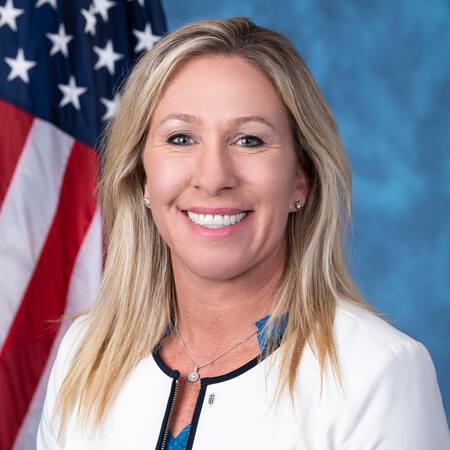
Rep. Marjorie Taylor Greene
Sponsored bills
Maddy summaryThis bill creates a presumption that certain health conditions (myocarditis, pericarditis, thrombosis with thrombocytopenia syndrome, Guillain-Barré Syndrome, and other diseases later determined by the VA) are connected to military service for veterans who received a COVID-19 vaccine under mandatory orders between August 24, 2021, and January 10, 2023. It directly affects veterans who developed these conditions after being required to get the vaccine during that period, streamlining their path to VA disability compensation by removing the need to prove a direct link to service. The bill requires the VA to report monthly on claim statuses and outcomes for four years, including approval rates and pending cases. This changes how the VA processes claims for these specific conditions, treating them as service-connected by default for affected veterans.
Maddy summaryHR 192 prohibits noncitizens from voting in all District of Columbia elections, including for public office and ballot initiatives. It directly affects noncitizen residents of Washington D.C. who currently have voting rights under the repealed Local Resident Voting Rights Amendment Act of 2022. The bill's key mechanism is repealing that 2022 amendment, restoring the requirement that only U.S. citizens may vote in DC elections. This changes the voting eligibility rules for noncitizens living in the District. The law would take effect upon enactment, removing noncitizens from the voter rolls for all local elections.
Maddy summaryHR 5403, the CBDC Anti-Surveillance State Act, prohibits the Federal Reserve from issuing or facilitating central bank digital currency (CBDC) directly or indirectly to individuals through financial institutions. It specifically bans Federal Reserve banks from offering digital products to individuals, maintaining individual accounts, or using CBDC for monetary policy implementation. The bill also clarifies that its restrictions do not apply to existing physical cash or private, permissionless digital payment systems. This bill directly affects the Federal Reserve's ability to develop or deploy a government-run digital dollar. The law aims to prevent the Federal Reserve from creating a digital currency that could enable transaction tracking or government oversight of personal financial activity.
Maddy summaryHRES 1262 is a ceremonial resolution commemorating the 100th anniversary of the U.S. Border Patrol's establishment on May 28, 1924. It honors the agency's history, service, and sacrifices - including over 57 million apprehensions and 155 agents who died in the line of duty - without creating new laws or affecting any policies. The resolution symbolically recognizes the Border Patrol's role in border security and recommends designating a National U.S. Border Patrol Day. As a purely commemorative measure, it has no direct impact on legislation, funding, or individuals.
Maddy summaryHR 8519 prohibits federal departments and agencies from using government funds for three specific research programs: disinformation research grants, Secure and Trustworthy Cyberspace grants, and the National Science Foundation's Track F program focused on "Trust and Authenticity in Communications Systems." The bill directly affects federal agencies that administer research grants, preventing them from obligating or spending funds on these designated initiatives. It does not alter existing laws or regulations but restricts future funding allocations for these particular research areas. This is a procedural funding restriction, not a policy change affecting the public.
Interstate Milk Freedom Act of 2024 This bill prohibits federal regulation of the interstate traffic of unpasteurized milk or milk products packaged for direct human consumption under specified circumstances. Specifically, the prohibition applies if such products (1) would be considered in violation of federal law solely because they are unpasteurized; (2) are allowed by the state of origin to be distributed for direct human consumption by any means; (3) are produced, packaged, and moved in compliance with the laws of such state; and (4) are moved from the state of origin with the intent to transport them to another state that allows the distribution of such products for direct human consumption.
Maddy summaryHR 8421 would abolish the Federal Reserve Board of Governors and all Federal Reserve Banks, ending the U.S. central banking system as currently structured. The bill requires a one-year wind-down period during which the Fed Chairman manages employee compensation, asset liquidation, and debt settlement, with all assets transferred to the Treasury and liabilities assumed by the Secretary of the Treasury. It repeals the Federal Reserve Act and mandates a joint Treasury-OMB report to Congress within 18 months detailing implementation progress. This bill directly affects the Federal Reserve System's operations and structure, not the general public or financial markets.
Maddy summaryHR 7109, the Equal Representation Act, requires the U.S. Census Bureau to add a citizenship status checkbox to the 2030 and future decennial censuses, asking respondents to identify if they are U.S. citizens, U.S. nationals, lawful residents, or unlawful residents. It then mandates excluding noncitizens (both lawful and unlawful residents) from the population count used to determine each state's number of congressional seats and electoral votes starting with the 2030 census. This bill directly affects how states are apportioned representation in Congress and presidential electoral votes, based solely on the citizen population. The key change is shifting the apportionment base from total population to citizen population alone, using the new census data.
Maddy summaryThis bill renames the Department of Veterans Affairs community-based outpatient clinic in Hinesville, Georgia, to the "John Gibson, Dan James, William Sapp, and Frankie Smiley VA Clinic." The change updates the clinic's official name in all federal references, including documents, maps, and records. It directly affects the clinic's identification and veterans who use its services, though the bill does not alter healthcare services or funding. The renaming is procedural and commemorative, with no new policy or funding mechanisms.