

Maddy summaryHR 10414 seeks to repeal the Impoundment Control Act of 1974 (2 U.S.C. 681 et seq.), a law that limited the President's authority to withhold funds Congress had appropriated. This bill would remove the legal restrictions requiring the President to seek Congressional approval before delaying or refusing to spend money already approved by Congress. The repeal would directly affect the executive branch's budget implementation powers, restoring the pre-1974 practice where the President could withhold funds without specific Congressional consent. This is a procedural change altering the legal framework governing federal spending, with no new provisions or direct impact on specific programs or citizens.
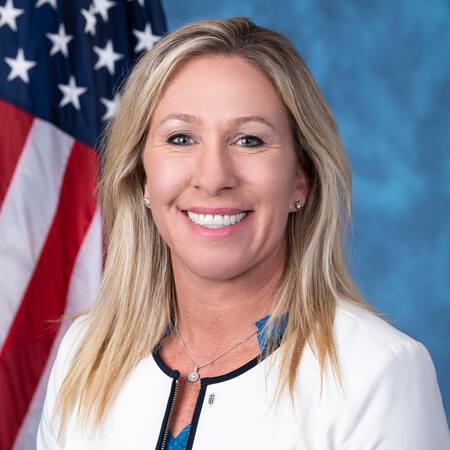
Rep. Marjorie Taylor Greene
Sponsored bills
Maddy summaryHR 10186, the Protecting Women’s Private Spaces Act, prohibits access to single-sex facilities (like restrooms, locker rooms, or changing rooms) on federal property unless the user's biological sex matches the facility's intended use. It defines "biological sex" based on reproductive anatomy and function, requiring facilities to correspond with an individual's assigned sex at birth. The bill directly affects users of federal buildings, including those who identify as transgender, by restricting access to facilities aligned with their gender identity rather than their biological sex. Exceptions apply only for emergency medical personnel responding to medical emergencies or law enforcement during active investigations.
Maddy summaryThe Financial Management Risk Reduction Act (HR 10155) requires recipients of $300,000 or more in federal funds to identify if they skipped required audits, and directs federal agencies to report these cases to Congress every two years. It mandates federal agencies to develop tools using audit data to spot cross-government risks to federal funds within two years, and to conduct a government-wide audit quality review every three years. The bill also requires a four-year evaluation of these tools' effectiveness and agency responses to audit findings. No new funding is authorized for these requirements.
Maddy summaryHR 8706, the "Dismantle DEI Act of 2024," would prohibit federal agencies from maintaining diversity, equity, and inclusion (DEI) offices, programs, or training by requiring the closure of existing DEI offices within 90 days and banning federal funding for DEI-related activities. The bill defines "prohibited diversity, equity, and inclusion practices" as those that discriminate based on race, color, ethnicity, religion, biological sex, or national origin, or require training that asserts a particular group is inherently superior or inferior. It would rescind several executive orders related to racial equity and gender inclusion, and prohibit the use of federal funds for DEI-related activities across all federal agencies, contractors, and grant recipients. The bill contains limited exceptions for Equal Employment Opportunity offices and disability rights enforcement offices as historically organized and operated.
Maddy summaryThis bill redesignates the existing Ocmulgee Mounds National Historical Park as "Ocmulgee Mounds National Park" and establishes a separate "Ocmulgee Mounds National Preserve" in Georgia under the National Park System. It authorizes the Secretary of the Interior to acquire land for both areas only through voluntary purchases from willing sellers (not eminent domain), with boundaries defined by a specific map. The bill mandates co-management of the park and preserve with the Muscogee (Creek) Nation, allows tribal members to continue traditional ceremonies and hunting/fishing under state/federal laws, and requires an advisory council with tribal representation. The National Park Service must administer both areas as a single unit while respecting tribal cultural uses and existing wildlife refuge management.
Maddy summaryThis bill provides one-time financial assistance to U.S. farmers growing specific crops (like corn, soybeans, wheat, cotton, and rice) during the 2024 crop year if their expected costs exceed expected returns. Payments equal 60% of the difference between the expected cost of production per acre (based on USDA cost forecasts) and the expected gross return per acre (based on projected farm prices and yields). Payments are calculated using actual planted acreage plus 50% of acreage prevented from planting due to natural disasters, with annual caps of $175,000 or $350,000 depending on the farm’s primary income source. The program uses existing USDA data sources and applies standard farm payment limits.
Maddy summaryThis bill removes legal immunity for vaccine manufacturers by allowing individuals injured by vaccines to sue them directly in court after filing a claim with the federal vaccine injury compensation program (VICP). It eliminates time limits for filing VICP claims (previously 24-36 months) and explicitly excludes COVID-19 vaccines from the program's coverage. The changes affect people seeking compensation for vaccine injuries and vaccine manufacturers, who will no longer automatically avoid lawsuits. The bill also repeals provisions that previously restricted legal action after VICP claims.
Maddy summaryHR 9731, the Special Interest Alien Reporting Act of 2024, requires the Department of Homeland Security (DHS) to publish monthly reports on individuals classified as "special interest aliens" attempting unlawful entry into the U.S. These reports, due by the seventh day of each month, must detail the total number and nationalities of such individuals, broken down by geographic region and location of encounter (e.g., ports of entry, border areas, or interior). The reports must also identify if encounters involve individuals from "covered nations" (as defined in existing law). This bill mandates transparency for Congress and the public but does not change immigration law or enforcement practices.
Maddy summaryHJRES 144 is a congressional disapproval resolution targeting a specific rule issued by the Bureau of Alcohol, Tobacco, Firearms, and Explosives (ATF) on April 19, 2024. The resolution seeks to block the ATF's rule that redefined the term "engaged in the business" for firearm dealers, which would have affected how federal licensing requirements apply to certain sellers. If enacted, this resolution would nullify the rule, preventing it from taking effect under procedures in Title 5 of the U.S. Code. The bill directly impacts firearm dealers operating under the current regulatory framework and the ATF's enforcement authority.
Maddy summaryHRES 1463 is a resolution (not a legislative bill) censuring Representative Bennie Thompson for actions the resolution claims incited violence against former President Trump. It specifically references Thompson’s introduction of H.R. 8081 (the "DISGRACED Former Protectees Act," which sought to remove Trump’s Secret Service protection) and quotes staff comments and statements by Thompson and other cosponsors that the resolution labels as inciting violence. If passed, the resolution would require Thompson to appear in the House chamber for a public reading of the censure by the Speaker. This is a procedural House action with no legal effect beyond formal rebuke, not a policy change.