

Maddy summaryHR 7355, the "Stopping Excessive Climate Reporting Act," prohibits public companies from being required under securities laws to disclose certain climate-related information. Specifically, it prevents issuers from having to report greenhouse gas emissions from their own operations (Scope 1 and 2) or their supply chains and consumers (Scope 3 emissions). The bill also removes requirements for independent certification of this emissions data. This directly affects publicly traded companies subject to securities regulations by eliminating these specific disclosure obligations.
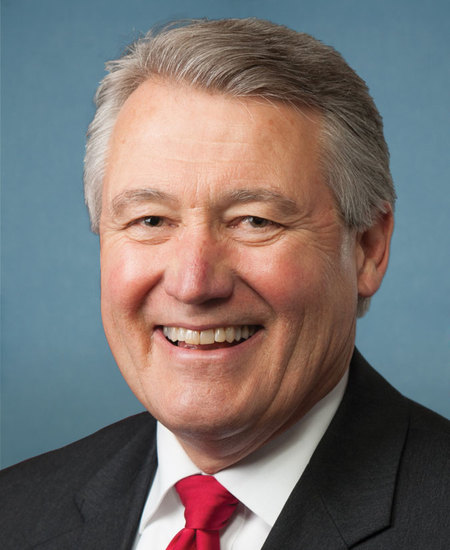
Rep. Rick W. Allen
Sponsored bills
Keeping Israel Safe from Iranian Proxies Act This bill prohibits the Department of Defense from making federal funds available to specified entities that are backed by Iran.
Validate Prior Learning to Accelerate Employment Act This bill incorporates assessments that measure an individual's prior knowledge, skills, competencies, and experiences into specified state and local employment training activities under the Workforce Innovation and Opportunity Act.
Reversing Every Vaccine Emergency Requirement and Stopping Employee OSHA Mandates Act or the REVERSE OSHA Mandates Act This bill limits the authority of the Occupational Safety and Health Administration (OSHA) to regulate workplace safety and health matters. Specifically, the bill repeals OSHA's authority to issue emergency temporary standards related to workplace safety and health. The bill further specifies that OSHA may not, under its authority to regulate workplace safety and health, require the administration of any drug, vaccine, or other biological product to an employee.
This resolution supports the preservation of the stepped-up basis tax rule that allows recipients of inherited assets such as land, equipment, or buildings to adjust the cost basis of the assets to reflect their fair market value. The resolution opposes any efforts to impose new taxes on family farms or small businesses and recognizes the importance of generational transfers of farm and family-owned businesses.
COVID-19 American History Project Act This bill directs the American Folklife Center at the Library of Congress to establish a history project to be known as the COVID-19 American History Project to collect and make publicly available individual stories and records of experiences during the COVID-19 pandemic in the United States. The bill includes a requirement to collect video and audio recordings of personal histories and testimonials of those who were affected by the pandemic. The Librarian of Congress may solicit and accept donations of funds and in-kind contributions to carry out the project, subject to this bill.
This resolution honors the life and legacy of the late Representative Don Young and directs the Sergeant at Arms to designate a Don Young Reserved Seat on the floor of the chamber of the House of Representatives.
This joint resolution nullifies the rule titled Patient Protection and Affordable Care Act; Updating Payment Parameters, Section 1332 Waiver Implementing Regulations, and Improving Health Insurance Markets for 2022 and Beyond , which was issued by the Centers for Medicare & Medicaid Services and the Department of the Treasury on September 27, 2021. The rule expands the open enrollment period for individual health coverage and rescinds the previous interpretation of certain requirements relating to Section 1332 waivers (also known as State Innovation Waivers or State Relief and Empowerment Waivers).
ID for EBT Act of 2022 This bill revises provisions related to the Supplemental Nutrition Assistance Program to require states to include a photograph of one or more members of a household on electronic benefit cards that are issued to provide program benefits.
Ensuring Sound Guidance Act This bill generally requires investment advisors and fiduciaries of employer-sponsored retirement plans to make investment decisions based only on pecuniary factors (i.e., factors that a fiduciary prudently determines are expected to have a material effect on the risk and return of an investment based on appropriate investment horizons consistent with the plan's policies and objectives). The bill allows nonpecuniary factors to be considered in certain situations, such as when a customer specifically requests that these factors be considered or when selecting investment options for certain participant-directed retirement plans.