

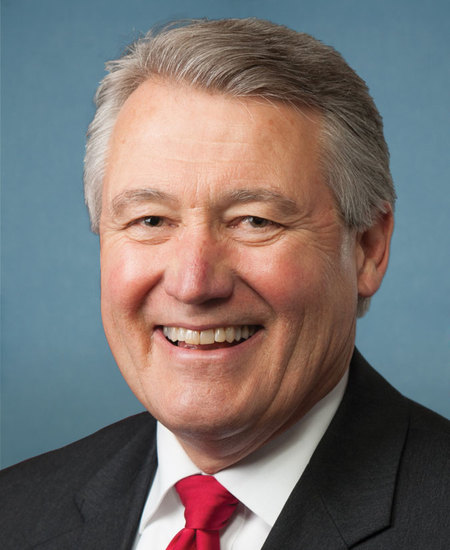
Photo of Rick W. Allen
R United States House · District 12 · Georgia On the 2026 ballot

Rep. Rick W. Allen

Compare
Total votes
2,837
all sessions
Attendance
98%
44 missed
Near the chamber average
With party
94%
of cast votes
Higher than 90% of chamber peers
Bipartisan score
3%
crosses aisle rarely
Lower than 91% of chamber peers
Sponsored
717
bills & resolutions
Lower than 83% of chamber peers
Committees
6
assignments
717 bills and resolutions

Sponsored bills

Total
717
Primary
49
Co-sponsor
668
This page
717
matching current filters
Co-sponsor HR 223
In committee · United States House · Co-sponsor
Adoption Information Act

Maddy summaryThis bill requires family planning services funded under Title V of the Social Security Act to provide pamphlets containing regional adoption center contact information to patients during consultations about medical or abortion services. The pamphlets must include a comprehensive list of adoption centers in the region, along with each center's address and phone number. It mandates that services offer patients the opportunity to read these pamphlets at the time of inquiry. The provision uses existing Title V funding and does not create new financial obligations.

In committee Jan 20, 2023 1 co-sponsor
Co-sponsor HR 355
In committee · United States House · Co-sponsor
Back the Blue Act of 2023

Maddy summaryThis bill creates new federal crimes for killing or assaulting law enforcement officers, judges, and certain public safety officers (including firefighters) while they are on duty or for past duties, with penalties including minimum 10-year sentences for killing and varying assault penalties based on severity. It adds a new factor that would make the federal death penalty more likely for killing such officers, limits federal legal challenges for convictions related to these killings, and expands law enforcement officers' rights to carry firearms in certain circumstances. The bill also provides funding for grants to improve community-law enforcement relationships through transparency, accountability, and officer wellness programs. It directly affects law enforcement officers, judges, and public safety personnel across the country, establishing new federal protections and procedures for violence against these personnel.

In committee Jan 13, 2023 1 co-sponsor
Co-sponsor HJRES 18
In committee · United States House · Co-sponsor
AUMF CARTEL Influence Resolution

Authorization for the Use of Military Force to Combat, Attack, Resist, Target, Eliminate, and Limit Influence Resolution or the AUMF CARTEL Influence Resolution This joint resolution authorizes the President to use the Armed Forces against foreign nations, foreign organizations, or foreign persons affiliated with foreign organizations that the President determines are involved in trafficking fentanyl or fentanyl-related substances into the United States. The joint resolution also authorizes the use of force against those determined to have used force or violence in specified ways, such as engaging in violence or intimidation to control territory to be used for illicit means. The joint resolution deems nine named cartels as having met the criteria for the President to use force against them. Force authorized by this joint resolution may only be used against organizations and persons located outside of the United States. The authority expires five years after the date of this joint resolution's enactment.

In committee Jan 12, 2023 1 co-sponsor
Co-sponsor HR 297
In committee · United States House · Co-sponsor
To direct the Secretary concerned to reinstate a member involuntarily separated from the Armed Forces solely on the basis of the refusal of such member to receive a vaccination against COVID-19.

Maddy summaryHR 297 requires the military Secretary to reinstate service members who were involuntarily separated solely for refusing a COVID-19 vaccine. It applies specifically to those separated only due to vaccine refusal, not other reasons. If a covered member chooses reinstatement, they must be returned to their previous rank and branch of service. The bill mandates this action without requiring the member to receive the vaccine.

In committee Jan 11, 2023 1 co-sponsor
Co-sponsor HRES 16
In committee · United States House · Co-sponsor
Congratulating the University of Georgia Bulldogs football team for winning the 2023 National Collegiate Athletic Association College Football National Championship.

Maddy summaryHRES 16 is a non-binding House resolution congratulating the University of Georgia Bulldogs football team for winning the 2023 College Football Playoff National Championship. The resolution recognizes the team's undefeated 15-0 season, including a 65-7 championship victory, and requests that an enrolled copy be presented to the university's president, athletic director, and head coach. It has no legal effect or financial impact, serving solely as a symbolic gesture of recognition. The resolution was introduced by Georgia representatives and referred to the Education and Workforce Committee.

In committee Jan 10, 2023 1 co-sponsor
Co-sponsor HR 231
In committee · United States House · Co-sponsor
Terminate TikTok on Campus Act of 2023

Maddy summaryThis bill requires colleges and universities receiving federal funding to ban TikTok (and related ByteDance apps) on all school-owned electronic devices - including computers, tablets, and smartphones - within 90 days of enactment. It prohibits federal funding for institutions that fail to implement such a ban, with an exception for research related to national security, law enforcement, or cybersecurity. The policy directly affects all public and private higher education institutions that accept federal funds, including grants and student aid programs. It does not restrict TikTok use on personal devices or apply to non-federal funding sources.

In committee Jan 10, 2023 1 co-sponsor
Co-sponsor HJRES 12
In committee · United States House · Co-sponsor
Proposing a balanced budget amendment to the Constitution of the United States.

Maddy summaryH.J.Res. 12 proposes a constitutional amendment requiring the federal government to balance its budget annually, meaning spending cannot exceed revenue except under specific circumstances. It would directly affect Congress and the President by mandating that annual budgets must not exceed revenue, with exceptions requiring a 3/5 vote in both chambers of Congress or a military conflict waiver approved by a joint resolution. Key provisions include prohibiting increases to the national debt without a 3/5 congressional vote, requiring the President to submit a balanced budget proposal each year, and defining "receipts" to exclude borrowing. The amendment would take effect five years after ratification by 38 states (three-fourths of states) and includes limited waivers for declared wars or imminent national security threats. This is a procedural constitutional change, not a spending bill, and would fundamentally alter federal budgeting processes.

In committee Jan 9, 2023 1 co-sponsor
Co-sponsor HJRES 8
In committee · United States House · Co-sponsor
Proposing an amendment to the Constitution of the United States to require that the Supreme Court of the United States be composed of nine justices.

Maddy summaryHJRES 8 proposes a constitutional amendment to permanently set the Supreme Court's size at nine justices. The bill would require any future changes to the Court's composition to follow this specific number, locking in the current structure. It does not alter the existing Court size (which has been nine since 1869) but aims to prevent future adjustments through legislative action. The amendment must be ratified by three-fourths of state legislatures within seven years to take effect. This is a procedural proposal focused on constitutional structure, not a direct policy affecting citizens or programs.

In committee Jan 9, 2023 1 co-sponsor
Co-sponsor HR 106
In committee · United States House · Co-sponsor
Abortion Is Not Health Care Act of 2023

Maddy summaryThis bill amends the tax code to prevent abortion expenses from being counted as deductible medical costs. It directly affects taxpayers who pay for abortions, as they can no longer include these expenses when calculating their medical deduction on federal tax returns. The key provision adds a new rule to the Internal Revenue Code stating that "amounts paid for abortion shall not be taken into account" under medical expense deductions. This change applies to tax years beginning after the bill's enactment date.

In committee Jan 9, 2023 1 co-sponsor
Co-sponsor HR 116
In committee · United States House · Co-sponsor
Pregnant Women Health and Safety Act of 2023

Pregnant Women Health and Safety Act of 2023 This bill establishes requirements for physicians who perform abortions and abortion clinics. Specifically, the bill requires a physician who performs an abortion (1) to have admitting privileges at a nearby hospital; and (2) at the time of the abortion, to notify the patient of the hospital location where the patient can receive follow-up care if complications arise. A physician who fails to comply is subject to criminal penalties—a fine, a prison term of up to two years, or both. A woman who undergoes an abortion may not be prosecuted. The bill also requires an abortion clinic, in order to receive federal funds or assistance, to (1) be licensed by the state in which it is located, and (2) be in compliance with federal standards for ambulatory surgical centers.

In committee Jan 9, 2023 1 co-sponsor
Showing 401 to 410 of 717 bills
Previous 1 … 40 41 42 … 72 Next