

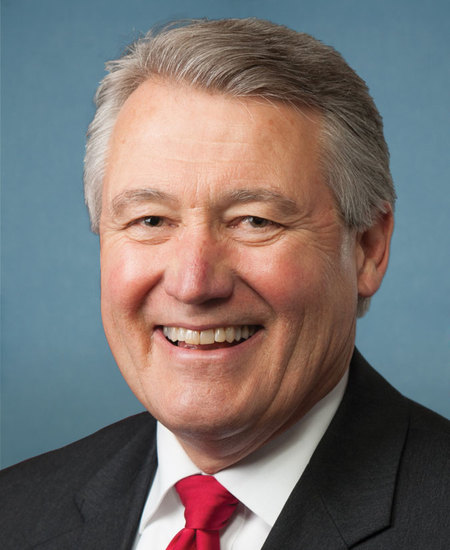
Photo of Rick W. Allen
R United States House · District 12 · Georgia On the 2026 ballot

Rep. Rick W. Allen

Compare
Total votes
2,837
all sessions
Attendance
98%
44 missed
Near the chamber average
With party
94%
of cast votes
Higher than 90% of chamber peers
Bipartisan score
3%
crosses aisle rarely
Lower than 91% of chamber peers
Sponsored
717
bills & resolutions
Lower than 83% of chamber peers
Committees
6
assignments
717 bills and resolutions

Sponsored bills

Total
717
Primary
49
Co-sponsor
668
This page
717
matching current filters
Co-sponsor HRES 1255
In committee · United States House · Co-sponsor
Calling upon all Americans on this Memorial Day, 2024, to honor the men and women of the Armed Forces who have died in the pursuit of freedom and peace.

Maddy summaryHRES 1255 is a non-binding House resolution introduced on May 23, 2024, that calls on all Americans to observe Memorial Day 2024 as a day of remembrance for military personnel who died in service. The resolution specifically honors "the men and women of the Armed Forces who have died in the pursuit of freedom and peace" and urges the public to demonstrate appreciation for their sacrifices. It does not create new laws or policies but serves as a symbolic expression of national gratitude, emphasizing respect for those who died while defending democratic values. The resolution was co-sponsored by multiple House members and aligns with the traditional observance of Memorial Day.

In committee May 23, 2024 1 co-sponsor
Co-sponsor HR 895
In committee · United States House · Co-sponsor
Combating Organized Retail Crime Act of 2023

Maddy summaryHR 895, the Combating Organized Retail Crime Act of 2023, expands federal law to better prosecute organized retail theft by amending sections 2314 and 2315 of Title 18. It clarifies that crimes involving stolen goods valued at $5,000 or more over 12 months - including retail theft - can be prosecuted under existing federal statutes, and broadens definitions to include goods taken via "any facility of interstate or foreign commerce." The bill also creates a new Organized Retail Crime Coordination Center within Homeland Security, requiring it to coordinate federal, state, and local law enforcement efforts, share threat information with retailers, and produce annual public reports on trends. This directly affects law enforcement agencies, retailers, and criminal justice systems by standardizing prosecution thresholds and enhancing interagency collaboration.

In committee May 23, 2024 1 co-sponsor
Co-sponsor HJRES 151
In committee · United States House · Co-sponsor
Providing for congressional disapproval under chapter 8 of title 5, United States Code, of the rule submitted by the Environmental Protection Agency relating to "Supplemental Effluent Limitations Guidelines and Standards for the Steam Electric Power Generating Point Source Category".

Maddy summaryHJRES 151 is a congressional disapproval resolution targeting an Environmental Protection Agency (EPA) rule that would have set new water pollution standards for steam electric power plants, including coal and nuclear facilities. The rule, published in the Federal Register on May 9, 2024, aimed to limit pollutants discharged into waterways from these power plants. If passed, this resolution would block the rule from taking effect under the Congressional Review Act. It directly affects steam electric power plants by preventing the implementation of these new environmental requirements.

In committee May 22, 2024 1 co-sponsor
Co-sponsor HR 8369
Passed · United States House · Co-sponsor
Israel Security Assistance Support Act

Maddy summaryThis bill requires the U.S. Department of Defense and State Department to immediately deliver all previously approved military equipment and services to Israel within 15 days, reversing any pauses on arms transfers. It prohibits using federal funds to withhold, halt, or cancel defense article deliveries to Israel and mandates that unobligated security assistance funds for Israel must be spent by the end of 30 days. The bill also requires monthly reports to Congress detailing all security assistance provided to Israel since October 7, 2023, including specific items delivered and funding sources. The law directly affects U.S. agencies responsible for military aid and Israel as the recipient of the security assistance.

Passed May 21, 2024 1 co-sponsor
Co-sponsor HR 354
Passed · United States House · Co-sponsor
LEOSA Reform Act of 2024

Maddy summaryThis bill amends the Law Enforcement Officers Safety Act (LEOSA) to expand where current and retired law enforcement officers can carry concealed firearms. It specifically allows qualified officers to carry in Federal facilities like post offices and courthouses (previously restricted), clarifies they may carry on public property and transportation, and updates firearms training requirements to accept certification from any state-certified instructor. The key change requires officers to meet recent firearms training standards (using flexible state-based criteria), rather than relying solely on their former agency's standards. This directly affects retired officers seeking to carry in more public spaces and federal buildings without needing prior agency certification.

Passed May 20, 2024 1 co-sponsor
Co-sponsor HJRES 138
In committee · United States House · Co-sponsor
Providing for congressional disapproval under chapter 8 of title 5, United States Code, of the rule submitted by the Centers for Medicare & Medicaid Services relating to "Clarifying the Eligibility of Deferred Action for Childhood Arrivals (DACA) Recipients and Certain Other Noncitizens for a Qualified Health Plan through an Exchange, Advance Payments of the Premium Tax Credit, Cost-Sharing Reductions, and a Basic Health Program".

Maddy summaryHJRES 138 is a joint resolution seeking congressional disapproval of a Centers for Medicare & Medicaid Services (CMS) rule that would have clarified eligibility for health insurance subsidies under the Affordable Care Act for Deferred Action for Childhood Arrivals (DACA) recipients and certain noncitizens. The rule, submitted on May 8, 2024, aimed to allow these individuals to access premium tax credits, cost-sharing reductions, and health plans through ACA marketplaces. This resolution, if enacted, would block the rule from taking effect under the Congressional Review Act, directly preventing DACA recipients and the specified noncitizens from qualifying for these benefits. The bill does not create new policy but halts an existing regulatory clarification.

In committee May 17, 2024 1 co-sponsor
Co-sponsor HJRES 147
In committee · United States House · Co-sponsor
Providing for congressional disapproval under chapter 8 of title 5, United States Code, of the rule submitted by the Occupational Safety and Health Administration relating to "Worker Walkaround Representative Designation Process".

Maddy summaryHouse Joint Resolution 147 seeks to disapprove an Occupational Safety and Health Administration (OSHA) rule that would have established a process for workers to designate a representative to accompany OSHA inspectors during workplace safety inspections. The rule, published in the Federal Register on April 1, 2024, aimed to formalize this "walkaround" representative process during inspections. Under a federal disapproval procedure (Chapter 8 of Title 5, U.S. Code), this resolution would invalidate the rule if passed. As a result, the designated representative process would not take effect, meaning OSHA inspections would proceed without this specific worker representation mechanism.

In committee May 16, 2024 1 co-sponsor
Co-sponsor HRES 1235
In committee · United States House · Co-sponsor
Expressing the sense of the House of Representatives that certain welfare programs discourage marriage and hurt the institution of the family in the United States.

Maddy summaryHRES 1235 is a non-binding resolution expressing the House of Representatives' view that certain federal welfare programs - including Temporary Assistance for Needy Families (TANF), Medicaid, SNAP, and housing assistance - discourage marriage by reducing benefits for married couples compared to single parents. It cites examples like combined income calculations that may lower aid for married households, potentially costing a single parent of two children up to $14,544 annually in reduced benefits. The resolution urges the government to review and reform such programs to eliminate financial penalties on marriage but does not change existing laws or policies. As a procedural resolution, it serves only to state the House's position, not to enact new requirements.

In committee May 16, 2024 1 co-sponsor
Primary HJRES 143
In committee · United States House · Lead sponsor
Providing for congressional disapproval under chapter 8 of title 5, United States Code, of the rule submitted by the Department of Labor relating to "Amendment to Prohibited Transaction Exemptions 75-1, 77-4, 80-83, 83-1, and 86-128".

Maddy summaryHJRES 143 is a congressional resolution seeking to block a Department of Labor rule that would amend specific exemptions for retirement investment transactions. The bill targets a rule (published April 25, 2024) that would change how retirement funds can invest, particularly affecting retirement plan providers and fiduciaries managing employee savings. It directs Congress to disapprove the rule under a specific federal law, meaning the rule would not take effect if passed. This is a procedural step to halt the rule's implementation, not a new policy change.

In committee May 15, 2024 0 co-sponsors
Primary HJRES 140
In committee · United States House · Lead sponsor
Providing for congressional disapproval under chapter 8 of title 5, United States Code, of the rule submitted by the Department of Labor relating to "Amendment to Prohibited Transaction Exemption 2020-02".

Maddy summaryHJRES 140 is a resolution requesting Congress to disapprove a Department of Labor rule that amended Prohibited Transaction Exemption 2020-02. The rule, published in the Federal Register on April 25, 2024, would have changed how retirement plan fiduciaries can engage in certain investment transactions, specifically affecting retirement account providers and administrators. If approved, this resolution would block the rule from taking effect, directly impacting entities managing retirement funds that rely on the exemption framework. The bill uses the statutory disapproval process under Chapter 8 of Title 5, U.S. Code, to halt the rule’s implementation.

In committee May 15, 2024 0 co-sponsors
Showing 231 to 240 of 717 bills
Previous 1 … 23 24 25 … 72 Next