

Maddy summaryH.J. Res. 117 is a joint resolution that would disapprove an Environmental Protection Agency (EPA) rule concerning the reconsideration of National Ambient Air Quality Standards for particulate matter. The EPA rule, published on March 6, 2024, was part of the agency’s process to review these standards, which set limits for harmful air pollutants. This resolution invokes a congressional disapproval procedure under federal law to block the rule from taking effect. If enacted, the rule would have no force or effect, preserving the existing air quality standards for particulate matter.
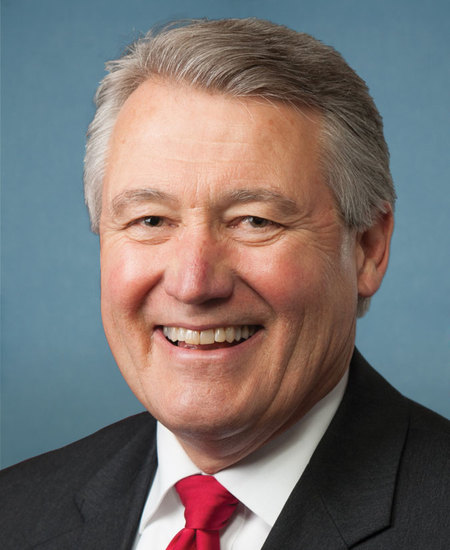
Rep. Rick W. Allen
Sponsored bills
Maddy summaryHJRES 204 is a congressional disapproval resolution targeting an EPA rule that would have reclassified certain large pollution sources (like industrial facilities) as smaller, less-regulated "area sources" under the Clean Air Act. If passed, this resolution would block the EPA's September 10, 2024, rule (published in the Federal Register) from taking effect, preventing the regulatory change. The resolution directly affects the EPA's authority to implement this specific reclassification, which would have altered how certain facilities are regulated under Section 112 of the Clean Air Act. It does not create new policy but halts an existing EPA rule through a procedural congressional action.
Maddy summaryHRES 1438 is a symbolic resolution passed by the U.S. House of Representatives on September 11, 2024, condemning the September 4, 2024, shooting at Apalachee High School in Winder, Georgia. It honors the four victims - Christian Angulo, Richard Aspinwall II, Cristina Irimie, and Mason Schermerhorn - expresses condolences to their families and the Winder community, and acknowledges the trauma experienced by students, staff, and the broader community. The resolution has no policy changes or funding provisions; it serves solely as a formal expression of grief and support following the tragedy.
This resolution supports the designation of National FFA Week. It also (1) recognizes the important role of the National FFA Organization (Future Farmers of America) in developing the next generation of globally conscious leaders who will change the world; and (2) celebrates the 10th anniversary of the Give the Gift of Blue program, which has donated more than 17,000 FFA blue jackets to FFA members in need.
Maddy summaryThis bill (HR 9242) renames a U.S. Department of Agriculture facility in Athens, Georgia, as the "Abit Massey Poultry Research Center." It directly affects the U.S. National Poultry Research Center and all federal documents referencing it, requiring updates to official records, maps, and publications. The bill makes no policy changes; it solely updates the facility's name and all related government references to honor Abit Massey.
Maddy summaryHJRES 165 is a congressional resolution seeking to block a Department of Education rule issued in April 2024 that updated protections against sex discrimination in schools receiving federal funding. The resolution aims to disapprove this specific rule (published as 89 Fed. Reg. 33474), which would have required schools to address sex-based discrimination in educational programs. If passed, the rule would no longer be in effect, meaning schools would not need to comply with its requirements. This resolution directly affects all schools and educational programs receiving federal financial assistance, as it targets the implementation of the new nondiscrimination standard.
Maddy summaryHR 9109, the IRS Overreach Prevention Act, prohibits the IRS from continuing its Direct File program or developing any successor program that offers free, public electronic tax filing. This bill directly affects taxpayers who might have used the free service, as it prevents the IRS from providing this specific option. The key provision explicitly bans the Secretary of the Treasury from maintaining or creating any free, public electronic return-filing service. The bill does not change tax laws or filing requirements but restricts the IRS’s ability to offer this particular service. It is a procedural measure focused solely on prohibiting the specific program described in the bill text.
Maddy summaryThe SAVE Act (HR 8281) requires U.S. citizens to provide documentary proof of citizenship when registering to vote in federal elections. It defines acceptable proof as documents like passports, REAL ID-compliant IDs, military IDs, or birth certificates, and mandates that states verify citizenship using information from government agencies like DHS and Social Security. States must establish processes for voters without required documentation to provide an attestation under penalty of perjury. The law also requires states to remove noncitizens from voter rolls when verified evidence shows they're not citizens. This bill directly affects all applicants registering to vote in federal elections and state election officials who must implement these requirements.
Maddy summaryHR 8939 amends the Communications Act of 1934 to require that artificial or prerecorded voice systems created using generative AI (like voice cloning) comply with existing telemarketing rules. It directly affects businesses and organizations using AI-generated voices for automated phone calls, ensuring these systems meet technical and procedural standards set by the Federal Communications Commission (FCC). The bill updates Section 227(d)(3) to explicitly include AI voice systems, requiring the FCC to establish specific rules for their use. This change ensures AI voice systems are treated under current regulations governing automated calls, without creating new prohibitions.
Maddy summaryThis bill prevents student athletes (and former athletes) from being classified as employees under federal or state law solely due to their participation in varsity intercollegiate sports programs or competitions. It directly affects college athletes whose eligibility or participation might otherwise be challenged under employment law. The key provision explicitly states that institutions, conferences, or associations cannot consider athletes as employees based on their sports involvement, regardless of existing rules or requirements. This is a definitional and legal clarification, not a new benefit or compensation measure.