

Maddy summaryHR 5403, the CBDC Anti-Surveillance State Act, prohibits the Federal Reserve from issuing or facilitating central bank digital currency (CBDC) directly or indirectly to individuals through financial institutions. It specifically bans Federal Reserve banks from offering digital products to individuals, maintaining individual accounts, or using CBDC for monetary policy implementation. The bill also clarifies that its restrictions do not apply to existing physical cash or private, permissionless digital payment systems. This bill directly affects the Federal Reserve's ability to develop or deploy a government-run digital dollar. The law aims to prevent the Federal Reserve from creating a digital currency that could enable transaction tracking or government oversight of personal financial activity.
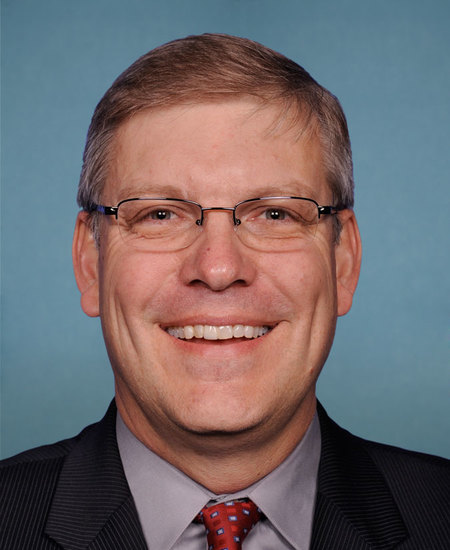
Rep. Barry Loudermilk
Sponsored bills
Maddy summaryHJRES 160 is a joint resolution seeking congressional disapproval of a rule issued by the Department of Health and Human Services (HHS) on May 6, 2024, regarding nondiscrimination in health programs and activities. If passed, the resolution would nullify the HHS rule, preventing it from taking effect and rendering it legally unenforceable. The bill directly affects the implementation of the HHS rule, which was published in the Federal Register (89 Fed. Reg. 37522), but does not alter the rule's content or create new policy.
Maddy summaryThis bill amends the 2022 Camp Lejeune Justice Act to clarify and correct technical details. It updates eligibility requirements for claimants (requiring 30 days at Camp Lejeune and defining "latent harm" instead of "latent disease"), clarifies court jurisdiction for cases, and specifies attorney fee structures (20% pre-litigation, 25% post-litigation). The changes directly affect individuals who developed health issues due to contaminated water at Camp Lejeune, streamlining their legal process under the existing 2022 law.
Maddy summaryThis bill requires the U.S. Department of Defense and State Department to immediately deliver all previously approved military equipment and services to Israel within 15 days, reversing any pauses on arms transfers. It prohibits using federal funds to withhold, halt, or cancel defense article deliveries to Israel and mandates that unobligated security assistance funds for Israel must be spent by the end of 30 days. The bill also requires monthly reports to Congress detailing all security assistance provided to Israel since October 7, 2023, including specific items delivered and funding sources. The law directly affects U.S. agencies responsible for military aid and Israel as the recipient of the security assistance.
Maddy summaryHR 8459, the Stopping Traffickers and Their Accomplices Act of 2024, requires abortion providers to notify the National Human Trafficking Hotline within 24 hours if they reasonably suspect a patient is a trafficking victim. It mandates annual staff training on identifying trafficking victims and submitting certification of training completion. Violations carry penalties: $10,000 per failure to report or $1,000 per day for training noncompliance. The bill directly affects abortion providers and facilities, imposing new reporting obligations without creating a right to abortion or requiring victims to self-report. State attorneys general may also sue providers for violations.
Maddy summaryHR 7109, the Equal Representation Act, requires the U.S. Census Bureau to add a citizenship status checkbox to the 2030 and future decennial censuses, asking respondents to identify if they are U.S. citizens, U.S. nationals, lawful residents, or unlawful residents. It then mandates excluding noncitizens (both lawful and unlawful residents) from the population count used to determine each state's number of congressional seats and electoral votes starting with the 2030 census. This bill directly affects how states are apportioned representation in Congress and presidential electoral votes, based solely on the citizen population. The key change is shifting the apportionment base from total population to citizen population alone, using the new census data.
Maddy summaryThis bill renames the Department of Veterans Affairs community-based outpatient clinic in Hinesville, Georgia, to the "John Gibson, Dan James, William Sapp, and Frankie Smiley VA Clinic." The change updates the clinic's official name in all federal references, including documents, maps, and records. It directly affects the clinic's identification and veterans who use its services, though the bill does not alter healthcare services or funding. The renaming is procedural and commemorative, with no new policy or funding mechanisms.
Maddy summaryThis bill authorizes the placement of a memorial honoring women who contributed to World War II efforts on the National Mall or adjacent federal land in Washington, D.C. It specifically removes a location restriction (under 40 U.S.C. § 8908) to allow the memorial - previously authorized by the 2023 Consolidated Appropriations Act - to be situated within Area I of the National Mall or the National Mall Reserve. The memorial would commemorate over 18 million women who worked as pilots, engineers, mechanics, and codebreakers during the war. The bill directly affects the Women Who Worked on the Home Front Foundation, which is tasked with establishing the memorial.
Maddy summaryThis bill (HR 3944, Public Law 118-57) renames a specific U.S. Postal Service facility at 120 West Church Street in Mount Vernon, Georgia, as the "Second Lieutenant Patrick Palmer Calhoun Post Office." It directly affects the official designation of that post office location and any future references to it in federal documents. The bill requires all federal records, maps, and documents to use the new name instead of the previous designation. As a naming resolution, it has no policy impact beyond this ceremonial renaming.
Maddy summaryHJRES 131 seeks congressional disapproval of an EPA rule establishing emissions standards for light- and medium-duty vehicles model years 2027 and later. If passed, this resolution would block the EPA's rule from taking effect, preventing automakers from having to comply with those specific pollution requirements. The bill targets the EPA's April 18, 2024, rule published in the Federal Register (89 Fed. Reg. 27842). This is a procedural disapproval resolution under the Congressional Review Act, not a new policy.