

Maddy summaryHR 731, the Green Tape Elimination Act of 2025, exempts certain forest fire prevention activities on federal land from major environmental review and legal requirements for 10 years. It specifically removes the need for compliance with the Endangered Species Act, National Historic Preservation Act, Migratory Bird Treaty Act, and related laws when conducting "hazardous fuel reduction activities," such as prescribed burns, creating firebreaks, or mechanically removing dead vegetation. The bill also adds a provision to the Clean Air Act allowing the EPA to exclude air quality monitoring data directly caused by these activities from violation determinations. This directly affects federal land management agencies (like the Forest Service) conducting fire prevention work on public lands.
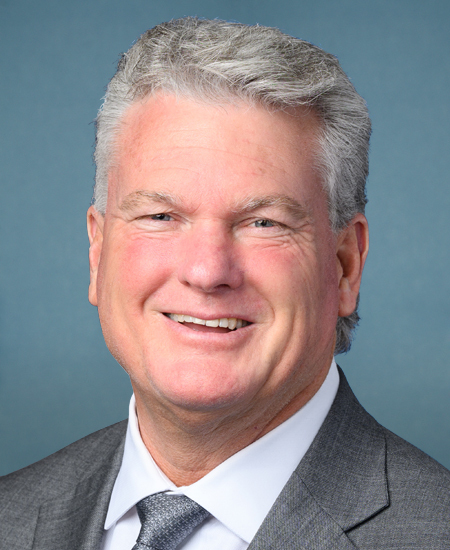
Rep. Mike Collins
Sponsored bills
Life at Conception Act This bill declares that the right to life guaranteed by the Constitution is vested in each human being at all stages of life, including the moment of fertilization, cloning, or other moment at which an individual comes into being. Nothing in this bill shall be construed to authorize the prosecution of any woman for the death of her unborn child.
Maddy summaryHR 21, the Born-Alive Abortion Survivors Protection Act, requires medical staff at abortion facilities to provide the same immediate care and hospital admission to any infant born alive during an abortion as they would for any newborn. It mandates reporting failures to provide this care to law enforcement and imposes penalties of up to 5 years in prison for violations, with harsher penalties for intentional killing. The bill also allows women who undergo abortions to sue for civil damages, including triple the abortion cost, and provides for attorney fees. It defines "abortion" to exclude procedures performed after viability to preserve a live birth. This law directly affects healthcare providers at abortion facilities and creates new federal legal obligations for them.
Maddy summaryHRES 59 is a symbolic resolution expressing the House of Representatives' disapproval of a sermon delivered by Bishop Mariann Edgar Budde at the National Prayer Service on January 21, 2025, at the National Cathedral. It declares the sermon "a display of political activism" and condemns its "distorted message," though it does not change any laws or policies. The resolution directly addresses the bishop's remarks during a nonpartisan religious event, making no concrete policy changes but reflecting the House's view on the content of that specific sermon. As a procedural resolution, it has no legal effect beyond expressing the House's stance.
Maddy summaryThe MERIT Act of 2025 makes significant changes to federal personnel management by repealing Chapter 43 performance-based actions and modifying procedures for disciplinary actions, furloughs, and bonus recoupment. It extends probationary periods for senior executives (to 2 years) and competitive service employees (to 2 years), establishes new rules for reducing retirement benefits of employees convicted of felonies related to their federal service, and creates standardized procedures for adverse actions including written notice requirements and response periods. The bill also allows agencies to recoup bonuses for misconduct and modifies procedures for handling furloughs of more than 14 days. These changes apply to all federal employees across government agencies and aim to clarify and streamline personnel management processes.
Maddy summaryThe Regulation Decimation Act requires federal agencies to repeal at least ten existing regulations before issuing a new rule that affects businesses, states, or local governments. For major rules (those with significant economic impact), agencies must repeal ten related rules and ensure the new rule's cost does not exceed the cost of the repealed rules, with Office of Management and Budget certification. The law excludes internal agency policies and rules revised to reduce burdens, and mandates agencies to review all costly or outdated rules within 90 days of enactment, reporting on rule reductions to Congress every five years. This bill directly affects federal agencies creating new regulations, aiming to reduce regulatory burden through mandatory rule repeal.
Maddy summaryHR 645, the National Constitutional Carry Act, would prevent all U.S. states and localities from requiring permits or imposing penalties for carrying firearms in public. It directly affects eligible U.S. citizens (including non-residents) who legally possess firearms under state and federal law, removing current permit requirements for public carry. The bill’s key provision amends federal law to invalidate any state or local law that criminalizes or discourages public firearm carry, except where private property owners clearly prohibit firearms or security screening occurs. This would override existing state permit laws, making permitless carry legal across all states and territories for qualified individuals.
Maddy summaryHR 703, the Main Street Tax Certainty Act, makes a key tax deduction permanent for small business owners. It removes the temporary sunset provision (subsection (i)) from Section 199A of the tax code, ensuring the qualified business income deduction remains available for eligible small businesses. This change directly affects pass-through business owners (like S-corps, partnerships, and sole proprietorships) who currently qualify for this deduction. The permanent change takes effect for tax years starting after December 31, 2025.
Maddy summaryHJRES 28 proposes a constitutional amendment to permanently fix the number of justices on the U.S. Supreme Court at nine. This would require ratification by 38 state legislatures (three-fourths of states) within seven years to become part of the Constitution. The amendment directly affects the structure of the Supreme Court, which has had nine justices since 1869 but could otherwise be altered by future congressional action. It does not change current court operations or create new laws, but instead seeks to make the nine-justice composition a permanent constitutional requirement.
Maddy summaryThe RIFLE Act of 2025 amends federal firearm licensing laws to create a more structured process for addressing violations by licensed firearm businesses. It establishes graduated penalties for violations, with non-willful violations requiring notification and a reasonable timeframe to correct, while willful violations could lead to license suspension (up to 30 days for first-time offenders) or revocation. The bill adds procedural protections including written notice requirements, administrative hearings with due process, and a 90-day period to liquidate inventory after license expiration or revocation. It also requires the Attorney General to reconsider denied applications from former licensees and reverse certain past license revocations made under specific ATF orders. The bill aims to balance enforcement with due process for firearm licensees while maintaining public safety standards.