

Saving America's Energy Future Act This bill prohibits the Department of Agriculture and the Department of the Interior from declaring a moratorium on issuing new oil and gas leases and drill permits on certain federal lands. In addition, the bill prohibits the departments from declaring a moratorium on renewals of such permits.
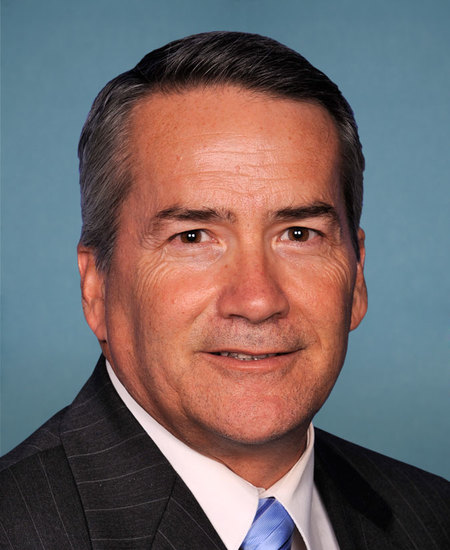
Rep. Jody B. Hice
Sponsored bills
Eliminate Agency Excess Space Act This bill modifies requirements with respect to the disposal of surplus and excess property by federal agencies. Among other things, the bill repeals provisions that require federal agencies to report excess property to the General Services Administration (GSA). Additionally, the GSA must issue regulations that allow federal agencies to dispose of surplus and excess property without first making the property available to other agencies or state or local governments. The bill also requires the GSA to survey all unused or underutilized office spaces held by federal agencies, make recommendations to reduce agency real estate assets, and report on costs associated with property disposal.
Iran Nuclear Verification Act This bill prohibits the United States from becoming a party to the Joint Comprehensive Plan of Action (JCPOA) or any other agreement with Iran that relates to Iran's nuclear program until the President makes certain certifications. The JCPOA is an agreement, signed by Iran and several other world powers (including the United States), that places restrictions on Iran's nuclear program in exchange for certain sanctions relief. The United States withdrew from the JCPOA in 2018. The United States may not become a party to any such agreement until the President certifies to Congress that United Nations nuclear inspectors are allowed full access to all of Iran's nuclear facilities, and that they have completed their comprehensive report relating to those facilities.
This resolution honors the life and legacy of Rush Limbaugh and commends him for his devotion to the United States.
China Technology Transfer Control Act of 2021 This bill controls exports of certain national interest technology and intellectual property to China. Specifically, covered technology or intellectual property includes items that (1) would contribute significantly to the Chinese military to the detriment of U.S. national security, (2) are included in a designated list of product components compiled by the U.S. Trade Representative (USTR), or (3) are used by China to violate human rights or religious liberties. The President must control exports to China of any covered technology or intellectual property. Further, the President must sanction (1) a foreign person who sells to China or purchases from China any covered item, and (2) a Chinese person who knowingly uses a covered item provided to them in violation of U.S. export control law. In addition to a specified list of industries subject to the bill, the USTR must identify certain products from China that either receive designated support from the Chinese government or are used by China to violate human rights or religious liberties.
Earmark Elimination Act of 2021 This bill establishes a point of order in the House of Representatives against considering legislation that contains a congressional earmark, limited tax benefit, or limited tariff benefit. If the point of order is raised and sustained, the congressional earmark, limited tax benefit, or limited tariff benefit shall be deemed to be stricken from the legislation.
Iran Hostages Congressional Gold Medal Act This bill requires the Speaker of the House of Representatives and the President pro tempore of the Senate to arrange for the award of a Congressional Gold Medal commemorating the bravery and endurance of the 53 hostages of the Iran Hostage Crisis. Following its award, the medal shall be given to the National Museum of American History of the Smithsonian Institution for display and research. The Department of the Treasury must strike duplicate medals in silver for presentation to a hostage (or the personal representative of a deceased hostage), and Treasury may also strike and sell duplicate medals in bronze.
Creating Hope and Opportunity through Increased Choice in Education Act or the CHOICE Act This bill directs the Department of Education to make grants to parents of eligible students for certain education-related expenses. Eligible student refers to a student who (1) is served by a local educational agency that will not provide in-person instruction in a manner consistent with the 2019-2020 school year, and (2) is from a household with a household income that is less than 200% of the reduced-price lunch rate income. Grant funds may be used for tuition and fees for private elementary or secondary schools, private tutoring, home school expenses, or educational materials.
Improving Confidence in Veterans' Care Act This bill prescribes oversight requirements for the Department of Veterans Affairs (VA) regarding health care professionals at VA medical centers. Specifically, the bill requires the VA to ensure each VA medical center consistently compiles, verifies, and reviews specified documentation for each VA health care professional (including contractors). The VA shall ensure that specified health care professionals hold an active Drug Enforcement Administration registration. Each VA medical center must implement (1) monitoring of the performance and quality of the health care delivered by each health care professional at the center, and (2) reviews of such care if an individual notifies the VA of any potential concerns relating to a failure to meet generally accepted standards of clinical practice. The bill imposes notification requirements in situations where the VA substantiates a concern relating to the clinical competency of, or quality of care delivered by, a current or former VA health care professional. The VA is prohibited from entering into a settlement agreement relating to an adverse action against a VA health care professional if such agreement includes terms that require the VA to conceal certain information from the employee's personnel file. Such prohibition does not apply to adverse actions determined to be prohibited personnel practices. The VA must provide mandatory training, at least biannually, to employees of each medical center who are responsible for specified tasks (e.g., those who are responsible for compiling, validating, or reviewing the credentials of VA health care professionals).
This resolution requests that the President transmit to the House of Representatives documents related to the amount of funding that was provided in specified laws regarding COVID-19 (i.e., coronavirus disease 2019) and is currently unspent. The specified laws include the Coronavirus Preparedness and Response Supplemental Appropriations Act, 2020; the Families First Coronavirus Response Act; the Coronavirus Aid, Relief, and Economic Security Act (CARES Act); the Paycheck Protection Program and Health Care Enhancement Act; and Division N of the Consolidated Appropriations Act, 2021.