

Presidential Allowance Modernization Act of 2021 This bill revises the compensation provided to a President who leaves office after enactment of this bill or such a President's widow or widower. Each such President, excluding a President removed from office through impeachment, shall receive (1) an annuity of $200,000 per year for the remainder of the President's life, and (2) a monetary allowance of $200,000 per year. Such allowance shall be reduced by the amount the President's earned income exceeds $400,000. These monetary amounts are subject to a cost-of-living increase. The widow or widower of each such President shall be entitled to receive $100,000 per year, payable monthly, if such individual waives the right to each other annuity or pension to which the individual is entitled. This amount is subject to a cost-of-living increase.
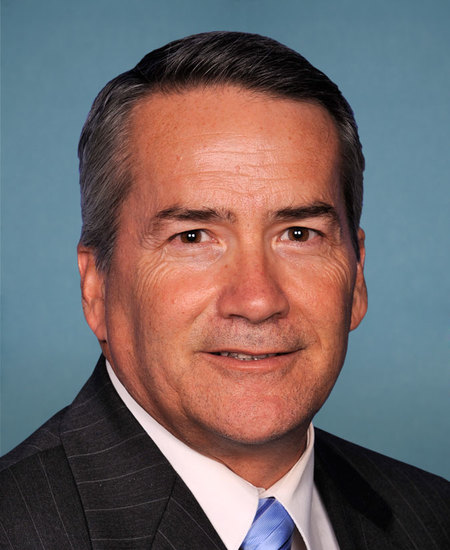
Rep. Jody B. Hice
Sponsored bills
IRS Customer Service Improvement Act This bill prohibits the use of official time for specified union activities by employees of the Internal Revenue Service during the period each year beginning on February 12 and ending on April 15.
This resolution expresses the sense of the House of Representatives that the Department of Homeland Security (DHS) provides essential protection for our country from foreign and domestic threats and that defunding DHS would be detrimental to our national security.
This resolution recognizes and expresses support for the efforts of democracy and human rights activists in Cuba.
Energy Poverty Prevention and Accountability Act This bill addresses energy poverty (i.e., insufficient access to affordable energy) in at-risk communities. An at-risk community is a community that is low-income, minority, rural, elderly, or Native American. The Department of the Interior must report on (1) barriers to the ability of at-risk communities that live on or near federal land or tribal land to access reliable and affordable energy, including how the presence of adequate energy transmission infrastructure affects such access; and (2) actions that it and the Forest Service may take to reduce such barriers. In addition, certain executive actions may not be carried out until Interior conducts energy poverty studies for such actions. The Congressional Budget Office must report on how a bill or resolution will affect the cost of energy for at-risk communities. The Government Accountability Office must (1) analyze federal energy and environmental laws and regulations, and state renewable portfolio standards, to determine how such laws, regulations, and standards affected electricity prices, home heating prices, gasoline prices, motor vehicle prices, natural gas prices, and household appliance prices in at-risk communities; and (2) develop criteria to determine whether an at-risk community is experiencing energy poverty. The Office of Management and Budget must review and publish each applicable energy regulation to determine if any regulation imposes, relative to the general population, disproportionate costs on at-risk communities.
Increasing Health Coverage through HRAs Act of 2021 This bill provides statutory authority for the Department of the Treasury, the Department of Labor, and the Department of Health and Human Services rule dated June 20, 2019, which provides for the integration of health reimbursement arrangements and other account-based health plans with individual health insurance coverage or Medicare.
Vaccine Passport Prevention Act of 2021 This bill generally prohibits governments from issuing vaccine passports (i.e., standard documentation other than health records to certify an individual's COVID-19 vaccination status to a third party) and discrimination based on an individual's COVID-19 vaccination status or post-transmission recovery. Specifically, the federal government may not issue any vaccine passport or discriminate based on an individual's COVID-19 vaccination or recovery status by requiring documentation of the status as a condition of receiving a benefit or service. In addition, the federal government (except for the Department of Defense) may not mandate COVID-19 vaccines as a condition of federal employment. Furthermore, the bill prohibits, as a condition of receiving certain COVID-19 relief funds, states, tribal nations, and localities from issuing vaccine passports or engaging in discrimination by requiring documentation of an individual's COVID-19 vaccination or recovery status. Additionally, the bill prohibits private entities that offer products or services affecting interstate commerce from requiring documentation of an individual's COVID-19 vaccination or recovery status in order to obtain a product or service. It also establishes a private right of action for individuals who experience such discrimination by private entities. The bill also provides an exception to allow kindergartens, elementary and secondary schools, and institutions of higher education to mandate COVID-19 vaccines as a condition of enrollment. However, the Department of Education may not award financial assistance to any school that requires COVID-19 vaccines without also providing for exemptions based on (1) religious or conscientious beliefs, (2) medical reasons, and (3) natural immunity from COVID-19.
Ending Platform Monopolies Act This bill prohibits large online platforms, as designated by the Department of Justice or Federal Trade Commission, from offering certain products or services from another line of business that is owned or controlled by the platform. Specifically, such platforms are prohibited from owning or controlling another line of business that (1) uses the platform to sell products or services, (2) offers a product or service that the platform requires a business user to purchase or use as a condition for access to the platform, or (3) gives rise to a conflict of interest. Under the bill, a conflict of interest occurs when a platform operator's ownership or control of another line of business creates an incentive and the ability for the platform to provide an advantage to the platform's own products or services over those of a competitor on the platform, or exclude or disadvantage the products or services of a competitor on the platform. For example, under the bill, Amazon.com, Inc. may be prohibited from offering for sale on Amazon.com privately labeled products or services (e.g., Amazon Essentials, AmazonBasics, etc.) if designated as a large online platform. Finally, the bill prohibits a director, officer, employee, or agent of a platform from simultaneously serving in the same or a similar role with a formerly affiliated entity.
Platform Competition and Opportunity Act of 2021 This bill generally prohibits operators of covered platforms from acquiring the stock or other share capital or the assets of another person engaged in commerce or in any activity affecting commerce. Covered platforms are online platforms that (1) have at least 50 million U.S.-based monthly active users or at least 100,000 U.S.-based monthly active business users, (2) are owned or controlled by a person with net annual sales or a market capitalization greater than $600 billion, and (3) are critical trading partners for the sale or provision of any product or service offered on or directly related to the platform. The Federal Trade Commission or the Department of Justice must designate whether an entity is a covered platform, and both must carry out enforcement activities. The bill provides for any person (other than a foreign state and any instrumentality thereof) who is injured by an activity forbidden under the bill to recover triple damages. (A foreign state may only recover actual damages.) Further, the bill specifies the U.S. Court of Appeals for the District of Columbia Circuit as the judicial venue for a covered platform's appeals related to (1) the designation as a covered platform, (2) other administrative and enforcement proceedings, or (3) a final order issued in any district court.
Augmenting Compatibility and Competition by Enabling Service Switching Act of 2021 or the ACCESS Act of 2021 This bill requires large online platforms (e.g., YouTube, Salesforce) to facilitate consumers and businesses switching from one platform to another. Specifically, the platforms must maintain interfaces that (1) securely transfer user data to other platforms (i.e., portability), and (2) allow other platforms to connect and communicate with their systems (i.e., interoperability). The bill provides the Federal Trade Commission (FTC) and the Department of Justice with the authority to designate specific platforms to which these requirements apply. After a platform is designated, the FTC must issue standards of interoperability specific to the platform. A platform may not change its interoperability interface without petitioning the FTC, and the platform must provide to competing businesses documentation for accessing the interface. Further, the FTC must establish a technical committee to assist with the implementation of these requirements. The bill provides the FTC with authority to enforce these requirements including through recovery of civil penalties and injunctive relief.