

Maddy summaryThis concurrent resolution (HCONRES 4) expresses congressional support for U.S. law enforcement agencies and condemns efforts to defund or dismantle them. It does not create new funding or policy changes but formally rejects "misguided and dangerous efforts to defund and dismantle" police departments, citing officer safety concerns and rising fatalities. The resolution specifically references the 2021 increase in law enforcement deaths (458 officers killed) and opposes rhetoric that "vilifies" officers, while emphasizing their role in community safety and crisis response. It is a symbolic statement with no binding legal or financial impact.
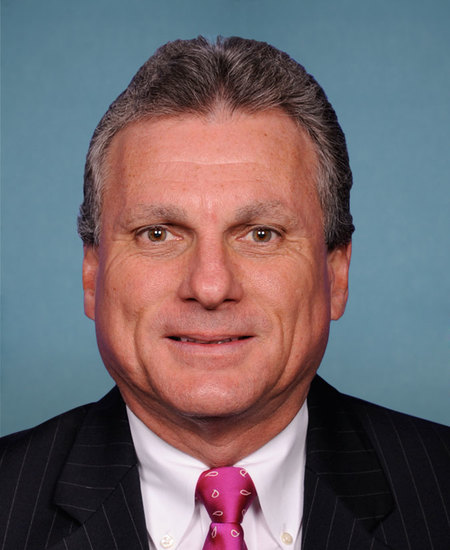
Rep. Earl L. "Buddy" Carter
Sponsored bills
Maddy summaryH.J. Res. 9 proposes a constitutional amendment requiring Congress to pass a law with a three-fourths majority in both the House and Senate to authorize any new federal debt, except for a specific purpose defined in that law. This would significantly raise the threshold for increasing the national debt, changing the current process that typically allows debt limits to be raised with a simple majority. The amendment would take effect ten years after ratification by three-fourths of state legislatures. It directly affects Congress, as it would require supermajority votes to approve new borrowing for any purpose.
Maddy summaryHJRES 8 proposes a constitutional amendment to permanently set the Supreme Court's size at nine justices. The bill would require any future changes to the Court's composition to follow this specific number, locking in the current structure. It does not alter the existing Court size (which has been nine since 1869) but aims to prevent future adjustments through legislative action. The amendment must be ratified by three-fourths of state legislatures within seven years to take effect. This is a procedural proposal focused on constitutional structure, not a direct policy affecting citizens or programs.
Maddy summaryThis resolution amends House Rules to require that all regular annual appropriation bills for the next fiscal year (starting October 1) be approved by July 31. If the House fails to pass these bills by that date, it cannot schedule a recess during August. The rule applies specifically to "regular appropriation bills" handled by single subcommittees of the Appropriations Committee. This procedural change aims to prevent the House from taking a summer break before finalizing the annual budget funding.
Maddy summaryHRES 8 is a formal resolution introduced by the U.S. House of Representatives in January 2023 to impeach Secretary of Homeland Security Alejandro Mayorkas. The resolution alleges three specific violations: (1) failing to maintain border security, citing record migrant encounters and fentanyl seizures under his leadership; (2) providing false testimony to Congress about border security; and (3) spreading false claims about Border Patrol agents whipping migrants during a 2021 incident. It claims these actions violated his constitutional duties and federal law. As an impeachment resolution, it does not enact policy but seeks to refer the case to the Senate for trial.
Maddy summaryHR 24, the Federal Reserve Transparency Act of 2023, requires a comprehensive audit of the Federal Reserve System's Board of Governors and Federal Reserve banks within 12 months of the bill's enactment. The Congressional auditor (Comptroller General) must then submit a detailed report to Congress within 90 days, including findings, conclusions, and recommendations for improving transparency. This bill directly affects the Federal Reserve System by mandating greater oversight of its operations and financial activities. The key provision repeals a prior limitation that prevented audits of certain Fed programs, aiming to clarify which activities are subject to audit under existing law.
FairTax Act of 2023 This bill imposes a national sales tax on the use or consumption in the United States of taxable property or services in lieu of the current income taxes, payroll taxes, and estate and gift taxes. The rate of the sales tax will be 23% in 2025, with adjustments to the rate in subsequent years. There are exemptions from the tax for used and intangible property; for property or services purchased for business, export, or investment purposes; and for state government functions. Under the bill, family members who are lawful U.S. residents receive a monthly sales tax rebate (Family Consumption Allowance) based upon criteria related to family size and poverty guidelines. The states have the responsibility for administering, collecting, and remitting the sales tax to the Treasury. Tax revenues are to be allocated among (1) the general revenue, (2) the old-age and survivors insurance trust fund, (3) the disability insurance trust fund, (4) the hospital insurance trust fund, and (5) the federal supplementary medical insurance trust fund. No funding is authorized for the operations of the Internal Revenue Service after FY2027. Finally, the bill terminates the national sales tax if the Sixteenth Amendment to the Constitution (authorizing an income tax) is not repealed within seven years after the enactment of this bill.
Maddy summaryThis bill establishes nationwide recognition for valid concealed carry permits. It allows permit holders from any state to carry concealed handguns in states that either issue such permits or don't ban concealed carry, provided they carry a photo ID and their valid permit. Key provisions include making presentation of a valid permit and ID prima facie evidence of compliance, shifting the burden of proof to prosecutors if challenged, and requiring courts to award attorney fees to successful defendants. It does not override state laws prohibiting concealed carry on private property or government lands, nor does it affect restrictions on federal lands like national parks.
Maddy summaryThis bill would block federal funding to any state or local government that permits non-citizens to vote in federal, state, or local elections. States and localities seeking federal funds must certify they do not allow non-citizen voting as a condition of receiving those funds. The rule applies only to new funding agreements entered into after the bill's enactment, not existing contracts. It directly affects state and local government budgets by tying federal financial assistance to compliance with citizenship requirements for voting.
Jurists United to Stop Trafficking Imitation Child Exploitation Act of 2023 or the JUSTICE Act of 2023 This bill broadens the federal criminal prohibition on importation or transportation of obscene materials. Specifically, the bill makes it a crime to import, or knowingly use a common carrier or interactive computer service to transport, a child sex doll.