

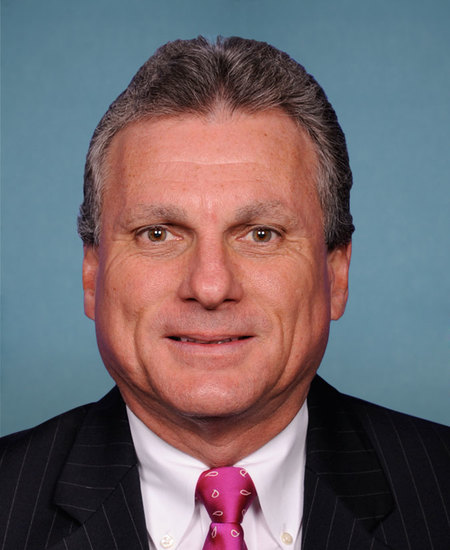
Photo of Earl L. "Buddy" Carter
R United States House · District 1 · Georgia

Rep. Earl L. "Buddy" Carter

Compare
Total votes
2,837
all sessions
Attendance
96%
104 missed
Lower than 83% of chamber peers
With party
96%
of cast votes
Higher than 92% of chamber peers
Bipartisan score
2%
crosses aisle rarely
Lower than 93% of chamber peers
Sponsored
1,351
bills & resolutions
Higher than 78% of chamber peers
Committees
5
assignments
1,351 bills and resolutions

Sponsored bills

Total
1,351
Primary
159
Co-sponsor
1,192
This page
1,351
matching current filters
Co-sponsor HR 889
In committee · United States House · Co-sponsor
Broadband Grant Tax Treatment Act

Maddy summaryHR 889, the Broadband Grant Tax Treatment Act, excludes certain federal broadband grants from recipients' taxable income. It specifically applies to grants received under programs like the Infrastructure Investment and Jobs Act's Broadband Equity, Access, and Deployment Program and state digital equity grants. The bill prevents double tax benefits by disallowing deductions or credits for expenses covered by these excluded grants and reduces the adjusted basis of related property. This policy change directly affects broadband providers, local governments, and tribal entities receiving qualifying grants from federal or state sources for broadband infrastructure deployment.

In committee Feb 9, 2023 1 co-sponsor
Co-sponsor HR 958
In committee · United States House · Co-sponsor
To require certain reports and briefings relating to North Korea.

This bill requires the President to provide periodic reports and briefings to Congress on matters related to certain U.S. laws concerning North Korea. Annually, the President must submit a report to Congress relating to (1) arms trafficking involving North Korea, (2) operators of foreign airports and sea ports that fail to inspect cargo to or from North Korea, and (3) cooperation between North Korea and Iran. Twice a year, the President must submit a report regarding persons responsible for activities undermining cybersecurity. The bill also requires the President to provide a briefing to Congress twice a year regarding measures to deny specialized financial messaging services to designated North Korean financial institutions.

In committee Feb 9, 2023 1 co-sponsor
Co-sponsor HR 914
In committee · United States House · Co-sponsor
Simplifying Grants Act of 2023

Maddy summaryHR 914, the Simplifying Grants Act of 2023, requires federal agencies to simplify grant application processes for small local governments (defined as those in areas with fewer than 50,000 people, per Census standards). Within 180 days of enactment, agencies must review and simplify complex grant requirements for existing programs and ensure new programs are designed with simplicity from the start. Agencies must also publish public checklists for each grant step and report annually to Congress on implementation progress, including how much technical assistance was provided and how many grants were awarded to small communities versus larger ones. This bill directly affects counties, towns, and other small local governments that receive federal grants but face bureaucratic hurdles.

In committee Feb 9, 2023 1 co-sponsor
Co-sponsor HR 336
In committee · United States House · Co-sponsor
Finish the Wall Act

Finish the Wall Act This bill requires the Department of Homeland Security (DHS) to resume activities related to the construction of a barrier system along the U.S.-Mexico border and addresses other border-related issues. DHS must resume all such construction activities that were planned or underway prior to January 20, 2021. DHS must also expend all funds appropriated or explicitly obligated since October 1, 2016, for construction of this barrier system. DHS may not cancel contracts for activities related to such construction entered into on or before January 20, 2021. Furthermore, within 14 days of this bill's enactment, DHS must certify to Congress that U.S. Customs and Border Protection facilities that process adults taken into custody at the border are fully compliant with certain laws related to the collection of DNA. (Among other things, these laws allow for the collection of DNA samples from non-U.S. persons detained under U.S. authority.)

In committee Feb 8, 2023 1 co-sponsor
Co-sponsor HR 29
In committee · United States House · Co-sponsor
Border Safety and Security Act of 2023

Maddy summaryHR 29, the Border Safety and Security Act of 2023, grants the Secretary of Homeland Security authority to restrict entry at U.S. land or maritime borders for certain immigrants deemed "covered aliens" (those inadmissible under immigration law due to lack of proper documentation). The bill requires the Secretary to suspend entry if they cannot detain or process these individuals as required by existing immigration law. It also allows state attorneys general to sue the Secretary in federal court if they believe border policies harm their state's residents. The law defines "operational control" using terms from the Secure Fence Act of 2006. This bill directly affects immigrants seeking entry who fall under the specified inadmissibility category.

In committee Feb 8, 2023 1 co-sponsor
Co-sponsor HRES 100
In committee · United States House · Co-sponsor
Expressing support for the Iranian people's desire for a democratic, secular, and nonnuclear Republic of Iran, and condemning violations of human rights and state-sponsored terrorism by the Iranian Government.

This resolution condemns Iranian state-sponsored terrorist attacks against U.S. citizens and officials and Iranian dissidents. The resolution also expresses support for the people of Iran who are legitimately defending their rights for freedom against repression and condemns the killing of Iranian protesters by the Iranian regime.

In committee Feb 7, 2023 1 co-sponsor
Primary HR 857
In committee · United States House · Lead sponsor
Presidential Budget Accountability Act

Maddy summaryHR 857, the Presidential Budget Accountability Act, requires the President to submit the annual budget to Congress by the first Monday in February. If the budget is late, federal funds cannot be used for the President's travel expenses starting the Tuesday after that date until the budget is submitted. The bill specifically restricts funds for the President's expense allowance, travel costs, entertainment, and subsistence during travel. This directly affects the President's travel budget and aims to incentivize timely budget submissions by the executive branch.

In committee Feb 7, 2023 0 co-sponsors
Primary HR 858
In committee · United States House · Lead sponsor
PAYSTUB Act

Maddy summaryThe PAYSTUB Act requires the President to submit the federal budget to Congress by the first Monday in February. If the President misses this deadline, the bill prohibits using federal funds for salaries and expenses of political appointees (including Executive Schedule positions, certain Senior Executive Service roles, and policy-determining Schedule C positions) from the Tuesday after the deadline until the budget is submitted. Affected employees must then be paid retroactively at their standard rate once the budget is filed. This creates a direct financial consequence for the executive branch if the President fails to meet the constitutional budget deadline.

In committee Feb 7, 2023 0 co-sponsors
Co-sponsor HCONRES 13
In committee · United States House · Co-sponsor
Supporting the Local Radio Freedom Act.

Maddy summaryHCONRES 13 is a concurrent resolution expressing Congress's support for maintaining the current policy that prohibits imposing new fees on local radio stations for playing music. It states that Congress should not impose any performance fee, tax, royalty, or charge on local radio stations for broadcasting sound recordings over the air, or on businesses like bars and restaurants that play music publicly. The resolution argues that such fees would harm local radio stations - critical sources for emergency information and community programming - and jeopardize the economic model that has supported both radio and the music industry for decades. This resolution does not create new law but formally opposes potential legislative changes to the existing fee structure.

In committee Feb 6, 2023 1 co-sponsor
Primary HR 456
In committee · United States House · Lead sponsor
Fairness in Orphan Drug Exclusivity Act

Fairness in Orphan Drug Exclusivity Act This bill limits which orphan drugs may be granted a market exclusivity period by the Food and Drug Administration (FDA). (Generally, an orphan drug is one that is not economically viable because of the rarity of the disease that it treats; the sponsor of an FDA-designated orphan drug may be granted various incentives, such as a seven-year period in which the FDA may not grant market approval to a different sponsor for the same drug to treat the same disease.) Under this bill, if a drug is designated as an orphan drug on the basis that there is no reasonable expectation that the sponsor will recover the costs of developing and distributing the drug from U.S. sales, the drug shall be granted the seven-year exclusivity period only if the sponsor demonstrates that there is no reasonable expectation that it will recover such costs within its first 12 years of U.S. sales of the drug. When deciding whether an orphan drug meets this requirement, the FDA shall consider the sales of all drugs from the sponsor that are covered by the same orphan drug designation.

In committee Feb 3, 2023 0 co-sponsors
Showing 871 to 880 of 1,351 bills
Previous 1 … 87 88 89 … 136 Next