

Maddy summaryH.J.Res. 65 designates November 9th each year as "Gold Star Father's Day" to honor fathers who have lost children serving in the U.S. Armed Forces. The resolution recognizes these fathers' sacrifice, aligns with existing recognition of Gold Star Mothers (since 1936), and supports efforts to honor military families. It does not create new benefits or legal requirements but formally designates a day for national recognition of fathers who lost children in military service. This symbolic resolution follows Georgia's 2017 designation of November 9 as "Georgia Gold Star Father's Day."
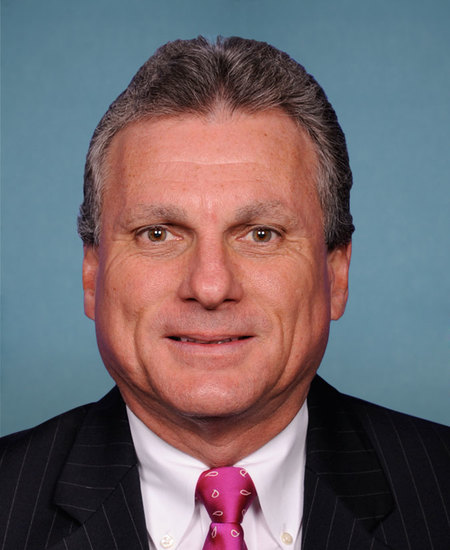
Rep. Earl L. "Buddy" Carter
Sponsored bills
Maddy summaryThis bill creates a new tax credit for expenses related to "qualified access technology for the blind" under the Internal Revenue Code. It allows taxpayers to claim a credit of up to $2,000 per year (adjusted for inflation) for costs paid for hardware, software, or IT that converts visual information into formats usable by blind individuals, covering the taxpayer, their spouse, or a dependent who is blind. The credit is limited to $2,000 over any three consecutive tax years per blind individual and expires after 2028. It directly affects blind individuals and their families who purchase qualifying assistive technology. The credit cannot be claimed for expenses already covered by other tax deductions or credits.
Stop Our Scourge Act of 2023 or the SOS Act of 2023 This bill directs the Department of Homeland Security to designate illicit fentanyl as a weapon of mass destruction and requires the Office of National Drug Control Policy to conduct an assessment regarding that substance. Specifically, the office must assess foreign manufacturing of illicit fentanyl, the tools and capabilities across federal agencies to address trafficking of that substance, the capabilities of the Mexican military to conduct counterdrug missions with respect to that substance, the capacities and willingness of China to take specified actions with respect to that substance, and illicit fentanyl being trafficked into the United States from Mexico.
Maddy summaryHR 3639, the After Hours Child Care Act, creates a new Child Care and Development Innovation Fund to improve access to child care for parents working nontraditional hours (such as evenings, nights, or weekends). The bill directly affects working parents with young children and eligible child care providers who serve these families. It authorizes competitive grants (ranging from $25,000 to $500,000) to providers or partnerships with businesses/community organizations to expand after-hours care programs, establish workplace child care, or improve existing facilities. Grantees must cover 25% of costs, and the Secretary of Health and Human Services must report biennially on program impact to Congress.
Maddy summaryHR 3612, the "No ESG at TSP Act," prohibits the Thrift Savings Plan (TSP) - the federal retirement plan for government employees - from offering investment funds that use environmental, social, or governance (ESG) criteria in their investment decisions. It specifically bans mutual funds, ETFs, or other vehicles marketed with ESG criteria (such as climate policies, diversity metrics, or gun industry focus) from the TSP's "mutual fund window." The bill requires the TSP Board to remove existing ESG-linked funds within 90 days, notify participants about switching to non-ESG options, and automatically move unselected funds to a government securities fund. This directly affects federal employees and retirees who use the TSP for retirement savings.
Maddy summaryThis bill requires that AM radio receivers be included as standard equipment in all new motor vehicles (such as cars and trucks) sold in the United States, with a rule to be issued by the Department of Transportation within one year. The rule must ensure AM radio is easily accessible on the dashboard and allows manufacturers to use digital AM radio technology instead of traditional AM. During the one-year period between the bill's enactment and the rule's effective date, manufacturers must clearly label vehicles without AM radio. The bill also directs a study to evaluate whether an alternative system could deliver emergency alerts as reliably as AM radio across the country, especially during crises.
Maddy summaryThe ADA Improvement Act of 2023 requires that before filing a lawsuit under the Americans with Disabilities Act (ADA), a plaintiff must first provide written notice of an alleged violation to the defendant via registered mail. This notice must specify the location, date, and nature of the violation, and the plaintiff must wait 30 days for the defendant to correct the issue before suing. The law applies to most ADA-related civil actions but excludes emergency cases seeking immediate court orders to stop ongoing violations. This change aims to give businesses a chance to address accessibility problems before legal action begins.
Maddy summaryThe Empowering Law Enforcement Act of 2023 would allow state and local law enforcement officers to enforce federal immigration laws by investigating, arresting, and detaining individuals who are in the United States without proper authorization. The bill requires the Department of Homeland Security to add certain immigration violators (including those with final removal orders or expired visas) to the National Crime Information Center database and establishes procedures for transferring aliens apprehended by state officers to federal custody within 48 hours. It extends detention periods for some individuals and provides legal immunity for state officers who enforce immigration laws within their official duties. The bill also mandates that DHS create training materials for state and local law enforcement on immigration enforcement procedures. These provisions would directly affect state and local law enforcement agencies, immigration detainees, and the federal government's immigration enforcement system.
Maddy summaryHR 3435, the Charitable Act, creates a temporary tax deduction for charitable contributions for individual taxpayers who do not itemize deductions. It allows these taxpayers to deduct up to one-third of their standard deduction amount for charitable gifts in 2023 and 2024. The bill directly affects millions of filers who typically take the standard deduction instead of itemizing, making charitable giving more tax-advantageous for them during these two years. The provision expires after 2024 and does not change the standard deduction amount itself.
Maddy summaryHR 3291, the Proportional Reviews for Broadband Deployment Act, exempts wireless infrastructure deployment (like cell towers) from certain federal environmental and historic preservation reviews. It removes the need for environmental assessments under the National Environmental Policy Act (NEPA) and historic site reviews under the National Historic Preservation Act (NHPA) for federal authorizations related to "eligible facilities requests." This primarily affects wireless providers seeking federal permits for broadband infrastructure, streamlining their approval process by eliminating these specific review steps. The bill changes existing law to accelerate deployment without altering broadband service requirements or eligibility criteria.