

Maddy summaryThe BITCOIN Act of 2025 directs the U.S. Treasury to establish a "Strategic Bitcoin Reserve" for securely storing government-held Bitcoin. It mandates purchasing 1,000,000 Bitcoins over five years (200,000 annually), requiring all acquired Bitcoin - including through federal agency transfers or forfeitures - to be held in this reserve for a minimum of 20 years without sale. The bill also requires the Treasury to manage digital assets from Bitcoin forks or airdrops for five years before potentially selling non-dominant assets, while implementing strict security protocols and quarterly public transparency reports. Funding for the purchase program will come from Federal Reserve remittances and gold certificate adjustments, with no impact on private citizens' Bitcoin ownership rights under Section 10.
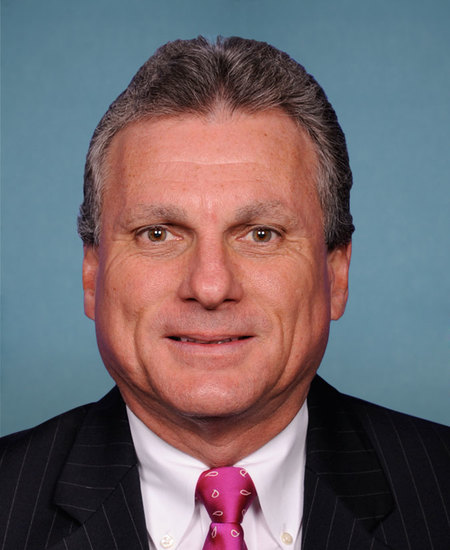
Rep. Earl L. "Buddy" Carter
Sponsored bills
Maddy summaryHR 2080, the "Crucial Communism Teaching Act," requires high schools to teach students about communism's historical and current impacts. The bill mandates that students learn communism caused over 100 million deaths globally, understand its dangers, and recognize that 1.5 billion people "still suffer under communism." It directs the Victims of Communism Memorial Foundation to develop a high school curriculum and oral history resources ("Portraits in Patriotism") featuring victim stories, with specific focus on modern examples like Xinjiang human rights abuses and China's actions in Hong Kong and Taiwan. The curriculum must be integrated into social studies, government, history, and economics classes, and updated to cover both historical and current communist regimes.
Maddy summaryThe FLASH Act authorizes construction of navigable roads along federal border lands to improve U.S. Customs and Border Protection access and operational control. It requires federal agencies to develop protocols for reducing trash accumulation and environmental degradation from unauthorized border crossings, while targeting illegal cannabis cultivation sites with environmental response initiatives. The bill prohibits using federal funds to provide housing for undocumented immigrants on federal lands and establishes criminal penalties for illegal pesticide use. The legislation affects how federal land management agencies (National Park Service, Bureau of Land Management, etc.) operate along the southern border, with specific reporting requirements for environmental impacts and trash collection.
Maddy summaryHR 1990, the American Innovation and R&D Competitiveness Act of 2025, amends tax rules for businesses to make research and development (R&D) costs more flexible. It allows companies to deduct R&D expenses immediately as business costs (instead of capitalizing them) or to spread these costs over a minimum 60-month period. The bill clarifies which R&D expenses qualify, excludes land improvements and mineral exploration costs, and ensures companies can claim R&D tax credits without conflict with expense treatment. This directly affects businesses that conduct R&D, changing how they account for these costs on tax returns starting for 2022 taxable years.
Maddy summaryThe State Strategic Stockpile Act of 2025 reauthorizes a federal program that provides funding to states for maintaining emergency medical supply stockpiles. It extends the funding period through fiscal year 2030 and adds requirements for states to coordinate with health officials and share best practices through state consortia. The bill mandates that states receiving funds must collaborate with healthcare and emergency management entities within their jurisdiction. This directly affects state health departments and emergency management agencies that administer medical stockpiles under the program.
Maddy summaryThis bill extends current Medicare payment rates for durable medical equipment (like wheelchairs and oxygen) in non-rural areas through December 2025. It delays implementing a new payment rule for all areas until January 2026. The law directly affects Medicare beneficiaries needing equipment and the suppliers who provide it by maintaining existing reimbursement rates for an additional year. This avoids immediate payment reductions for non-rural areas while postponing the full transition to new rates.
Maddy summaryHRES 189 is a procedural resolution censuring Representative Al Green (D-TX) for disrupting a joint session of Congress on March 4, 2025, when he interrupted the President's address. The resolution states his conduct breached proper decorum, leading to his removal by the Sergeant at Arms. It mandates Green to appear in the House chamber for the public pronouncement of censure, with the resolution to be read aloud by the Speaker. This is a formal disciplinary action by the House, not a policy change affecting constituents or legislation.
Maddy summaryHR 1940, the Tanning Tax Repeal Act of 2025, removes a federal excise tax on indoor tanning services. It directly affects tanning salons and businesses providing these services by eliminating the tax they previously paid. The bill repeals Chapter 49 of the Internal Revenue Code, which imposed the tax, and the change takes effect for services provided after the bill becomes law. This is a straightforward tax repeal with no new requirements or funding mechanisms.
Maddy summaryThis bill authorizes a posthumous Congressional Gold Medal for actor James Earl Jones to recognize his career achievements in theater and film. It directs the Treasury Secretary to strike a gold medal bearing his name, which will be presented to his son, Flynn Earl Jones, following Jones' passing. The bill also permits the sale of bronze duplicates to cover costs. As a ceremonial honor with no policy changes, it does not affect legislation or government operations.
Maddy summaryHR 1909 reauthorizes federal funding and updates programs to reduce maternal deaths. It requires maternal mortality review committees to include obstetricians/gynecologists and improves death certificate reporting by coordinating with death certifiers. The bill mandates the CDC to share annual best practices for preventing maternal mortality with hospitals, state health groups, and perinatal programs. It also increases annual funding from $58 million to $100 million for these initiatives, covering fiscal years 2025 through 2029. The law directly affects hospitals, state health agencies, and maternal health programs receiving these federal funds.