

Maddy summaryHR 3043 prohibits U.S. federal funding for biomedical research involving vertebrate animals conducted in or by entities located in China (including Hong Kong), Iran, North Korea, or Russia. It directly affects research institutions receiving grants or contracts from the Department of Health and Human Services (HHS) that would conduct such animal testing in those four countries. The bill bans HHS from directly conducting this research or funding it through grants, contracts, or other federal support. It also requires HHS to submit detailed reports to Congress within 60 days when adding new countries to the restricted list, as determined with input from State and Defense departments. This is a funding restriction, not a ban on all international research.
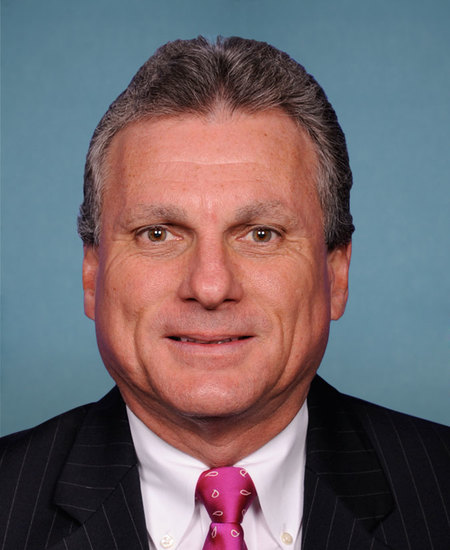
Rep. Earl L. "Buddy" Carter
Sponsored bills
Maddy summaryThe TAKE IT DOWN Act makes it a crime to intentionally share intimate images or digital forgeries of people without their consent, with penalties of up to 2 years in prison for adults and 3 years for minors. It requires major online platforms to establish a 48-hour process for victims to request removal of such content, with platforms protected from liability when acting in good faith. The bill defines "digital forgery" as AI-generated content that appears authentic and applies to websites and apps primarily hosting user-generated content, excluding email services and broadband providers. The Federal Trade Commission will enforce these notice and takedown requirements. This legislation directly affects victims of nonconsensual intimate content, the platforms hosting such material, and individuals who distribute it.
Maddy summaryHRES 337 is a symbolic House resolution honoring linemen for their critical role in maintaining power infrastructure and responding to emergencies. It recognizes them as first responders who work in dangerous conditions 24/7 to keep electricity flowing, supporting schools and businesses during storms. The resolution formally supports designating April 18, 2025, as "National Lineman Appreciation Day" to publicly acknowledge their contributions. As a non-binding resolution, it has no direct policy impact or effect on affected individuals.
Maddy summaryThe National Energy Dominance Council Act of 2025 establishes a new council within the Executive Office of the President, chaired by the Secretary of the Interior and including 20+ cabinet secretaries and White House officials. The council’s primary role is to advise the President on strategies to increase U.S. energy production, reduce unnecessary regulations, and streamline permitting for energy infrastructure. Key provisions require the council to develop a "National Energy Dominance Strategy" within 100 days, focusing on cutting bureaucratic delays, boosting private-sector investment, and fast-tracking projects like natural gas pipelines and Small Modular Nuclear Reactors. The council must also consult with state, local, tribal governments and private sector stakeholders to address energy affordability and reliability for homes, vehicles, and industries.
Maddy summaryThis bill, HR 2936 (the ABC-ED Act), aims to reduce emergency department crowding by requiring real-time tracking of hospital bed capacity and related metrics like patient wait times. It allows federal grants to modernize public health data systems that monitor emergency department boarding rates, bed availability, and ambulance offload times, with results displayed on a public dashboard (while protecting privacy). The bill also adds two new Medicare Innovation Center pilot programs: one focused on improving care for older adults (through staffing, infrastructure, and senior care coordination) and another for psychiatric crisis care (including dedicated units and faster facility transfers). Finally, it mandates a one-year study by the Government Accountability Office to evaluate best practices for these data systems and their impact on emergency department efficiency.
Maddy summaryThis bill requires the U.S. Postal Service to seek an advisory opinion from the Postal Regulatory Commission (PRC) at least 180 days before implementing any nationwide or significant district postal service change. It prohibits the Postal Service from spending funds or moving forward with such changes until the PRC issues its opinion. If the Postal Service skips this step, the PRC can suspend the change and require service levels to return to their pre-change state. The bill also gives Congress a 60-day window after the PRC’s opinion to disapprove the change via a joint resolution.
Maddy summaryThis bill amends the Wild Free-Roaming Horses and Burros Act to change how the Bureau of Land Management manages horse and burro populations. It requires using fertility control vaccines as the first priority method for population management, replacing previous steps. Crucially, it directs the Secretary to prioritize recruiting and training military veterans for these fertility control tasks, including through the PZP applicator certification program, with veterans receiving appropriate compensation. This directly affects wild horse and burro populations through new management methods and military veterans through new training and contracting opportunities under the program.
Maddy summaryThe Resilient Coasts and Estuaries Act of 2025 establishes a new Coastal and Estuarine Resilience and Restoration Program to protect and restore coastal areas with ecological, recreational, or community value. The program prioritizes lands threatened by development, that can be restored to enhance ecosystem function, or that benefit vulnerable communities facing coastal hazards like sea level rise. It requires the designation of at least five new National Estuarine Research Reserves within eight years and authorizes $47 million annually for 2025-2029 to support these efforts. The bill also creates new requirements for public access to protected lands and establishes a graduate research fellowship program focused on coastal management. This legislation directly affects coastal communities, conservation organizations, and federal agencies managing coastal zones under the Coastal Zone Management Act.
Maddy summaryThis resolution (HRES 307) is a formal House of Representatives expression of honor for baseball legend Hank Aaron. It recognizes his historic career, including breaking Babe Ruth's home run record, and his lifelong impact as a civil rights symbol who faced racism while achieving athletic excellence. The resolution specifically praises Aaron for embodying perseverance, dignity, and the spirit of equality during his career and beyond. It does not create new laws or affect any specific group, but formally commemorates his legacy as both a sports icon and a civil rights figure.
Maddy summaryThe Affordable Housing Credit Improvement Act of 2025 would reform the Low-Income Housing Credit program, which provides tax credits to developers of affordable housing. It would increase state allocations based on population with annual cost-of-living adjustments, modify tenant eligibility rules to allow higher income limits for some residents, and add protections for domestic violence victims in housing. The bill would simplify rules for rural and Native American housing projects, clarify credit eligibility requirements, and require greater transparency in program administration. These changes would directly affect developers, property owners, and low-income tenants in housing projects that receive LIHC tax credits.