

Essential Caregivers Act of 2025 This bill prohibits certain health care facilities from limiting the access of essential caregivers to residents of those facilities, including during designated emergency periods. Specifically, the bill generally prohibits Medicare skilled nursing facilities, Medicaid nursing facilities, Medicaid intermediate care facilities, and associated inpatient rehabilitation facilities from restricting the access of essential caregivers to residents of the facilities, including during emergency periods in which visitation rights are otherwise restricted. During emergency periods, facilities may restrict access for an initial period of up to seven days and for one additional maximum seven-day period (if the additional period is approved by the state health department). Facilities may restrict access for a total of 7 days (or 14 days with the approval of the state health department) during an emergency period. Essential caregivers must agree to comply with any safety protocols set by the facility, which may be no more stringent for caregivers compared to those for staff. Caregivers who fail to comply with these requirements may be denied access, subject to an appeals process.
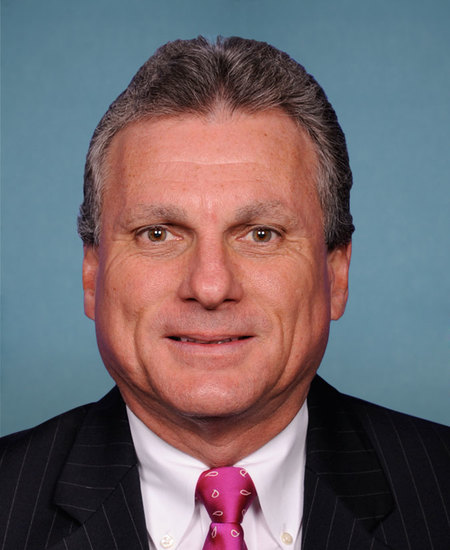
Rep. Earl L. "Buddy" Carter
Sponsored bills
Miracle on Ice Congressional Gold Medal Act This act provides for the award of Congressional Gold Medals to the members of the 1980 U.S. Olympic men's ice hockey team in recognition of the team's achievement at the 1980 Winter Olympic Games.
Maddy summaryThis bill establishes new requirements for pharmacy benefit managers (PBMs) working with Medicare Part D prescription drug plans and Medicaid programs. It mandates that PBMs pay pharmacies a specific reimbursement amount based on drug acquisition costs plus a fixed fee, pass through manufacturer rebates directly to beneficiaries at the point of sale, and prohibits steering practices that direct patients to specific pharmacies. The bill applies to Medicare Part D plans and Medicaid managed care organizations beginning January 1, 2027, affecting how PBMs interact with pharmacies and handle drug rebates. Violations could result in criminal penalties of up to $1 million or 10 years in prison for willful noncompliance. The bill aims to increase transparency and fairness in pharmacy drug pricing for Medicare and Medicaid beneficiaries.
Maddy summaryHR 6643, the American Border Story Memorial Act, authorizes a nonprofit organization ("The American Border Story") to establish a commemorative memorial on federal land in Washington, D.C., to honor U.S. citizens and legal residents who died due to crimes committed by individuals unlawfully present in the U.S. The bill prohibits the use of federal funds for the memorial's creation or maintenance, requiring all costs to be covered by private donations. Any remaining funds after project costs must be deposited into specific federal or National Park Foundation accounts, as outlined in the Commemorative Works Act. This is a procedural memorial bill with no direct policy or regulatory changes.
Maddy summarySammy's Law requires large social media platforms (those with over 100 million monthly users or $1 billion in annual revenue) to create real-time tools allowing parents or third-party safety software providers to help protect children under 17 from online harms. Platforms must provide secure access to children's account data for safety software providers that register with the Federal Trade Commission and meet strict security and privacy requirements. Third-party providers can only use the data to address specific risks like cyberbullying, trafficking, or abuse, and must delete data after 14 days unless needed for a safety concern. The law creates a federal standard that prevents states from making their own rules about this type of platform access.
Maddy summaryHR 6559, the Thiokol Memorial Gold Medal Act, authorizes the posthumous award of a Congressional Gold Medal to 30 workers who died in a 1971 industrial explosion at the Thiokol plant in Woodbine, Georgia. The bill specifically recognizes these employees - many African American women - who were manufacturing military supplies during the Vietnam War. The medal, designed by the Treasury Secretary, will be displayed at the Thiokol Memorial Museum, with bronze duplicates sold to offset costs. This is a commemorative measure, not a policy change, building on prior Georgia state honors for the workers' sacrifice.
Maddy summaryThis bill amends the Clean Air Act to clarify when certain plastic conversion facilities are excluded from the definition of "solid waste incineration units." It directly affects companies operating facilities that transform plastic or post-use polymers (via methods like pyrolysis) into usable materials, provided at least 50% of the output by mass is a "product" (e.g., usable substances for sale or manufacturing), not energy or ash. Key mechanisms include adding a specific exclusion for qualifying conversion units (Section 2(A)(iv)) and creating a 180-day petition process for other similar units to seek exclusion (Section 2(B)). The bill defines "product" to exclude electricity, heat, or ash but include materials with commercial applications.
Maddy summaryThis bill establishes the President’s Council on Sports, Fitness, and Nutrition to advise the President on reestablishing the Presidential Fitness Test as the primary assessment tool for a Presidential Fitness Award in U.S. schools. The Council, appointed by the President, would develop school-based fitness programs, promote physical activity through community partnerships, and address childhood obesity as a national security concern. It directs the Secretary of Health and Human Services to fund the Council and its initiatives, with the Council terminating two years after enactment unless extended. The bill specifically aims to impact K-12 schools by integrating the fitness test into physical education programs.
Maddy summaryThis resolution (HRES 937) condemns the Ethiopian government for actions that threaten regional stability, violate human rights, and harm U.S. interests in the Horn of Africa. It specifically cites ongoing conflicts in multiple regions, reports of war crimes and religious persecution (including against the Ethiopian Orthodox Church), and risks of terrorist exploitation. The resolution demands the U.S. administration take concrete steps, including imposing Global Magnitsky sanctions on implicated officials, suspending nonhumanitarian aid, and initiating a formal determination on potential genocide. It also urges diplomatic efforts to hold perpetrators accountable and support civil society in Ethiopia.
Maddy summaryThis bill directs the American Battle Monuments Commission to correct historical errors by identifying Jewish World War I and II veterans buried overseas under incorrect Christian markers (Latin crosses) and replacing them with appropriate markers. It establishes a 10-year program to contact families of affected veterans, with the Commission funding the effort at $500,000 annually through nonprofit contracts. The program specifically targets veterans buried in foreign U.S. military cemeteries with markers indicating non-Jewish faith, addressing a documented mistake affecting approximately 900 Jewish servicemembers. This directly affects Jewish veterans' families by honoring their heritage and correcting past burial inaccuracies.