

Senior Access to Vaccines Ensured Act of 2021 or the SAVE Act of 2021 This bill requires the Centers for Medicare & Medicaid Services (CMS) to establish a program that provides nonemergency medical transportation (NEMT) for Medicare beneficiaries to COVID-19 vaccination sites during the public health emergency. The CMS must contract with qualified transportation managers to implement the program, with preference given to those with prior experience under a state Medicaid NEMT program. The CMS must also establish criteria for beneficiary participation that is similar to the criteria used by states for Medicaid NEMT services.
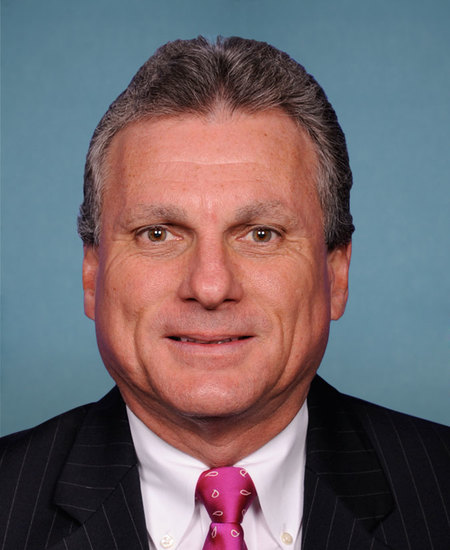
Rep. Earl L. "Buddy" Carter
Sponsored bills
Heartbeat Protection Act of 2021 This bill makes it a crime for a physician to knowingly perform an abortion (1) without determining whether the fetus has a detectable heartbeat, (2) without informing the mother of the results, or (3) after determining that a fetus has a detectable heartbeat. It provides an exception for an abortion that is necessary to save the life of a mother whose life is endangered by a physical (but not psychological or emotional) disorder, illness, or condition. A physician who performs a prohibited abortion is subject to criminal penalties—a fine, up to five years in prison, or both. A woman who undergoes a prohibited abortion may not be prosecuted for violating or conspiring to violate the provisions of this bill.
Just and Unifying Solutions To Invigorate Communities Everywhere Act of 2021 or the JUSTICE Act This bill addresses policies and issues regarding policing practices and law enforcement accountability. The bill funds state and local grants, incentivizes state and local reporting on the use of certain policing practices, creates new federal offenses for certain misconduct, and establishes best practices and training requirements. The bill funds state and local grants, including to support the use of body-worn cameras, to implement information sharing systems for disciplinary records of law enforcement officers, and to prohibit officers from engaging in sexual acts under color of the law. Further, it requires state and local governments that receive grants under the Edward Byrne Memorial Justice Assistance Grant program to report information related to use-of-force incidents and the use of no-knock warrants. At the federal level, the bill establishes new criminal offenses related to falsifying police reports and engaging in sexual acts under color of law. The bill directs the Department of Justice to develop training on de-escalation tactics, behavioral health crises, alternatives to the use of force, and the duty to intervene when another officer uses excessive force. Finally, the bill establishes and funds the National Criminal Justice Commission. Among other tasks, the commission must develop best practices for policing tactics and procedures.
Born-Alive Abortion Survivors Protection Act This bill establishes requirements for the degree of care a health care practitioner must provide in the case of a child born alive following an abortion or attempted abortion. Specifically, a health care practitioner who is present must (1) exercise the same degree of care as would reasonably be provided to any other child born alive at the same gestational age, and (2) ensure the child is immediately admitted to a hospital. Additionally, a health care practitioner or other employee who has knowledge of a failure to comply with the degree-of-care requirements must immediately report such failure to law enforcement. A health care practitioner who fails to provide the required degree of care, or a health care practitioner or other employee who fails to report such failure, is subject to criminal penalties—a fine, up to five years in prison, or both. An individual who intentionally kills or attempts to kill a child born alive is subject to prosecution for murder. The bill bars the criminal prosecution of a mother of a child born alive under this bill and allows her to bring a civil action against a health care practitioner or other employee for violations.
Restored, Equitable, Coronavirus Adjusted Lodging Act of 2021 or the RECAL Act This bill prohibits the General Services Administration (GSA), when determining the FY2022 and FY2023 per diem reimbursement rates for locations within the Continental United States (CONUS), from setting lodging allowances below the FY2020 levels. CONUS per diem reimbursement rates are the maximum allowances that federal employees are reimbursed for official travel expenses. The rates consist of lodging, meals, and incidental expense allowances; the GSA sets rates annually based on data from the prior 12-month period.
State Stockpile Readiness Act of 2021 This bill temporarily authorizes the Department of Health and Human Services to award matching grants to states for expanding or maintaining stockpiles of commercially available medical equipment and supplies for use during public health emergencies.
This resolution removes Representative Eric Swalwell from the House Permanent Select Committee on Intelligence.
Protect Seniors and Cut Waste Act This bill prohibits the budgetary effects of the American Rescue Plan Act of 2021 from being counted for the purposes of determining whether a specified sequester occurs under the Statutory Pay-As-You-Go Act of 2010. (The American Rescue Plan Act of 2021 provided funding to address the impact of COVID-19. Sequestration is a process of automatic, usually across-the-board spending reductions under which budgetary resources are permanently cancelled to enforce specific budget policy goals.) The bill also modifies several other provisions related to COVID-19 spending. Among other modifications, the bill provides supplemental appropriations for the Public Health and Social Services Emergency Fund to reimburse certain health care providers for health care related expenses or lost revenues that are attributable to the coronavirus; rescinds certain funds that were provided for payments to states, territories, and tribal governments to mitigate the fiscal effects stemming from the COVID-19 public health emergency; prohibits individuals who are incarcerated or unlawfully present in the United States from receiving 2021 recovery rebates; and rescinds funds that were provided by the American Rescue Plan Act of 2021 for the National Endowment for the Arts, the National Endowment for the Humanities, and the Emergency Federal Employee Leave Fund.
Working Families Flexibility Act of 2021 This bill revises requirements for the receipt of compensatory time off for private sector employees. Specifically, the bill authorizes private employers to provide compensatory time off to their employees at a rate of one and one-half hours for each hour of employment for which overtime compensation otherwise is required; employees may accrue a maximum of 160 hours of compensatory time. Employers are prohibited from interfering with an employee's right to or not request compensatory time off in lieu of payment of overtime compensation or from requiring an employee to use such compensatory time, and must give their employees 30-days notice before discontinuing a compensatory time policy. Employers are liable to employees for damages from violations of these requirements.
Medicare Multi-Cancer Early Detection Screening Coverage Act of 2021 This bill provides for Medicare coverage and payment for multi-cancer early detection screening tests that are approved by the Food and Drug Administration and that are used to screen for cancer across many cancer types.