Stop Child Abuse Act This bill nullifies the executive order titled Advancing Equality for Lesbian, Gay, Bisexual, Transgender, Queer, and Intersex Individuals , which was issued on June 15, 2022. The order directed several executive agencies to establish initiatives that support lesbian, gay, bisexual, transgender, queer, and intersex individuals in a variety of settings, including health care, education, housing, and social services.
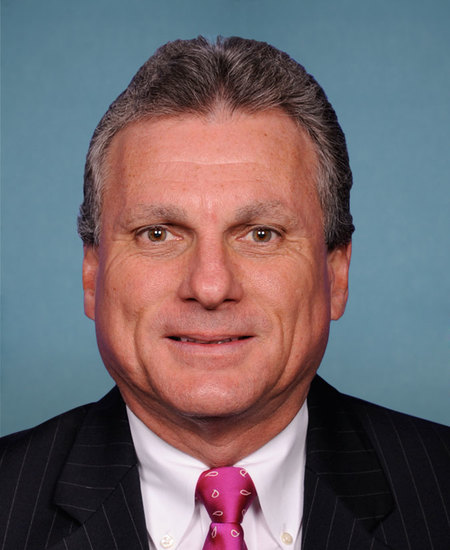
Rep. Earl L. "Buddy" Carter
Sponsored bills
Saving Access to Laboratory Services Act This bill modifies provisions relating to Medicare payment rates for clinical diagnostic laboratory services, including by requiring payment rates for certain widely available clinical diagnostic laboratory tests to be based on a statistical sampling of private sector rates.
This bill reauthorizes through FY2026 and revises the Coastal and Estuarine Land Conservation Program. For example, the bill modifies the name of the program to the Coastal Estuarine Resilience and Restoration Program. It also revises goals of the program to include (1) climate change mitigation; and (2) restoring developed property in vulnerable coastal and estuarine areas to a natural state to restore ecological function, allow for shoreline migration, and protect coastal communities. Additionally, the bill requires the National Oceanic and Atmospheric Administration to designate at least five new national estuarine reserves.
Recovering America’s Wildlife Act of 2022 This bill provides funding for the conservation or restoration of wildlife and plant species of greatest conservation need, including endangered or threatened species, and establishes related requirements. TITLE I--WILDLIFE CONSERVATION AND RESTORATION (Sec. 101) This title establishes and funds a subaccount of the Wildlife Conservation and Restoration Account, which was established under the Pittman-Robertson Wildlife Restoration Act. The subaccount must be used to support efforts of states, territories, or the District of Columbia to recover and manage wildlife and plant species of greatest conservation need. The Department of the Interior must use a portion of the funding from the subaccount for grants to state fish and wildlife departments, the District of Columbia fish and wildlife department, fish and wildlife departments of territories, nonprofit organizations, or regional associations of fish and wildlife departments. The grants must be used for innovative recovery efforts for species of greatest conservation need, species listed as endangered or threatened species, or the habitats of such species. Funding for the subaccount must supplement existing funds available to the states from funds distributed under the Dingell-Johnson Sport Fish Restoration Act and the Wildlife Conservation and Restoration Account. Recipients of the funding from the subaccount must match federal funds as specified by the title. The Government Accountability Office must study and report on the progress of states, territories, the District of Columbia, and Indian tribes in protecting species of greatest conservation need, endangered species, and threatened species. TITLE II--TRIBAL WILDLIFE CONSERVATION AND RESTORATION (Sec. 201) This title establishes and funds a Tribal Wildlife Conservation and Restoration Account to support Indian tribes' efforts to recover and manage wildlife and plant species of greatest conservation need. Indian tribes are not required to provide matching funds. TITLE III--ENDANGERED SPECIES RECOVERY AND HABITAT CONSERVATION LEGACY FUND (Sec. 301) This title establishes and funds through FY2026 the Endangered Species Recovery and Habitat Conservation Legacy Fund. The U.S. Fish and Wildlife Service must use the fund to (1) implement an Endangered Species Recovery Grant Program; (2) address its interagency consultation responsibilities under the Endangered Species Act of 1973; (3) work with nonfederal entities to conserve wildlife habitat and at-risk species, threatened or endangered species, or species proposed to be listed as threatened or endangered species; or (4) address the development and permitting of voluntary conservation agreements under such act. Amounts made available under the fund must supplement other federal amounts made available to carry out such activities. The President must annually submit to Congress, together with the annual budget of the United States, a list of threatened species and endangered species for which recovery plans will be developed or implemented with amounts from the Endangered Species Recovery and Habitat Conservation Legacy Fund. TITLE IV--REPORT (Sec. 401) Interior must also report on information concerning the amount of grants and contracts that were awarded or are allocated under this bill to Historically Black Colleges and Universities, Hispanic-serving educational institutions, tribally controlled colleges and universities, minority-serving educational institutions, minority-owned business enterprises, women-owned business enterprises, and community-based organizations that are principally administered by, operated by, or serving minority communities.

Global Nuclear Energy Assessment and Cooperation Act This bill establishes requirements concerning international nuclear energy cooperation and safety. Specifically, the Department of Energy (DOE) must develop and carry out a program to train foreign nuclear energy experts and standardize safety practices. DOE must also study the global status of the civilian nuclear energy industry and its supply chain. In addition, the bill prohibits any person from possessing or owning enriched uranium from Russian or China unless specifically authorized by the Nuclear Regulatory Commission (NRC). NRC may not issue a license to possess or own such fuel if DOE and the Department of State determine that the possession or ownership would pose a threat to national security. NRC must establish an International Nuclear Reactor Export and Innovation Branch within its Office of International Programs to carry out and coordinate certain nuclear reactor export and innovation activities. NRC must also identify in its annual budget justification such activities.
Fallen Heroes Flag Reauthorization Act of 2022 This bill reauthorizes through FY2027 a program through which a Member of Congress may provide, at no cost, a Capitol-flown flag to commemorate a firefighter, law enforcement officer, or other public safety officer who died in the line of duty if an immediate family member of the deceased requests such a flag.
More Options for Infants and Parents Act of 2022 This bill requires the Food and Drug Administration (FDA) to (1) act upon any pending applications from domestic manufacturers for new infant formula within 14 days of the bill's enactment, and (2) maintain a list on its website of infant formula products that may be substituted for certain specialized infant formula products that are in shortage. It also authorizes the FDA to waive certain labeling and nutritional requirements in furtherance of other necessary infant formula product substitutions.
Health Care Provider Shortage Minimization Act of 2022 This bill generally exempts qualified locum tenens physicians and advanced care practitioners from employment taxes. The bill defines qualified locum tenens physicians and advanced care practitioners as individuals who provide temporary physician or advanced care practitioner services for not more than one continuous year at a site of service. Such individuals include doctors of medicine, dentistry, podiatry, and other specified health care providers.
No ESG at TSP Act This bill prohibits investments under the Thrift Savings Plan in mutual funds that are based on environmental criteria (e.g., emissions standards), social criteria (e.g., company diversity), political criteria (e.g., political affiliations), or corporate governance criteria that differ from the standards that currently apply under law.
Maddy summaryHR 7815 requires the President to submit a report within 30 days of the bill's enactment detailing actions taken by federal agencies to address the U.S. infant formula shortage. The report must be submitted to specific congressional committees, including the Senate Finance and Agriculture Committees and the House Ways and Means and Agriculture Committees. This bill does not create new policies or funding but mandates transparency about ongoing executive branch efforts to resolve the shortage. It directly affects the White House and federal agencies responsible for food safety and supply chain management. The focus is solely on requiring a status update, not on prescribing solutions or outcomes.