

Maddy summaryThe Healthcare Workforce Resilience Act (HR 6205) reallocates unused employment-based immigrant visas from fiscal years 1992-2021 to directly support foreign nurses and physicians seeking permanent residency in the U.S. It creates 40,000 new visas - 25,000 for nurses and 15,000 for physicians - available only to those with petitions filed within three years of the bill’s enactment. The bill includes expedited processing without fees, exempts these visas from country limits, and requires employers to attest that hiring foreign workers won’t displace U.S. workers. This policy change specifically targets healthcare staffing shortages by streamlining pathways for qualified foreign healthcare professionals.
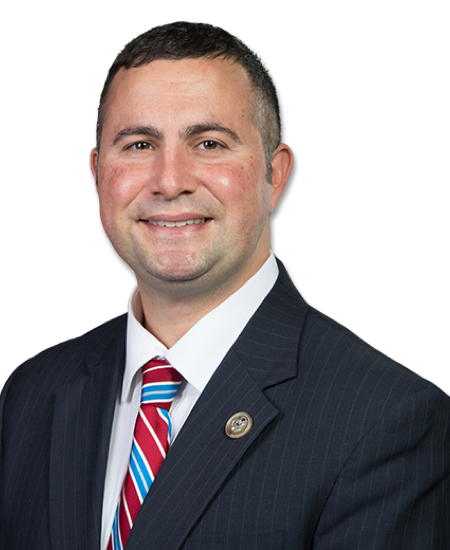
Rep. Darren Soto
Sponsored bills
Maddy summaryHR 3266, the Peace and Tolerance in Palestinian Education Act, requires the U.S. Secretary of State to report annually on curriculum content in Palestinian Authority (PA) schools and UNRWA schools in the West Bank and Gaza. The bill mandates reports assessing whether textbooks contain content encouraging violence or intolerance toward other nations or ethnic groups, steps the PA is taking to align with UN tolerance standards, and how U.S. aid funds are used to address such content. It specifically directs the State Department to review materials like textbooks, maps, and math problems referencing conflicts, as documented in a 2018 GAO report. The reports must be submitted publicly and include details on U.S. diplomatic efforts to promote peace in Palestinian education. This is a procedural bill focused on monitoring curriculum content, not altering education policy directly.
Maddy summaryHRES 832 is a symbolic resolution recognizing Día de los Muertos (Day of the Dead) as an annual cultural observance in the U.S. and globally. It acknowledges the holiday's origins in Mesoamerican traditions, its significance in honoring deceased loved ones through altars (*ofrendas*), and its role in celebrating Latino cultural heritage. The resolution specifically highlights the contributions of Mexican and Mexican American communities to U.S. society and culture, without creating new laws or obligations. It is a ceremonial gesture by Congress, not a policy with concrete effects on individuals or communities.
Maddy summaryHRES 831 is a symbolic congressional resolution supporting October as "National Domestic Violence Awareness Month." It does not create new laws or allocate funding, but formally expresses the House of Representatives' support for the goals of raising awareness about domestic violence. The resolution urges Congress to continue highlighting domestic violence's impact and backing programs that prevent and address it. It directly affects public awareness efforts and serves as a non-binding statement of congressional support for victims and advocacy organizations.
Maddy summaryHRES 599 is a non-binding resolution urging the European Union to fully designate Hizballah (Hezbollah) as a terrorist organization, rather than just its military wing as the EU did in 2013. It recommends the EU implement sanctions, freeze assets, issue arrest warrants, and prohibit fundraising for Hizballah, aligning with actions taken by the U.S. and other nations. The resolution cites Hizballah’s history of attacks, its criminal activities in Europe (including drug trafficking and money laundering), and its ties to Iran as justification. It directly addresses EU decision-makers, calling for coordinated action to disrupt Hizballah’s operations across the continent. The resolution follows prior House efforts, including H.Res. 359 (2017) and H.Res. 558 (2022), which made similar requests.
Maddy summaryThis bill amends the tax code to allow taxpayers to deduct over-the-counter naloxone purchases as medical expenses, similar to insulin. It directly affects individuals who buy naloxone without a prescription for personal or family use. The key provision adds "naloxone" to the list of deductible medical items under Section 213(b) of the Internal Revenue Code. The change applies to taxable years beginning after the bill's enactment date.
Maddy summaryHR 662, the Block Grant Assistance Act of 2023, amends the Disaster Relief Supplemental Appropriations Act of 2023 to allow the Secretary of Agriculture to provide disaster loss assistance to eligible states and territories through block grants. This change permits states and territories to use the funds more flexibly for disaster recovery under the existing disaster relief framework, rather than requiring direct federal disbursement for specific losses. The bill directly affects states and territories experiencing disasters covered by the Disaster Relief Act. It modifies the current process by adding a specific provision enabling block grants as an option for distributing relief funds.
Maddy summaryThis bill establishes a program to address critical legacy computer languages used by the federal government but rarely taught in colleges. It requires the Comptroller General to identify at least three such languages (beyond COBOL, Assembly, and PL/I) necessary for government operations and national security. The Grace Hopper Sustainment and Modernization Grant Program then funds up to five institutions of higher education annually (including at least two 2-year colleges) to develop courses teaching maintenance and modernization of these systems. Grants prioritize projects recruiting underrepresented groups, engaging K-12 students, offering student support, incorporating social science perspectives, and securing paid internships with government or private sector partners for students.
Maddy summaryHCONRES 72 is a non-binding concurrent resolution recognizing the wage gap between Latina women and White, non-Hispanic men, where Latina women earn 57 cents for every dollar earned by White, non-Hispanic men working full-time. It highlights that this disparity results in Latina women losing over $1.2 million in potential earnings over a 40-year career and places them at risk of poverty. The resolution reaffirms congressional support for equal pay but does not create new laws or policy changes. It serves as a symbolic statement to raise awareness about systemic inequities affecting Latina women workers.
Maddy summaryHRES 785 is a non-binding resolution introduced by the U.S. House of Representatives that formally recognizes the contributions of Hispanic lawyers and judges while highlighting their underrepresentation in the legal profession and judiciary. It cites specific statistics, noting Hispanic lawyers make up 5.8% of U.S. lawyers and Hispanic judges represent just 7% of federal judicial appointments. The resolution expresses support for increasing Hispanic representation in the legal field to better reflect the Hispanic population, which comprises 18.7% of the U.S. population. As a symbolic measure, it does not enact new laws or policies but serves as a statement of the House's acknowledgment of diversity efforts in the legal sector.