

Maddy summaryHCONRES 101 is a symbolic resolution introduced in the U.S. House of Representatives on March 22, 2024, by multiple cosponsors. It recognizes that people with disabilities face daily barriers accessing federally funded facilities and reaffirms support for the existing Americans with Disabilities Act (ADA) and Architectural Barriers Act of 1968. The resolution pledges to prioritize "universal and inclusive design" in future federal infrastructure projects but does not create new legal requirements or alter current accessibility standards. As a concurrent resolution, it has no binding effect and serves only to express congressional support for accessibility goals.
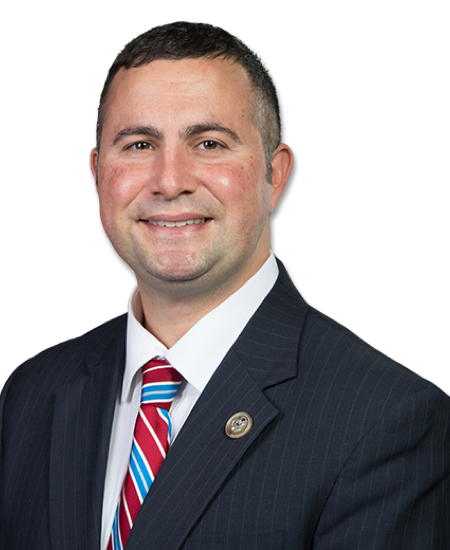
Rep. Darren Soto
Sponsored bills
Maddy summaryHRES 1110 is a symbolic resolution passed by the U.S. House of Representatives in March 2024 to commemorate March 2024 as National Women’s History Month. It formally supports the month’s goals, recognizes women and organizations advancing women’s history education, and highlights the intersectional contributions of Black, Hispanic, Asian, Native American, Pacific Islander, LGBTQ+, and disabled women throughout U.S. history. The resolution has no legal effect or policy changes - it serves solely as a ceremonial acknowledgment of historical milestones and ongoing advocacy for gender equality. It directly affects all Americans by affirming the significance of women’s historical contributions through official congressional recognition.
Maddy summaryHR 7814, the Dental Loan Repayment Assistance Act of 2024, changes tax rules to exclude certain loan repayments from taxable income for dental school faculty. It directly affects dental faculty members at schools participating in the federal Dental Faculty Development and Loan Repayment Program (under Section 748(a)(2) of the Public Health Service Act). The key provision amends tax law so that repayments received through this specific program are not counted as taxable income. The bill also requires a GAO report to assess how many dental faculty remain teaching in clinics at participating schools after receiving the funding.
Maddy summaryHR 7808, the EARLY Minds Act, amends the Public Health Service Act to require states receiving federal mental health funds to include evidence-based prevention and early intervention strategies for children and adolescents in their state plans. It allows states to use up to 5% of their annual mental health allotment to support these programs, which aim to prevent, delay, or reduce the severity of mental health issues before they become serious. States must report biennially to Congress by 2025 on the programs they implement, including demographics served, outcomes like reduced care access delays, and how programs lessen the onset of serious mental illness. The bill directly affects states administering federal mental health funds and targets youth populations aged 0-18.
Maddy summaryHRES 1109 is a symbolic resolution commemorating the 1913 Woman Suffrage Procession in Washington, DC, where suffragists led by Alice Paul and Inez Milholland marched to demand voting rights for women. It honors the participants' courage during a protest that drew 500,000 spectators despite violent opposition, highlighting how this event advanced the national push for the 19th Amendment. The resolution does not create new laws but reaffirms support for voting rights equality, connecting the 1913 march to ongoing efforts to protect democratic access. It specifically acknowledges the intersectional struggles of women of color in the suffrage movement. As a commemorative resolution, it has no binding policy effect.
Maddy summaryThis bill is a procedural naming resolution that designates a specific U.S. Postal Service facility in Key West, Florida (at 400 Whitehead Street) as the "Jimmy Buffett Post Office Building." It directly affects the postal facility and all official references to it in government documents. The key provision requires all federal laws, maps, regulations, and records to update their references to this location to the new name. This is a symbolic honorific designation with no policy or funding changes.
Maddy summaryHR 7795, the ProTECT Act of 2024, bans trophy hunting and importing trophies of threatened wildlife species in the U.S. and prohibits issuing permits for such activities. It amends the Endangered Species Act to extend existing protections - previously only covering endangered species - to threatened species, making it unlawful to take or import trophies (including parts or derivatives) of these species. The bill defines "trophy" broadly to cover whole animals, parts, or processed items obtained under hunting authorization, aiming to prevent legal trade from masking illegal wildlife trafficking.
Maddy summaryThe Firefighter PFAS Injury Compensation Act of 2024 establishes a federal program to provide compensation to firefighters who develop health conditions linked to exposure to PFAS (per- and polyfluoroalkyl substances) chemicals. Eligible claimants can receive $250,000 for cancer-related conditions or $50,000 for non-cancer conditions, with additional payments based on years of service (up to 4x the base amount). The program is funded through a new PFAS Trust Fund, which receives money from a 10% tax on PFAS products sold by manufacturers and a 10% tax on PFAS-related litigation settlements. Claims must be submitted within two years of regulations being finalized or two years after the firefighter's death, with a streamlined review process that presumes PFAS exposure caused the health condition. The program includes an appeals process to the Court of Federal Claims for those dissatisfied with initial determinations.
Maddy summaryThe AADAPT Act reauthorizes and expands the Project ECHO grant program to specifically address Alzheimer's disease and dementia care. It provides $1 million annually (2026-2031) for grants to eligible health care entities - such as rural clinics, tribal organizations, or community health centers - to develop online training programs for primary care providers working in underserved areas (including rural, frontier, or medically underserved communities). These programs aim to improve provider retention, increase early diagnosis of dementia, and enhance quality care. The bill requires grantees to report on outcomes and ensures funding supplements, rather than replaces, existing resources.
Maddy summaryHR 7790, the Women and Underrepresented Minorities in STEM Booster Act of 2024, authorizes $15 million annually (2024-2028) through the National Science Foundation to fund grants for programs increasing participation of women, underrepresented racial/ethnic groups (including Black, Hispanic, Native American, and specific Asian subgroups), LGBTQ+ individuals, and people with disabilities in STEM fields. The grants support concrete activities like mentoring programs, STEM internships, K-12 outreach, and faculty recruitment initiatives designed to address documented disparities in STEM degree completion and career retention. The bill directly affects eligible institutions (e.g., universities, nonprofits) that apply for competitive funding to implement these targeted programs. It focuses on measurable policy changes through federal funding for evidence-based retention strategies, not on outcome predictions.