

Maddy summaryHR 6063, the Empowering Striking Workers Act of 2023, modifies unemployment insurance rules to provide benefits for workers unable to work due to strikes or lockouts. It directs that unemployment compensation begins 14 days after a strike starts, or earlier if permanent replacements are hired, a lockout begins, or the dispute ends. The bill directly affects workers participating in labor disputes by making them eligible for benefits under these specific conditions, rather than requiring them to meet standard job search requirements. This change is implemented through amendments to the Internal Revenue Code and Social Security Act.
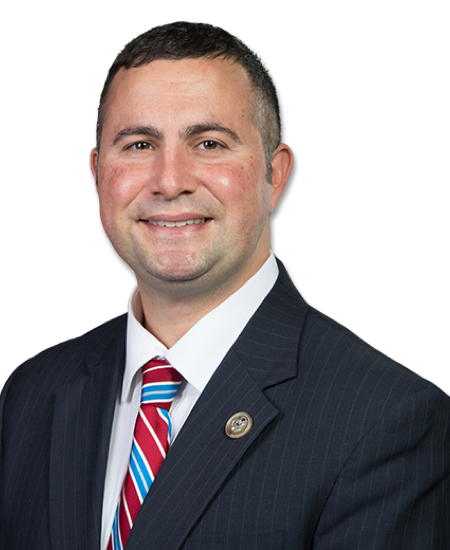
Rep. Darren Soto
Sponsored bills
Maddy summaryThis bill creates a Medicare buy-in option for retired or disabled first responders aged 50-64 who have lost employer health coverage. It allows them to enroll in Medicare Part A, B, and D (including prescription drug coverage) before age 65, with premiums calculated based on Medicare's average per-person costs. The coverage counts as "minimum essential coverage" under the Affordable Care Act, qualifying individuals for ACA premium tax credits and cost-sharing subsidies. It also establishes an oversight board and outreach grants to assist enrollment, while ensuring the program doesn't reduce benefits for existing Medicare beneficiaries or harm Medicare trust funds.
Maddy summaryThe Disaster Relief Medicaid Act creates a new Medicaid program for survivors of major disasters, providing continuous health coverage for up to two years after a disaster is declared. It establishes simplified eligibility requirements with no documentation needed, allowing individuals with income up to 133% of the poverty level (or their home state's standard) to qualify, including those who received FEMA assistance or lost employment due to the disaster. The law requires states to provide medical assistance equivalent to what would be provided in the survivor's home state, with 100% federal funding for all costs during the relief period. It also includes special provisions for pregnant individuals, children born during the relief period, and expanded mental health services.
Maddy summaryThe End Diaper Need Act of 2023 creates a federal program that will provide free diapers and incontinence supplies to low-income families with infants, toddlers, medically complex children (3+ years old with chronic health conditions), and low-income adults with disabilities. It allocates $200 million annually from 2024-2027 to fund this assistance through states and community organizations, making medically necessary diapers eligible for reimbursement through health savings accounts and other health benefit programs. The legislation requires integration with existing services like Medicaid, WIC, and TANF, and includes annual reporting requirements and an evaluation of the program's effectiveness within two years.
Maddy summaryHR 5663, the ALS Better Care Act, creates a new Medicare payment system to improve reimbursement for specialized care services provided to ALS patients. It establishes a $800 per visit payment rate starting in 2025 for qualified ALS care facilities, with annual increases based on market basket adjustments. The bill requires the Comptroller General to report on appropriate payment amounts and ensures this new payment is in addition to, not replacing, existing Medicare payments for ALS-related services. This aims to reduce wait times, support facilities in rural areas through telehealth access, and address funding challenges for ALS clinical trials.
Maddy summaryThis bill clarifies that Medicare must cover external infusion pumps and associated non-self-administrable drugs as durable medical equipment (DME) when specific criteria are met. It directly affects Medicare beneficiaries requiring home infusion therapy for drugs that must be prepared just before use, administered by a healthcare professional, or labeled for external pump use at least monthly. Key provisions require the drug's FDA labeling to specify external pump administration, safe home delivery by qualified suppliers, and preparation/administration requirements. The bill mandates Medicare coverage under existing rules (LCD L33794) for qualifying treatments, effective upon enactment or FDA approval, whichever is later.
Maddy summaryThis bill simplifies participation in Medicare's Accountable Care Organization (ACO) program by removing distinctions between small and large ACOs and eliminating the requirement for new ACOs to assume financial risk for three years before joining shared savings models. It creates a new "100% shared savings" option where ACOs keep all savings from cost reductions but bear full financial responsibility for losses. The bill also mandates clearer, transparent benchmark calculations for ACO performance, establishes appeal processes for disputed benchmarks, and requires technical assistance for rural and underserved providers. These changes directly affect Medicare ACOs, particularly smaller or newer organizations in rural or safety-net settings, aiming to make value-based care participation more accessible.
Maddy summaryHR 5008, the HEAL for Immigrant Families Act of 2023, would remove immigration status as a barrier to health insurance coverage for immigrants in the United States. The bill would make all lawfully present immigrants, including those with Deferred Action for Childhood Arrivals (DACA) status, eligible for Medicaid, CHIP, and Affordable Care Act health insurance subsidies. It would eliminate state-level restrictions on Medicaid eligibility for immigrants and allow individuals with federally authorized presence to access premium tax credits and cost-sharing reductions. This legislation aims to address health coverage disparities that disproportionately affect immigrant communities, particularly Black, Indigenous, Latinx, and other communities of color.
Maddy summaryThe 9-8-8 Implementation Act of 2023 establishes a national mental health crisis response system centered around the 9-8-8 suicide prevention hotline. It provides $441 million for call center technology, staffing, and operations, and requires Medicare, Medicaid, and private health plans to cover crisis response services including mobile crisis teams and crisis stabilization facilities. The bill also mandates a national suicide prevention media campaign and creates protocols for 9-1-1 dispatchers to better respond to mental health crises. These provisions aim to improve access to mental health crisis care across the United States.
Maddy summaryThe Social Security 2100 Act would significantly enhance Social Security benefits for millions of Americans by increasing monthly payments for retirees, disabled workers, widows/widowers, and children. Key provisions include raising the minimum benefit for long-term low earners, improving cost-of-living adjustments using a more accurate index, eliminating the 5-month waiting period for disability benefits, and extending child benefits to age 26. The bill also changes how Social Security taxes are calculated by applying them to income above $400,000 and establishes a unified Social Security Trust Fund to manage program finances. Most provisions would apply to benefits payable from 2025 through 2034, affecting all current and future Social Security beneficiaries.