

Maddy summaryThis bill (HR 2199) prevents private health insurance plans from discriminating against patients with end-stage kidney disease (ESRD) who require dialysis. It amends the Social Security Act to prohibit plans from treating dialysis coverage differently than other medical services or applying network restrictions that disproportionately harm ESRD patients. The law clarifies that plans cannot deny or limit benefits for dialysis based on a patient’s diagnosis, while preserving a plan’s right to choose which dialysis providers are in their network. It directly affects ESRD patients and their private health insurance coverage, ensuring dialysis is treated equally with other covered medical services. The bill does not require plans to include specific dialysis providers but stops them from unfairly restricting access to necessary care.
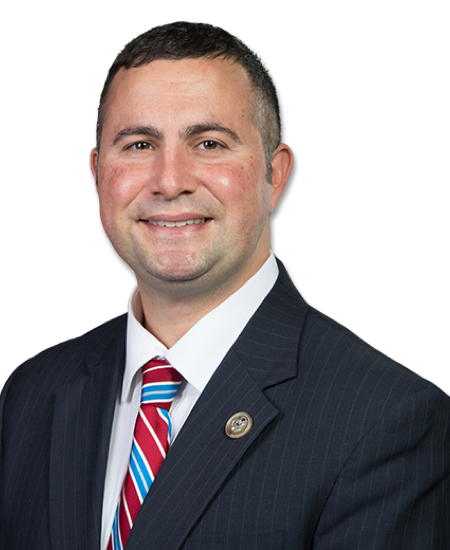
Rep. Darren Soto
Sponsored bills
Maddy summaryThe Air America Act of 2025 authorizes one-time payments of $40,000 to individuals who worked for Air America or its affiliated companies for at least five years during 1950-1976, or to their surviving spouses, children, or dependents. Additional payments of $8,000 per full year beyond five years are allowed. The program is capped at $60 million total funding, with claims required within two years of final regulations. Payments are a single lump sum with no ongoing benefits, and the bill explicitly states it does not create new entitlements beyond this one-time award.
Maddy summaryThis bill amends the tax code to permanently establish a 7-year depreciation period for motorsports entertainment complexes, replacing a temporary provision. It directly affects businesses operating these facilities by allowing them to deduct the cost of qualifying assets over seven years instead of a shorter period. The key change is removing a temporary rule (subparagraph D) from the tax code, making the longer recovery period permanent for these specific properties. The bill focuses solely on clarifying and extending this tax treatment without additional policy changes.
Preserving Patient Access to Home Infusion Act This bill specifically includes pharmacy services and home infusion drugs that are administered without a pump as part of covered home infusion therapy under Medicare. The bill also allows nurses and physician assistants to establish and review the plan of care for home infusion therapy, and it specifies that payment may be made regardless of whether a practitioner is physically present in the home at the time the drug is administered.
Maddy summaryHRES 226 is a ceremonial resolution commemorating Delta Air Lines' 100th anniversary, marking the centennial of its founding on March 2, 1925. It recognizes Delta's history as the first U.S. airline to reach 100 years (originally as Huff Daland Dusters, an aerial crop-dusting company) and highlights its current scale, including 100,000 employees, 5,000 daily flights, and global connectivity. The resolution contains no policy changes or binding provisions - it simply expresses the House's recognition of Delta's milestone and its role in connecting people and supporting communities. As a commemorative resolution, it does not affect any individuals, businesses, or regulations.
Homes for Every Local Protector, Educator, and Responder Act of 2025 or the HELPER Act of 2025 This bill establishes a program administered by the Department of Housing and Urban Development to provide mortgage assistance to law enforcement officers, elementary and secondary school teachers, firefighters, or other first responders. Specifically, these individuals may be eligible for a first-time mortgage on a primary family residence with no down payment. Instead, the mortgage is subject to a one-time, up-front mortgage insurance premium.
Maddy summaryHRES 215 is a symbolic resolution designating March 15, 2025, as "National Osceola Turkey Day." It directly honors the Osceola turkey subspecies, which is unique to peninsular Florida and considered challenging to hunt due to its habitat. The resolution highlights Florida's Wild Turkey Cost Share Program, which uses permit revenue for habitat conservation, and notes that Florida hunters contributed over $76 million annually to turkey management since 1985. It has no legal effect or funding changes - only encouraging public observance of the day. The resolution was introduced by Florida representatives and connects to Florida's spring turkey hunting season opening.
Maddy summaryHRES 216 is a resolution condemning the leadership of the House Republican Conference for allowing a social media post that falsely questioned the immigration status and patriotism of Congressman Adriano Espaillat (Chairman of the Congressional Hispanic Caucus). The resolution specifically names House Speaker Mike Johnson, Majority Leader Steve Scalise, Majority Whip Tom Emmer, and other top Republican leaders as responsible for the post. It characterizes the post as xenophobic and inappropriate, stating such rhetoric violates the standards of conduct expected of members of Congress.
Maddy summaryHRES 219 is a resolution recognizing four fellowship programs that support diversity in U.S. foreign affairs careers. These programs - the Charles B. Rangel Graduate Fellowship, Thomas R. Pickering Foreign Affairs Graduate Fellowship, William D. Clarke, Sr. Diplomatic Security Fellowship, and Donald M. Payne International Development Graduate Fellowship - help recruit underrepresented groups, including minority and economically disadvantaged students, for roles in diplomacy and development. The resolution emphasizes that these statutorily mandated programs strengthen national security and foreign policy by building a more diverse workforce for agencies like the State Department and USAID. It also notes these programs have historically drawn from over 500 colleges and all 50 states.
Maddy summaryThe Access to Family Building Act establishes legal rights for individuals seeking fertility care and health care providers offering assisted reproductive technology (ART) services. It prohibits states or localities from imposing unreasonable restrictions on ART access - such as excessive costs, health barriers, or arbitrary limitations - that don’t advance safety or health outcomes. The bill allows patients, providers, or insurers to sue to enforce these rights, while explicitly preserving state health/safety regulations that protect patient safety. It does not override existing state insurance laws or require changes to medical facility safety standards. This bill directly affects patients pursuing fertility treatment, fertility clinics, and health insurers covering ART services.