

Expanding Health Care Options for Early Retirees Act This bill establishes a Medicare buy-in option for certain qualifying first responders. Specifically, the bill allows first responders aged 50 to 64 to enroll in Medicare if they are retired or otherwise separated from service due to a disability. The Centers for Medicare & Medicaid Services (CMS) must determine enrollment periods and set premiums for the buy-in option established under the bill, in accordance with specified requirements. The CMS must also award grants to states and nonprofit organizations for outreach and enrollment activities relating to the buy-in option.
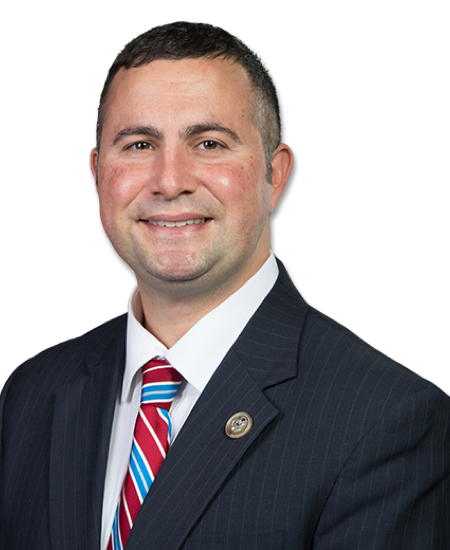
Rep. Darren Soto
Sponsored bills
Therapeutic Fraud Prevention Act of 20 21 This bill prohibits commercial conversion therapy, which is a practice or treatment designed to change a person's sexual orientation or gender identity or otherwise change behaviors, thoughts, or expressions related to gender or sexual attraction. This prohibition does not apply to treatment that assists an individual undergoing a gender transition or facilitates identity exploration and development.
This bill redesignates the Pulse Memorial located at 1912 South Orange Avenue in Orlando, Florida, as the National Pulse Memorial.
This resolution recognizes the challenges posed by sickle cell trait and sickle cell disease and encourages relevant screening, research, and surveillance. Sickle cell disease is a group of inherited disorders that cause abnormally shaped red blood cells.
This bill provides for the award of a Congressional Gold Medal to Billie Jean King in recognition of her courageous and groundbreaking leadership advancing equal rights for women and the LGBTQ community in athletics, education, and our society.
Saving Hazardous And Declining Environments Act or the SHADE Act This bill requires the Department of Housing and Urban Development to award grants for government entities and nonprofit organizations to plant trees in low-income communities and in communities meeting designated minority or limited English-proficiency thresholds.
Reducing Hereditary Cancer Act of 2021 This bill provides for Medicare coverage of germline mutation testing for individuals with a personal or family history of a hereditary cancer gene mutation or suspected history of hereditary cancer, as well as for associated coverage of risk-reducing surgeries and screenings.
Consumer Safety Technology Act This bill requires various agencies to explore the use of emerging technologies in the context of consumer products and safety. First, the Consumer Product Safety Commission must consult with relevant stakeholders, such as data scientists and product manufacturers, and use artificial intelligence in a pilot program for a least one of the following processes: (1) tracking trends in injuries involving consumer products, (2) identifying consumer product hazards, (3) monitoring the sale of recalled consumer products, or (4) identifying consumer products that do not meet specified importation requirements related to product safety. Additionally, the Department of Commerce must consult with the Federal Trade Commission (FTC) and other relevant agencies to study potential applications of blockchain technology (i.e., the technology that supports digital currencies such as Bitcoin), including the use of such technology to address fraud and other unfair or deceptive practices. Finally, the FTC must report on its efforts to address unfair or deceptive trade practices related to digital tokens (i.e., transferable units of a digital currency).
Stop Tip-overs of Unstable, Risky Dressers on Youth Act or the STURDY Act This bill requires the Consumer Product Safety Commission to revise the safety standards for freestanding clothing storage units such as a dressers, bureaus, or chests of drawers. Such standards must include specified testing related to tip overs and new warning requirements for all such products entering the U.S. market.
Vanessa Guillén Military Justice Improvement and Increasing Prevention Act This bill modifies the process and policy related to the disposition of charges and convening of courts-martial for certain sexual assault cases and other specified offenses under the Uniform Code of Military Justice (UCMJ). Among other elements, the bill provides that the determinations on the preferral, disposition, and referral of charges for specified offenses under the UCMJ must be made by a commissioned officer of the Armed Forces who is designated as a court-martial convening authority (in grade O-6 or higher) and who is available for detail as trial counsel, has significant trial experience, and is outside the chain of command of the member subject to the charges.