

Public Service Freedom to Negotiate Act of 20 21 This bill provides minimum collective bargaining rights and procedures for public employees and prohibits strikes by certain public safety workers. The Federal Labor Relations Authority (FLRA) shall determine for each state whether the laws of such state substantially provide for each of the minimum standard collective bargaining rights and procedures specified by this bill, including the right of public employees and supervisory employees to self-organize, form or join a labor organization, or collectively bargain. The FLRA must issue rules and take actions to establish and administer bargaining rights and procedures for those states that do not substantially provide for them. No employers, emergency services employees, or law enforcement officers may engage in a lockout, strike, or any other organized job action that is likely to result in a measurable disruption of the delivery of emergency or public safety services. Furthermore, no labor organization may be the cause of a violation of such prohibition.
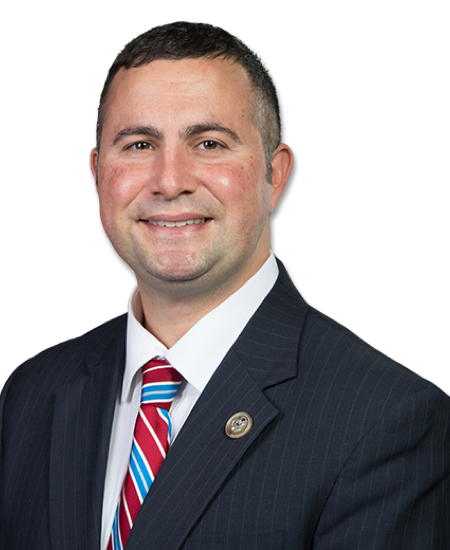
Rep. Darren Soto
Sponsored bills
State, Local, Tribal, and Territorial Fiscal Recovery, Infrastructure, and Disaster Relief Flexibility Act This bill allows states, tribes, territories, and localities to use certain COVID-19 relief funds for new categories of spending, including for natural disasters and infrastructure projects. It also makes changes to expenditure deadlines and other aspects of this funding. Specifically, recipients may use funds for emergency relief from natural disasters and associated negative economic impacts of natural disasters. In addition, recipients may use a portion of their COVID-19 relief funds for designated infrastructure projects, such as nationally significant freight and highway projects. Furthermore, the bill allows recipients to expend COVID-19 relief funds on these types of infrastructure projects until September 30, 2026. Under current law, recipients must expend the funds by December 31, 2024. Other changes in the bill include (1) modifying eligibility and allocation requirements for funding set aside for counties and Indian tribes that are near public lands, (2) allowing Indian tribes an additional year to expend their COVID-19 relief funds, and (3) establishing a process for government entities to decline COVID-19 relief funds and requiring any declined funds to be used to reduce the federal deficit.
Bring Animals Relief and Kibble Act of 2021 or as the BARK Act of 2021 This bill extends federal protection from civil and criminal liability that applies to donations of food or grocery products for needy individuals to the donation of pet food or supplies.
This concurrent resolution recognizes the disparity between wages paid to Latina women, and its impact on women, families, and the nation and reaffirms Congress' commitment to supporting equal pay and to narrowing the gender wage gap.
Maddy summaryHRES 737 is a symbolic resolution designating October 25, 2021, as "National Beauty and Wellness Education Day." It expresses the House's support for recognizing licensed beauty and wellness professionals (like cosmetologists, estheticians, and massage therapists) and the higher education institutions that train them. The resolution highlights projected job growth in these fields and emphasizes that proper education is essential for professionals to pass licensing exams and meet industry standards. As a non-binding resolution, it does not create new laws or affect any specific individuals or programs.
This resolution expresses the sense of the House of Representatives that the U.S. Postal Service should issue a commemorative postage stamp honoring Ralph Samuelson, known as the Father of Waterskiing, to commemorate the upcoming 100-year anniversary of the invention of waterskiing.
Open RAN Outreach Act This bill requires the National Telecommunications and Information Administration (NTIA) to conduct outreach and provide technical assistance to small communications network providers to raise awareness of the benefits, uses, and challenges of Open RAN networks and other open network architectures. Open RAN networks are wireless networks that follow the Open Radio Access Network approach to standardization, promoting the use of open interface standards in the portion of the telecommunications network that connects wireless devices (e.g., mobile phones) to the core of the network. The NTIA must also conduct outreach and provide assistance regarding participation in the Wireless Supply Chain Innovation Grant Program.
Communications Security, Reliability, and Interoperability Council Act This bill provides statutory authority for a council that makes recommendations to the Federal Communications Commission regarding ways to increase the security, reliability, and interoperability of communications networks.
Information and Communication Technology Strategy Act This bill requires the National Telecommunications and Information Administration to report on the information and communication technology supply chain and to develop a strategy to ensure the economic competitiveness of trusted information and communication technology vendors. The report must include (1) an identification of technology that is critical to U.S. economic competitiveness and the industrial capacity of U.S. vendors and other trusted vendors that produce such technology, (2) an assessment of whether and to what extent there is a dependence by providers of advanced telecommunications capability in the United States on technology that is not trusted, and (3) an identification of federal government actions and resources needed to support the economic competitiveness of trusted vendors and reduce dependence on companies that are not trusted.
Strengthening America's Strategic National Stockpile Act of 2021 This bill makes changes to the administration and management of the Strategic National Stockpile. Among these changes, the bill authorizes through September 30, 2024, the Department of Health and Human Services (HHS) to transfer supplies from the stockpile to any federal departments or agencies under certain conditions. HHS must also ensure the contents of the stockpile remain in working order and may enter into maintenance service contracts to carry out this requirement. Furthermore, as part of its management of the stockpile, HHS must establish and maintain domestic reserves of certain supplies, including by entering into cooperative agreements or partnerships to access facilities and equipment to produce these supplies. The authority for such agreements and partnerships terminates on September 30, 2024. Additionally, the bill temporarily authorizes HHS to award grants to states for maintaining stockpiles of certain equipment and supplies for use during public health emergencies. HHS must also develop transparent processes for the use and distribution of supplies from the stockpile that address, for example, the prioritization of requests. Additionally, during the COVID-19 emergency, the Office of the Assistant Secretary for Preparedness and Response must report monthly on requests for supplies from states, tribes, and other jurisdictions. These reports must include the rationale for any partially fulfilled or denied requests. Lastly, the Government Accountability Office must study the feasibility of establishing user fees to offset costs for procuring single-source materials for, and distributing such materials from, the stockpile.