

Access to Baby Formula Act of 2022 This bill authorizes the Department of Agriculture (USDA) to take certain actions to address emergencies, disasters, and supply chain disruptions (particularly the shortage of infant formula in the United States) affecting participants of the Special Supplemental Nutrition Program for Women, Infants, and Children (WIC). The bill directs USDA to require each infant formula cost containment contract to include remedies in the event of an infant formula recall, including how an infant formula manufacturer would protect against disruption to WIC participants in the state. USDA must, within 30 days, ensure there is a memorandum of understanding with the Department of Health and Human Services that includes procedures for coordination and information sharing regarding any supply chain disruption, including a supplemental food recall. The bill also authorizes USDA to waive or modify any WIC qualified administrative requirement during emergencies, disasters, and supply chain disruptions. Specifically, USDA may waive or modify such a requirement for one or more state agencies if (1) the requirement cannot be met by state agencies during the emergency, disaster, or disruption; and (2) the modification or waiver is necessary to provide assistance to WIC participants and does not substantially weaken the nutritional quality of supplemental foods. For example, USDA may waive the maximum monthly allowance for infant formula. The bill establishes notification requirements for USDA and state agencies related to supply chain disruptions.
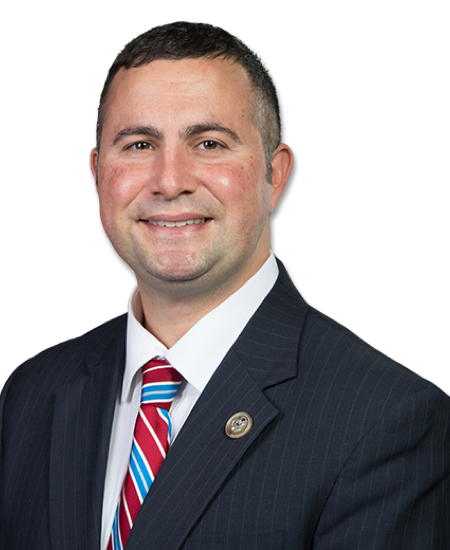
Rep. Darren Soto
Sponsored bills
Water Efficiency, Conservation, and Sustainability Act of 2022 This bill establishes multiple grants that support activities to incentivize efficient water use by customers of public water systems, reduce water losses and leaks in water systems, and promote the adoption of water-efficient plumbing codes.
Travel and Tourism Act This bill implements measures to support the U.S. travel and tourism industry. Specifically, the bill requires the Department of Commerce to develop a 10-year travel and tourism strategy with annual goals for the number of international visitors to the United States and for travel and tourism commerce. Further, Commerce must develop and implement a COVID-19 pandemic recovery strategy to assist the recovery of the U.S. travel and tourism industry. The bill also provides statutory authority for the United States Travel and Tourism Advisory Board, which shall advise Commerce on matters relating to the travel and tourism industry.
Consumer Fuel Price Gouging Prevention Act This bill prohibits any person from selling, during a proclaimed energy emergency, a consumer fuel at a price that (1) is unconscionably excessive, and (2) indicates that the seller is exploiting the emergency to increase prices unreasonably. The President may issue a proclamation of such an emergency that specifies the consumer fuel and geographic area covered and how long the proclamation applies. The bill provides for enforcement of these provisions by the Federal Trade Commission and state attorneys general. Civil penalties collected by the commission through such enforcement must be used to provide assistance under the Low Income Home Energy Assistance Program. Additionally, the commission must investigate whether the price of gasoline is being manipulated through reducing refinery capacity or other manipulative practices. The commission also must establish a Transportation Fuel Monitoring and Enforcement Unit to collect, monitor, and analyze crude oil and transportation fuel market data. The bill further includes specified transportation fuels within the prohibitions against (1) manipulative market practices, and (2) reporting false price information. It also increases the penalty for violations of those prohibitions. Finally, the Energy Information Administration must survey energy companies to facilitate transparent and competitive crude oil and transportation fuel markets.
Health Care Providers Safety Act of 2022 This bill authorizes the Department of Health and Human Services to award grants to health care providers for security services and other expenses related to physical security and cybersecurity.
Student Veteran Work Study Modernization Act This bill requires the Department of Veterans Affairs (VA) to implement a five-year pilot program to expand eligibility for the work-study allowance program to individuals who are pursuing programs of rehabilitation, education, or training at a rate equal to at least half of that required of a full-time student. To offset the cost of the program, the bill extends from January 14, 2031, to January 23, 2031, the end of the period for certain VA housing loan fee rates under the VA home loan program.
Military Spouse Licensing Relief Act of 2021 This bill provides for the portability of professional licenses of service members and their spouses who are relocated, because of military orders, outside of the jurisdiction that issued the license. Specifically, a professional license in good standing of a service member or spouse shall be considered valid at a similar scope of practice and in the discipline applied for in the new jurisdiction for the duration of such military orders. To establish and maintain eligibility, a service member or spouse must (1) provide a copy of the military orders to the licensing authority in the new jurisdiction; (2) remain in good standing with the licensing authority that issued the license; and (3) submit to the authority of the licensing authority in the new jurisdiction for the purposes of standards of practice, discipline, and fulfillment of any continuing education requirements. The bill also provides that if a service member or spouse is licensed to operate in multiple jurisdictions through an interstate licensure compact, the service member or spouse is subject to the requirements of the compact or the applicable provisions of the state law rather than the provisions of this bill.
Helping Employees Navigate Rabies Regulations from over Yonder or the HENRY Act This bill directs certain actions to allow federal officers and employees to bring dogs into the United States from countries that are considered high-risk for rabies. Among other provisions, the bill directs the Centers for Disease Control and Prevention (CDC) to allow federal officers and employees who are stationed abroad, including members of the military, to bring up to three dogs into the United States per entry; the CDC may allow for more dogs through specialized waivers.
Rights for the Transportation Security Administration Workforce Act of 2022 or the Rights for the TSA Workforce Act of 2022 This bill modifies the workplace rights, protections, and benefits applicable to Transportation Security Administration (TSA) personnel. Specifically, the bill by December 31, 2022, eliminates personnel authorities of the Department of Homeland Security (DHS) and the Department of Transportation governing the conditions of employment for TSA employees, thus making TSA employees subject to the personnel management system applicable to other federal employees; sets forth transition rules that protect the pay rates, leave rights, and other rights of TSA employees; and requires DHS to consult with the exclusive representative of TSA screening employees to carry out the conversion of those positions. The bill also permits the TSA to consult with organizations representing federal air marshals to address concerns, including mental health and suicide rates; directs the TSA to ensure its employees are provided proper guidance regarding prevention and protections against COVID-19; requires the TSA to provide a one-time bonus payment of $3,000 to each TSA employee carrying out duties that require substantial contact with the public during the COVID-19 national emergency; and requires the Government Accountability Office to report on implementation of the bill, TSA recruitment efforts, and specified TSA personnel policies.
Alzheimer's Accountability and Investment Act This bill requires the National Institutes of Health to annually submit, beginning in FY2024, an estimate of its budget and personnel needs for carrying out initiatives pursuant to the National Alzheimer's Project. This project supports coordination of federal planning, research, and other efforts to address Alzheimer's disease and related dementias.