

Maddy summaryHRES 1226 designates the week of July 19-25, 2022, as "Black Maternal Mental Health Awareness Week" to highlight mental health challenges during pregnancy or after childbirth that disproportionately affect Black women and families. The resolution emphasizes that Black women are 3 times more likely to die from maternal causes than White women and that 1 in 4 women of color face these conditions compared to 1 in 7 White women. It calls for raising public awareness, promoting culturally appropriate care, and encouraging government and community efforts during this designated week. As a non-binding resolution, it does not create new programs but supports existing goals to address racial disparities in maternal health outcomes.
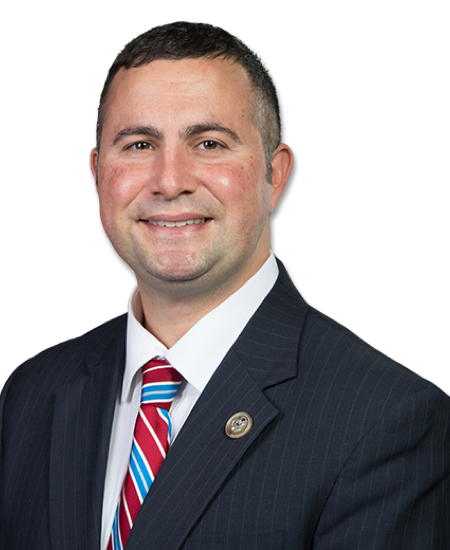
Rep. Darren Soto
Sponsored bills
Support The Resiliency of Our Nation's Great Veterans Act of 2022 or the STRONG Veterans Act of 2022 This bill addresses mental health care provided by the Department of Veterans Affairs (VA), including by requiring the VA to update training for the VA workforce and Veterans Crisis Line staff, implement pilot programs, expand access to mental health care, conduct studies and research, and provide outreach to veterans regarding mental health resources. Among other requirements, the VA must ensure its medical centers have at least one full-time minority veteran coordinator and that such coordinators receive training on culturally appropriate mental health and suicide prevention services for American Indian and Alaska Native veterans; increase the number of full-time equivalent employees at Vet Centers and paid mental health trainees in the VA's workforce; expand specified scholarships and loan repayment programs for mental health providers and students; review and update the training for Veterans Crisis Line responders and social service assistants; designate a Buddy Check Week to organize outreach events and educate veterans on conducting peer wellness checks; update the Veterans Justice Outreach Program, including by conducting program outreach to justice-involved veterans; make permanent and expand the Peer Specialist Support program; expand eligibility for Vet Center services; offer mental health consultations to certain veterans; improve the assessment and treatment of veterans with sleep disorders; and perform various studies and research related to mental health issues and care. Additionally, the bill permanently authorizes and expands the Solid Start program.
LGBTQ I+ Data Inclusion Act This bill addresses federal data collection of voluntary, self-disclosed information on sexual orientation, gender identity, and variations in sex characteristics. Specifically, the bill requires federal agencies that collect information through a survey for statistical purposes that includes demographic data (where subjects self-report information or a proxy provides information about the subject or responds for all persons in a household) to review existing data sets to determine which data sets do not include information about sexual orientation, gender identity, and variations in sex characteristics. Such agencies must assess needed changes in survey methods related to asking questions on such matters. Agencies that publish reports relying on survey demographic data must include information on sexual orientation, gender identity, and variations in sex characteristics. Agencies may waive this publication requirement on a case-by-case basis if the confidentiality of the information cannot be maintained or if adding such information to the survey would impair the agency's ability to preserve the utility, accuracy, or objectivity of the survey while also generating relevant evidence about the LGBTQI+ community. The Government Accountability Office must report to Congress on the implementation of this bill's requirements by agencies.
This resolution expresses support for the designation of Journeyman Lineworkers Recognition Day. (A journeyman lineworker is a person who builds and maintains electrical power systems.)
Leveraging American Understanding of Next-generation Challenges Exploring Space Act or the LAUNCHES Act This bill requires the Federal Communications Commission (FCC) to facilitate access to specified broadband spectrum frequencies for commercial space launches and reentries. Under current law, commercial missions launching from the United States to space must use government-owned spectrum to communicate with the rockets during launch, and private companies must apply to the FCC to receive special temporary authority to use such spectrum. On June 28, 2021, the FCC issued a final rule adopting a nonfederal secondary allocation of the 2200-2290 megahertz frequencies of the electromagnetic spectrum for use during commercial space launches and reentries. The bill requires the FCC to adopt service rules for access to additional frequencies for commercial space launches and reentries and complete associated rulemaking activities (e.g., those that set technical specifications and eligibility requirements) to implement the allocation of the frequencies. The FCC must also streamline the process for access authorizations, providing for (1) authorizations to access specified frequencies for multiple commercial space launches and reentries from one or more launch or reentry sites, (2) authorizations for multiple uses of such frequencies for a commercial space launch or reentry, (3) automation of the FCC's review process for access applications, and (4) increased coordination between the FCC and the National Telecommunications and Information Administration to speed the review of such applications.
Health Equity and Accountability Act of 2022 This bill directs the Department of Health and Human Services (HHS) and others to undertake efforts to reduce health disparities. For example, the bill (1) requires more detailed reporting of demographic and health disparities data, including related to public health emergencies; (2) directs certain components of HHS to support health workforce diversity; and (3) increases access to culturally and linguistically appropriate health care. The bill also modifies eligibility and other requirements for Medicare, Medicaid, private health insurance, nutrition assistance, and other programs to reduce health disparities among vulnerable populations. The bill includes specific provisions with respect to noncitizens; maternal, infant, and child health; mental and behavioral health; specified conditions that disproportionately affect racial and ethnic minority groups, such as certain cancers, HIV/AIDS, kidney disease, and diabetes; investments in communities facing health and other inequities; and nondiscrimination in the provision of services in federally supported health programs. Additionally, the bill (1) revises health information technology programs to address health disparities, and (2) supports health impact assessments and other efforts pertaining to environmental justice and social determinants of health (i.e., nonmedical factors that influence health outcomes, such as income and educational attainment). The bill also requires various studies and reports on issues related to health care and health disparities, including a report by the Government Accountability Office on health workforce diversity.
This resolution expresses condolences with respect to the collapse of the Champlain Towers South condominium building in Surfside, Florida, and supports the investigation into the causes of the collapse and efforts to prevent future high-rise building collapses.
Stop Anti-Abortion Disinformation Act or the SAD Act This bill prohibits advertisements that use deceptive or misleading statements related to the provision of abortion services. Abortion services include (1) surgical and non-surgical procedures to terminate a pregnancy, or (2) providing referrals for such procedures. The Federal Trade Commission must promulgate rules to implement the prohibition, and the bill provides for enforcement by the commission.
Advanced Research Project s Agency-Health Act or the ARPA-H Act This bill establishes within the Department of Health and Human Services (HHS) the Advanced Research Projects Agency-Health to accelerate health and medical innovation by investing in high-risk, high-reward research. The bill also establishes a committee to advise on agency activities. HHS must transfer all authorities, functions, funds, and personnel from a similar entity within the National Institutes of Health to a new, independent agency. Additionally, the President must appoint a director to lead the agency. The director may submit testimony and recommendations concerning the agency to Congress without review or approval by other federal officers or agencies. The director must appoint personnel to administer the agency's research programs, including by selecting projects to support and making recommendations about terminating or continuing projects. The agency may use grants, prize competitions, and a variety of other mechanisms to support the research projects. The agency's budget is separate from that of HHS. The agency must coordinate with the Food and Drug Administration and the Centers for Medicare & Medicaid Services to expedite development and coverage of high-need cures. Additionally, the agency may partner with other public and private entities (e.g., institutions of higher education and patient advocacy organizations). The bill also requires the agency to develop and periodically update a strategic plan and annually report on its activities. Furthermore, (1) the National Academies of Sciences, Engineering, and Medicine must evaluate the agency's performance; and (2) the Government Accountability Office must review the research portfolio of HHS and its components, including the new agency.
Save America’s Forgotten Equines Act of 2021 or the SAFE Act of 2021 This bill prohibits the transporting, receiving, possessing, purchasing, selling, or donation by a person of an equine (e.g., horse) that the person has reason to believe will be slaughtered for human consumption.