

Maddy summaryThis resolution (HRES 1370) is a symbolic statement supporting National HIV/AIDS and Aging Awareness Day, observed September 18 each year. It directly affects older adults living with HIV/AIDS in the U.S., highlighting that over half of people with HIV are aged 50+ and many face late diagnosis and healthcare challenges. The resolution encourages governments, healthcare providers, and community organizations to recognize the day, reduce stigma, improve access to HIV testing and treatment (including for older adults), and support existing programs like the Ryan White HIV/AIDS Program. It does not create new laws or allocate funds but urges action based on data showing older people with HIV often need culturally competent care and face unique barriers.
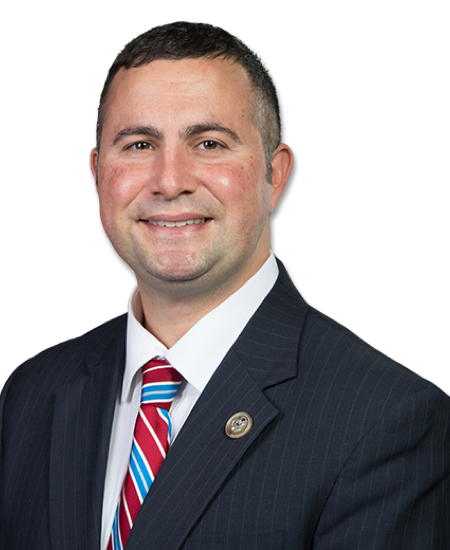
Rep. Darren Soto
Sponsored bills
This resolution recognizes (1) the celebration of Hispanic Heritage Month; and (2) the integral role of Latinos and their manifold heritage in the economy, culture, and identity of the United States.
This bill retroactively applies the Generalized System of Preferences (a U.S. trade preference program that provides duty-free access to imports on products from certain developing countries) for the period after December 31, 2020, and before September 1, 2022. These covered articles shall be liquidated or reliquidated as though entry occurred on December 31, 2020. A request for liquidation or reliquidation must be filed with U.S. Customs and Border Protection (CBP) and such request must contain sufficient information for CBP to locate the entry or, if the entry cannot be located, reconstruct the entry. Any amounts owed by the United States pursuant to liquidation or reliquidation of an entry of a covered article shall be paid without interest.
Lowering Obstacles to Achievement Now Act or the LOAN Act This bill makes various changes to federal student aid programs, including by providing funding to increase the maximum Pell Grant award for each eligible student and reducing the number of monthly loan payments required for loan forgiveness under the Public Service Loan Forgiveness (PSLF) program.
Loan Forgiveness for Educators Act of 2022 This bill expands the Teacher Loan Forgiveness program. Among other provisions, the bill (1) renames the program the Educator Loan Forgiveness program, (2) expands program eligibility to early childhood educators and program directors serving in early childhood education programs and school leaders serving in public high-need schools, and (3) establishes a program in which the Department of Education cancels monthly student loan payments during qualifying service and provides complete loan forgiveness after five years of service.
Improving Seniors' Timely Access to Care Act of 2022 This bill establishes several requirements and standards relating to prior authorization processes under Medicare Advantage (MA) plans. Specifically, MA plans must (1) establish an electronic prior authorization program that meets specified standards, including the ability to provide real-time decisions in response to requests for items and services that are routinely approved; (2) annually publish specified prior authorization information, including the percentage of requests approved and the average response time; and (3) meet other standards, as set by the Centers for Medicare & Medicaid Services, relating to the quality and timeliness of prior authorization determinations.
Tribal Cultural Areas Protection Act This bill provides for the preservation of tribal cultural sites on public land, including by establishing the Tribal Cultural Areas System, setting forth requirements related to land management, and authorizing certain actions by tribes.
This resolution expresses that the House of Representatives recognizes the importance of rural and agricultural programming and the need for greater access to rural and agricultural media programming.
Puerto Rico Nutrition Assistance Fairness Act of 2022 This bill sets out a process to enable Puerto Rico to participate as a state in the Supplemental Nutrition Assistance Program (SNAP). Under current law, a state receives SNAP funding based on the number of participating households in the state whereas Puerto Rico receives a block grant to fund its nutrition assistance program. The bill requires Puerto Rico to submit to the Department of Agriculture (USDA) a plan of operation to transition away from the consolidated block grant program to SNAP. USDA must provide appropriate training and technical assistance to enable Puerto Rico to formulate such plan.
Responsive Energy Demand Unlocks Clean Energy Act or the REDUCE Act This bill requires organizations that operate electric grid transmission facilities (e.g., Regional Transmission Organizations or Independent System Operators) to accept bids in a power market from demand response programs of a certain size. In a demand response program, end-use electricity customers are typically remunerated for voluntarily decreasing their short-term electrical consumption generally in response to compromised grid reliability or high wholesale electricity prices.