

Maddy summaryHRES 1107 is a House resolution urging the President to issue a proclamation flying the U.S. flag at half-staff to honor Rev. Jesse Jackson. The resolution recognizes his civil rights leadership, including founding the Rainbow PUSH Coalition and his presidential campaigns in 1984 and 1988, which advanced racial equality and economic justice. This symbolic gesture directly affects the President (as the one who would issue the proclamation) and the public, who would observe the flag at half-staff.
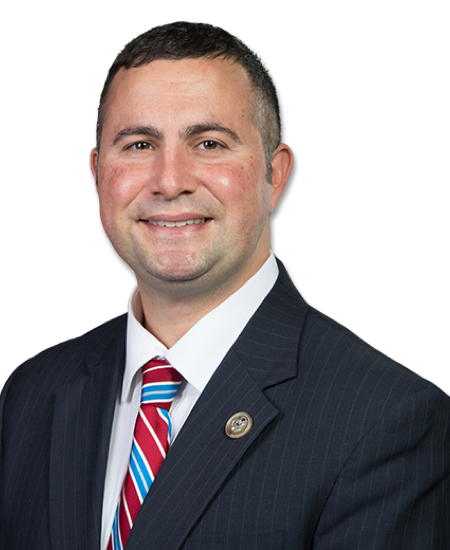
Rep. Darren Soto
Sponsored bills
Maddy summaryThis bill, the Supplemental Security Income Restoration Act of 2026, updates eligibility rules and benefit amounts for the Supplemental Security Income (SSI) program, which provides financial assistance to low-income elderly, blind, and disabled individuals. Key changes include raising income and resource limits to help more people qualify, adjusting benefit calculations to better reflect poverty guidelines, and extending the program to U.S. territories like Puerto Rico and Guam. The legislation also removes certain financial penalties, excludes retirement accounts and tribal welfare payments from eligibility calculations, and clarifies how state tax credits are treated when determining income.
Maddy summaryThis bill, titled the Puerto Rican People's Power Restoration Act of 2026, would end the federal Oversight Board for Puerto Rico if the territory's government creates a replacement organization to take over its duties. The law allows the Oversight Board to continue operating until Puerto Rico passes legislation establishing a successor entity, at which point the Board would cease to exist. Once the Board is replaced, the new Puerto Rico Electric Power Authority or other designated successor would assume the role of representing Puerto Rico in ongoing bankruptcy proceedings, including retaining the existing staff and legal advisors. The bill ensures that existing financial plans and court jurisdiction remain unchanged during this transition period.
Maddy summaryHR 7856, the Fair Housing for Survivors Act of 2026, amends the Fair Housing Act to explicitly prohibit housing discrimination based on being a survivor of domestic violence, sexual assault, or severe trafficking in persons. It adds "survivor of domestic violence, sexual assault, or severe trafficking" as a protected class in the law, alongside existing categories like race or national origin. This means landlords, housing providers, and programs cannot deny housing, evict, or otherwise discriminate against individuals due to their status as a survivor. The bill directly affects survivors who face housing barriers, including those with protective orders, shelter histories, or past evictions linked to abuse.
Maddy summaryThis bill, known as the Direct File Act of 2026, would establish a government-run online system allowing taxpayers to prepare and file their individual income tax returns for free. The legislation prohibits the Treasury Department from entering into agreements that restrict its ability to provide tax preparation or filing services, and it voids any existing contracts with such restrictions. The program would use IRS data to simplify filing, include customer support, be available in multiple languages, and allow users to file even if they are not required to. It also enables taxpayers in participating states to file state and local returns alongside their federal returns, with funding provided to states that meet certain standards.
Maddy summaryThis bill, known as the AI Fraud Accountability Act, makes it a federal crime to use artificial intelligence or other technology to create realistic digital impersonations of real or fictional people for the purpose of defrauding others of money, documents, or other valuable items. The law applies to communications across state lines and foreign borders, and it allows for criminal penalties including fines and up to three years in prison, along with the forfeiture of assets used to commit the fraud. In addition to criminal provisions, the bill gives the Federal Trade Commission authority to enforce these rules as unfair or deceptive business practices and requires the creation of a working group to develop technical best practices for detecting and preventing digital impersonation fraud. The legislation also establishes mechanisms for international cooperation with foreign law enforcement agencies to combat cross-border fraud and includes a safeguard protecting parody, satire, and journalism from being classified as illegal impersonation.
Maddy summaryHRES 1087 is a non-binding House resolution recognizing community water fluoridation as a safe and effective public health measure to prevent tooth decay. It acknowledges decades of scientific support for fluoridation, including CDC recognition as a top public health achievement, and highlights its cost-effectiveness in reducing dental treatment costs. The resolution encourages states and localities to maintain or adopt optimal fluoridation levels but does not create new legal requirements or directly affect any specific group. It serves as a symbolic endorsement of existing public health practice, referencing support from major health organizations.
Maddy summaryThis resolution (HRES 1088) is a non-binding House of Representatives measure recognizing the importance of Black history museums and cultural institutions. It formally acknowledges their role in preserving Black American history and contributions, particularly in relation to the 2026 100th anniversary of Black History Month and the U.S. 250th anniversary. The resolution urges the House to affirm that Black history is foundational to American history and calls for federal agencies to support these institutions through funding and partnerships. It also encourages the public to visit these museums, support them financially, and engage with their educational resources. The resolution does not create new laws or allocate funding, but serves as a symbolic endorsement of these institutions' cultural and historical significance.
Maddy summaryHR 7740, the African American History Act of 2026, authorizes $4 million annually for the National Museum of African American History and Culture to develop educational resources and support teaching about African American history. The bill directs the museum to create digital and print materials, provide teacher training, and expand access to curriculum resources for K-12 and college classrooms. It requires annual reports to Congress on fund usage and expires in 2030. This program directly affects educators and students by enhancing classroom materials and professional development on African American history.
Respect State Housing Laws Act This bill eliminates a provision that requires a 30-day notice period before a landlord may begin eviction proceedings against a tenant in federally assisted or federally backed housing.