

Preserving Access to Home Health Act of 2022 This bill restricts the Centers for Medicare & Medicaid Services (CMS) from decreasing payments for Medicare home health services based on certain adjustments until 2026. Current law requires the CMS to make certain permanent and temporary payment adjustments under the Medicare prospective payment system for home health services based on behavioral assumptions for 2020 through 2026. The bill restricts the CMS from making adjustments that decrease payments until 2026; the CMS must also ensure that any such necessary decreases are made before 2032.
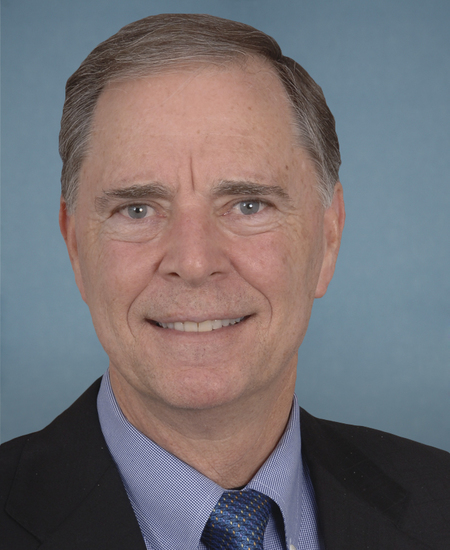
Rep. Bill Posey
Sponsored bills
Safeguarding Military Bonuses Act This bill requires the military departments to grant to certain members of the Armed Forces (i.e., those who were involuntarily separated based on the refusal to receive a COVID-19 vaccination) an exception to the requirement that they must repay a bonus, incentive pay, or similar benefit that is contingent on the member's satisfaction of certain service or eligibility requirements. Specifically, this exception applies for such members if the bonus, incentive pay, or similar benefit was made before August 24, 2021.
South Asian Heart Health Awareness and Research Act of 2022 This bill authorizes the Department of Health and Human Services to establish programs that support heart-disease research and awareness among communities disproportionately affected by heart disease, including the South Asian population of the United States. The programs include (1) grants to states for awareness initiatives and educational materials; and (2) research regarding heart disease, type 2 diabetes, and other heart health-related ailments with respect to the South Asian population and other at-risk populations.
Gabriella Miller Kids First Research Act 2.0 This bill reauthorizes through FY2027 a pediatric disease research initiative within the National Institutes of Health (NIH) and requires the NIH to coordinate pediatric research activities to avoid duplicative efforts. Additionally, the Department of Health and Human Services must report, within five years, to Congress about research funded through the initiative.
Federal PFAS Research Evaluation Act This bill requires the Environmental Protection Agency (EPA) to enter into an agreement with the National Academies of Sciences, Engineering, and Medicine (NASEM) to complete various studies and reports related to perfluoroalkyl and polyfluoroalkyl substances, commonly referred to as PFAS. PFAS are man-made and may have adverse human health effects. A variety of products contain the compounds, such as nonstick cookware or weatherproof clothing. Specifically, the bill requires the EPA to enter into an agreement with NASEM to (1) study and report on research and knowledge gaps identified by the Federal Government Human Health PFAS Research Workshop (October 26 and 27, 2020); and (2) identify research and development needed to identify, categorize, evaluate, and address individual or total PFAS. Additionally, the EPA and other relevant federal agencies must enter into an agreement with NASEM to submit a study and report to better understand the research and development needed to better understand the extent and implications of human and environmental contamination by PFAS and any management and treatment options. After NASEM submits the required reports, the White House Office of Science and Technology Policy must submit an implementation plan to Congress for increased collaboration and coordination of federal PFAS research, development, and demonstration activities.
This bill ensures that members of the Armed Forces who were granted a general discharge under honorable conditions (on the sole basis that the members failed to obey a lawful order to receive a vaccine for COVID-19) are eligible for Department of Veterans Affairs educational assistance under the Montgomery GI Bill-Active Duty and Post-9/11 GI Bill programs.
This bill expands eligibility for Department of Veterans Affairs (VA) reimbursement of emergency treatment for veterans who are treated in a non-VA facility. Specifically, the bill waives the requirement that a veteran must have received VA care within the 24-month period preceding the furnishing of emergency treatment if the veteran receives such emergency treatment within the 60-day period following their enrollment in the VA health care system.
Protecting Life on Federal Lands Act This bill prohibits a federal agency or department from leasing federal property to an abortion providing organization.
Citizen Ballot Protection Act This bill allows a state to include on its mail voter registration application form a requirement that the applicant provide proof of U.S. citizenship.
This resolution (1) supports the designation of Collector Car Appreciation Day, (2) recognizes that the collection and restoration of historic and classic cars is an important part of preserving the technological achievements and cultural heritage of the United States, and (3) encourages the people of the United States to engage in events and commemorations of Collector Car Appreciation Day.