

Maddy summaryHCONRES 106 is a symbolic concurrent resolution expressing congressional support for local law enforcement officers and condemning efforts to defund police agencies. It does not create new law or policy but formally recognizes officers' dedication to public safety, extends gratitude to them and their families, and specifically condemns calls to "defund, disband, dismantle, or abolish" police. The resolution directly addresses local law enforcement officers and their communities, emphasizing their role in protecting public safety and upholding the rule of law. Introduced in the U.S. House of Representatives on May 6, 2024, it was referred to the Committee on the Judiciary. As a non-binding statement, it reflects congressional sentiment but does not alter funding or operational authority for law enforcement.
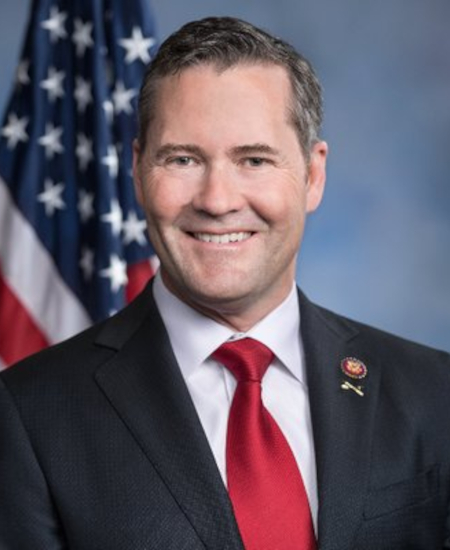
Rep. Michael Waltz
Sponsored bills
Maddy summaryThis resolution (HRES 616) condemns the Taliban's ongoing human rights abuses in Afghanistan, specifically targeting women, girls, religious minorities (including Hazaras and Sikhs), and ethnic groups. It expresses support for Afghans who assisted U.S. missions and calls for the U.S. government to halt Taliban violence and address systemic repression. Key mechanisms include urging the State Department to assess potential crimes against humanity, developing strategies to support human rights defenders, and expediting refugee processing for Afghans with Special Immigrant Visas. The resolution does not impose new legal requirements but formalizes congressional stance and policy guidance. It directly affects U.S. foreign policy implementation toward Afghanistan.
Maddy summaryThe Unity through Service Act of 2024 establishes an Interagency Council on Service to coordinate and strengthen military, national, and public service opportunities across federal agencies. The Council, composed of cabinet secretaries and agency directors, will develop recruitment strategies, share best practices, and report to Congress on service participation trends. The bill also creates joint marketing efforts between the military, Peace Corps, and national service programs, and improves transition assistance for service members entering civilian careers. It requires regular reports to Congress on recruitment effectiveness, cross-service participation, and strategies to enhance service opportunities. The bill does not authorize new funding and directs a GAO report on the Act's effectiveness within 30 months.
Maddy summaryThis bill requires the U.S. Department of Defense and State Department to immediately deliver all previously approved military equipment and services to Israel within 15 days, reversing any pauses on arms transfers. It prohibits using federal funds to withhold, halt, or cancel defense article deliveries to Israel and mandates that unobligated security assistance funds for Israel must be spent by the end of 30 days. The bill also requires monthly reports to Congress detailing all security assistance provided to Israel since October 7, 2023, including specific items delivered and funding sources. The law directly affects U.S. agencies responsible for military aid and Israel as the recipient of the security assistance.
Maddy summaryThe READ Act Reauthorization Act of 2023 extends the authorization period for the Reinforcing Education Accountability in Development Act (commonly known as the READ Act) from five to ten fiscal years. This change allows U.S. international education programs, administered by agencies like USAID, to operate without annual reauthorization for a longer period. The bill directly affects programs providing educational support in developing countries, such as teacher training and literacy initiatives. The key mechanism is amending Section 4(a) of the existing law to adjust the funding duration, ensuring continued program stability.
Maddy summaryThis bill designates the U.S. Postal Service facility at 290 NW Peacock Boulevard in Port St. Lucie, Florida, as the "Trooper Zachary Fink Post Office Building." It updates all federal references in laws, documents, and records to use the new name. The bill has no policy provisions or direct impact beyond the official naming change.
Maddy summaryThis bill authorizes Congress to award President Donald J. Trump a Congressional Gold Medal in recognition of his foreign policy achievements during his presidency. It specifically cites his 2019 DMZ meeting with North Korea's leader, the 2020 Abraham Accords normalizing Middle East relations, and his claim of no new wars started during his term. The bill directs the Treasury Secretary to design and strike the medal, with proceeds from bronze duplicates sold to the public covering production costs. It does not create new laws or affect public policy - it is a ceremonial honor for a former president.
Maddy summaryThis bill requires public high schools receiving federal education funds to grant military recruiters the same campus access as other employers or colleges, specifically for students aged 17 and older. It mandates that schools provide this access without discrimination, aligning military recruitment opportunities with those offered to civilian recruiters. The Secretary of Defense must annually collect compliance data and report violations to the Secretary of Education, identifying schools that fail to meet these requirements. The law takes effect one year after enactment, directly affecting thousands of secondary schools nationwide.
Maddy summaryThis bill designates the U.S. Postal Service facility at 859 North State Road 21 in Melrose, Florida, as the "Pamela Jane Rock Post Office Building" for commemorative purposes. It updates all official U.S. government references to the location to use this new name. The bill is procedural and does not create new policies or affect any other entities. It was enacted on May 7, 2024, after passing both chambers of Congress.
Maddy summaryHJRES 131 seeks congressional disapproval of an EPA rule establishing emissions standards for light- and medium-duty vehicles model years 2027 and later. If passed, this resolution would block the EPA's rule from taking effect, preventing automakers from having to comply with those specific pollution requirements. The bill targets the EPA's April 18, 2024, rule published in the Federal Register (89 Fed. Reg. 27842). This is a procedural disapproval resolution under the Congressional Review Act, not a new policy.