This resolution requires the chair of a House committee to administer a specific oath to any witness appearing before the committee. Currently, a committee chair is only authorized to administer an oath.
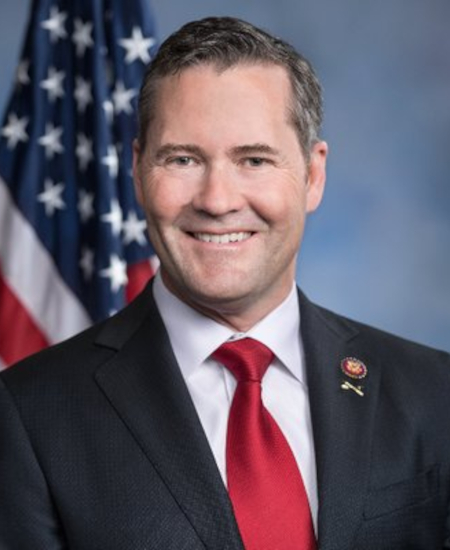
Rep. Michael Waltz
Sponsored bills
Military Retiree Survivor Comfort Act This bill addresses the overpayment of retired or retainer pay to a joint account (bearing the name of the decedent and the decedent's designated beneficiary) during the month of the death of a retired member of the armed forces. Specifically, the bill authorizes the Department of Defense (DOD) to forgive or offset the overpayment if the decedent was enrolled in the Survivor Benefit Plan (SBP). In the case of an offset, each of the first 12 SBP annuity payments after the death of the retired service member must be reduced by one-twelfth of the overpayment. If the decedent was not enrolled in the SBP, DOD is authorized to forgive the overpayment.
This bill directs the Department of State to include additional information in its annual reports concerning Taiwan's participation at the World Health Organization's World Health Assembly (WHA) as an observer. The report shall describe changes and improvements to the State Department's plan to support Taiwan's observer status at the WHA, following any meetings at which Taiwan did not participate under such status. (China has opposed Taiwan's participation in the WHA.)
Securing American Leadership in Science and Technology Act of 2021 This bill extends through FY2031 the Office of Science and Technology Policy (OSTP), the Office of Science of the Department of Energy, the Advanced Research Projects Agency-Energy, the National Institute of Standards and Technology (NIST), the National Oceanic and Atmospheric Administration (NOAA), and the National Science Foundation (NSF). The bill authorizes programs, projects, and activities, including those regarding (1) federal research security; (2) a National Supply Chain Database; (3) basic energy sciences research and advanced scientific computing research; (4) establishment and operation of Regional Energy Innovation Centers; (5) establishment of a carbon sequestration research initiative; (6) establishment of a NIST Foundation; (7) establishment of a technology transfer office in NOAA; (8) science, technology, engineering, and mathematics, including computer science (STEM) workforce development; and (9) establishment of an Energy Foundation. The OSTP shall submit a comprehensive national science and technology strategy, and complete a review of U.S. science and technology enterprise. The Office of Science shall continue to leverage U.S. participation in the Large Hadron Collider, prioritize international partnerships and investments in the Long-Baseline Neutrino Facility/Deep Underground Neutrino Experiment, and prioritize international collaboration that would provide U.S. researchers access to the most advanced accelerator facilities in the world. The Government Accountability Office shall evaluate NIST's Center for Neutron Research. The NSF shall contract the National Academy of Public Administration to study the organizational and management structure of the NSF.
Puppies Assisting Wounded Servicemembers Act of 2021 or the PAWS Act of 2021 This bill requires the Department of Veterans Affairs (VA) to implement a grant program for the purpose of pairing service dogs with eligible veterans. Organizations that receive grants must provide veterinary health insurance coverage, hardware, and travel expenses for each service dog and veteran participating in the program. Eligible veterans are those who (1) are enrolled in the VA health care system, (2) have been evaluated and treated for post-traumatic stress disorder (PTSD) but remain diagnosed with PTSD, (3) may benefit from a service dog, and (4) agree to successfully complete training provided by an eligible organization. Veterans are required to see a VA health care provider at least once every six months to determine whether the veteran continues to benefit from a service dog. Eligible organizations are nonprofit organizations that provide service dogs to veterans with PTSD, meet publicly available standards set forth by the Association of Service Dog Providers for Military Veterans, have expertise in the needs of veterans with PTSD, agree to cover all costs in excess of the grant amount to guarantee the benefits of the program, agree to reaccept or replace a service dog provided to a veteran, and submit an application to the VA. Any improvement in PTSD symptoms as a result of the provision of a service dog shall not affect the veteran's eligibility for any other VA benefits. The Government Accountability Office must report on the grant program.
Veterans Expedited TSA Screening Safe Travel Act or the VETS Safe Travel Act This bill makes certain veterans eligible for the Transportation Security Administration (TSA) PreCheck Program at no cost if they meet the program's background check and security requirements. Veterans who are eligible for this fee waiver are those who are in the annual patient enrollment system of the Department of Veterans Affairs (VA) and require the use of a wheelchair, prosthetic limb, or other assistive device to aid with mobility due to (1) loss, or loss of use, of a limb; (2) full or partial paralyzation; or (3) permanent blindness. The VA and the TSA must develop and implement a process to provide disabled veterans effective outreach about TSA programs that are designed to improve the screening process for passengers with disabilities.
Luke and Alex School Safety Act of 2021 This bill requires the Department of Homeland Security (DHS) to establish a Federal Clearinghouse on School Safety Best Practices for use by state and local educational and law-enforcement agencies, institutions of higher education, health professionals, and the public. The bill requires DHS to collect clearinghouse data analytics, user feedback on the implementation of best practices and recommendations identified by the clearinghouse, and any evaluations conducted on these best practices and recommendations. In addition, DHS must coordinate with the Departments of Education, Health and Human Services, and Justice to assess and identify best practices and recommendations and establish an advisory board to provide feedback and propose additional recommendations. Further, the bill specifies the criteria for best practices and recommendations of the clearinghouse, including evidence that the best practice or recommendation has had a significant effect on improving the health, safety, and welfare of individuals in school settings. Finally, the bill provides for grant program review.

Just and Unifying Solutions To Invigorate Communities Everywhere Act of 2021 or the JUSTICE Act This bill addresses policies and issues regarding policing practices and law enforcement accountability. The bill funds state and local grants, incentivizes state and local reporting on the use of certain policing practices, creates new federal offenses for certain misconduct, and establishes best practices and training requirements. The bill funds state and local grants, including to support the use of body-worn cameras, to implement information sharing systems for disciplinary records of law enforcement officers, and to prohibit officers from engaging in sexual acts under color of the law. Further, it requires state and local governments that receive grants under the Edward Byrne Memorial Justice Assistance Grant program to report information related to use-of-force incidents and the use of no-knock warrants. At the federal level, the bill establishes new criminal offenses related to falsifying police reports and engaging in sexual acts under color of law. The bill directs the Department of Justice to develop training on de-escalation tactics, behavioral health crises, alternatives to the use of force, and the duty to intervene when another officer uses excessive force. Finally, the bill establishes and funds the National Criminal Justice Commission. Among other tasks, the commission must develop best practices for policing tactics and procedures.
Born-Alive Abortion Survivors Protection Act This bill establishes requirements for the degree of care a health care practitioner must provide in the case of a child born alive following an abortion or attempted abortion. Specifically, a health care practitioner who is present must (1) exercise the same degree of care as would reasonably be provided to any other child born alive at the same gestational age, and (2) ensure the child is immediately admitted to a hospital. Additionally, a health care practitioner or other employee who has knowledge of a failure to comply with the degree-of-care requirements must immediately report such failure to law enforcement. A health care practitioner who fails to provide the required degree of care, or a health care practitioner or other employee who fails to report such failure, is subject to criminal penalties—a fine, up to five years in prison, or both. An individual who intentionally kills or attempts to kill a child born alive is subject to prosecution for murder. The bill bars the criminal prosecution of a mother of a child born alive under this bill and allows her to bring a civil action against a health care practitioner or other employee for violations.
Student Loan Disclosure Transparency Act of 2021 This bill requires lenders disbursing federal student loans to disclose additional information to borrowers and increase the frequency of such disclosures. Specifically, prior to disbursement, the lender making a loan must disclose (1) the principal amount, interest rate, and number of required monthly payments to be made on the loan; (2) the estimated balance owed by the borrower; and (3) the estimated aggregate amount the borrower will pay. Prior to repayment, the lender must disclose the projected total of interest charges that the borrower will pay on the loan, as well as projections of the borrower's monthly repayment amount. The bill also requires certain disclosures for the life of the loan. In particular, lenders must disclose information about loans on a monthly, rather than periodic, basis. Lenders must also provide borrowers who are not in a repayment status (e.g., a borrower who is in school or in a deferment period) with a monthly statement. The Department of Education must obtain feedback from borrowers and report on the usefulness and effectiveness of such disclosures.