This resolution recognizes and expresses support for the efforts of democracy and human rights activists in Cuba.
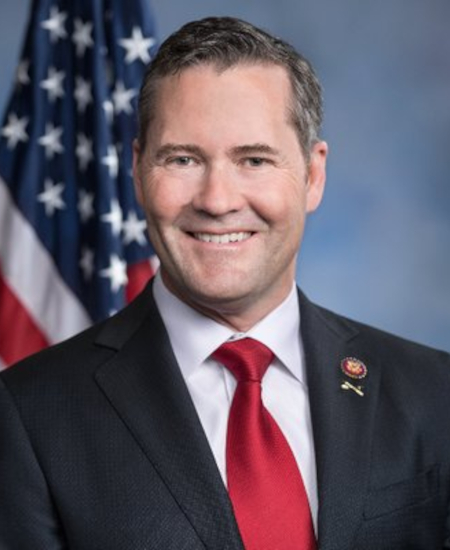
Rep. Michael Waltz
Sponsored bills
Department of Energy Science for the Future Act This bill supports specified research and development activities of the Department of Energy (DOE) Office of Science. The bill establishes various programs, including a basic energy sciences research and development program; a program of research and development for the application of advanced computing practices to foundational and emerging research problems in chemistry and materials science; a web-based platform to develop and provide access to a database of computed information on known and predicted materials properties and computational tools to accelerate breakthroughs in materials discovery and design; a biological systems science and climate and environmental science research and development program; research and development activities in biomolecular characterization and imaging science; earth and environmental systems science research; a coastal zone research initiative; an initiative focused on the development of engineered ecosystems; a program to implement a strategy for achieving computing systems with capabilities beyond exascale computing systems; a program of fundamental research and development of energy efficient computing and data center technologies relevant to advanced computing applications; a Quantum User Expansion for Science and Technology program or QUEST program; a collaborative research and development program of fusion energy technologies; a research program in elementary particle physics and advanced technology research and development to improve the understanding of the fundamental properties of the universe, including constituents of matter and energy and the nature of space and time; research activities on the nature of the primary contents of the universe, including the nature of dark energy and dark matter; a research program to discover and understand various forms of nuclear matter; a program across the DOE for the production of isotopes, including the development of techniques to produce isotopes, that the DOE determines are needed for research, medical, industrial, or related purposes; a midscale instrumentation program to enable the development and acquisition of novel, state-of-the-art instruments ranging in cost from $1 million to $20 million each that would significantly accelerate scientific breakthroughs at user facilities; and a high intensity laser research initiative. The DOE Office of Science shall continue to leverage U.S. participation in the Large Hadron Collider and prioritize expanding international partnerships and investments in the Long-Baseline Neutrino Facility and Deep Underground Neutrino Experiment. DOE shall support construction of a Facility for Rare Isotope Beams to advance the understanding of rare nuclear isotopes and the evolution of the cosmos. DOE shall expand opportunities to increase the number, diversity, equity, and inclusion of highly skilled science, technology, engineering, and mathematics (STEM) professionals working in DOE mission-relevant disciplines and broaden the recruitment pool to increase diversity, including expanded partnerships with Historically Black Colleges, Tribal Colleges, Minority Serving Institutions, emerging research institutions, and scientific societies. DOE shall establish within the DOE Office of Science, a cross-cutting research initiative to leverage the federal government's innovative analytical resources and tools, user facilities, and advanced computational and networking capabilities in order to prevent, prepare for, and respond to emerging infectious diseases, including COVID-19. DOE may not carry out gain-of-function research of concern.

National Science Foundation for the Future Act This bill reauthorizes the National Science Foundation (NSF) through FY2026 and authorizes programs and activities at the NSF. The bill establishes requirements for the NSF, including to enter into a contract with the National Academies of Science, Engineering, and Medicine to assess the status and opportunities for Pre-K through 12 science, technology, engineering, and mathematics, including computer science, (STEM) education research; award grants to establish no fewer than three multidisciplinary Centers for Transformative Education Research and Translation to support research and development of STEM education innovations; provide grants for research on programming that engages students in grades Pre-K through 8, including underrepresented and rural students, in STEM in order to prepare such students to pursue degrees or careers in STEM; award grants to support research and development activities to encourage greater collaboration and coordination between institutions of higher education and industry to enhance education, foster hands-on learning experiences, and improve alignment with workforce needs; award grants to establish a network of centers for science and technical education; award grants to advance research on the nature of learning and teaching at community colleges; award grants to establish traineeship programs for graduate students who pursue artificial intelligence-related research leading to a masters or doctorate degree; award grants to carry out research on the cyber workforce; establish a cybersecurity workforce data initiative; carry out a national initiative to facilitate the development of networks and partnerships to broaden participation in STEM studies and careers of groups historically underrepresented in such studies and careers; maintain a Research Security and Policy office to coordinate all research security policy issues across the NSF; award grants to support research to improve our understanding of the climate system and related human and environmental systems; support research to significantly advance our understanding of the food-energy-water system; award grants to advance knowledge of risk assessment and predictability to improve our ability to predict extreme events and natural hazards, including pandemics; and award grants to support basic research that will accelerate innovation to advance critical minerals mining strategies and technologies. The bill also establishes within the NSF a Directorate for Science and Engineering Solutions to advance research and development solutions to address societal and national challenges.
This resolution urges the President to facilitate private medical supply donations and to deliver urgently needed medical supplies, including oxygen generator plants, to India and countries neighboring India that are facing the spread of COVID-19.
This resolution supports the designations of National Post-Traumatic Stress Injury Awareness Month and National Post-Traumatic Stress Injury Awareness Day. The resolution supports (1) the education of members of the Armed Forces, veterans, their families, and the public about post-traumatic stress; and (2) efforts by the Department of Veterans Affairs and the Department of Defense to foster cultural change around the issue of post-traumatic stress. The resolution also encourages the leadership of the Armed Forces to support treatment of members of the Armed Forces who suffer from post-traumatic stress.
Cultivating Opportunity and Recovery from the Pandemic through Service Act or the CORPS Act This bill makes several changes to AmeriCorps programs during the COVID-19 health emergency. Specifically, the bill: increases living allowance payments to program participants; increases educational awards for program participants; relaxes program requirements, including reducing the age requirement for AmeriCorps Seniors to 45 and older; creates a pilot program to allow state commissions to directly place individuals in approved AmeriCorps programs; and allows for targeted AmeriCorps grants to fund recovery projects in communities disproportionately affected by COVID-19. The bill also excludes AmeriCorps living allowance payments and educational awards from taxable income for program participants.
Foreign Gain-of-Function Research Prevention Act of 2021 This bill prohibits the use of federal funds to conduct or support gain-of-function research involving potential pandemic pathogens by China, Russia, Iran, North Korea, or other foreign adversaries. Gain-of-function research is any research that is anticipated to confer an attribute on a pathogen to enhance its pathogenicity or transmissibility in mammals. If the Department of State finds that an entity has used funds for prohibited research, the entity may not receive any federal funding for a period of five years.
Retain Skilled Veterans Act This bill modifies the restriction related to the appointment of retired members of the Armed Forces to certain civil service positions in the Department of Defense. Under the bill, the 180-day waiting period before a retired member may be appointed to a position only applies to those positions in the excepted or competitive service classified at or above GS-14 of the General Schedule (or equivalent).
Puppy Protection Act of 2021 This bill requires the Department of Agriculture to expand standards that govern the humane handling, care, treatment, and transportation of animals to include new requirements for commercial dog dealers. Specifically, the standards must require dog dealers to provide to dogs adequate housing, exercise, and veterinary care; appropriate and nutritious food; continuous access to potable water; and meaningful socialization with humans and compatible dogs for at least 30 minutes each day. The standards must also include requirements for breeders to use safe breeding practices and make all reasonable efforts to find humane placement for retired breeding dogs.
Nicaragua Free Trade Review Act of 2021 This bill requires the U.S. Trade Representative to submit a report on the manner and extent to which Nicaragua is in compliance with the Dominican Republic-Central America-United States Free Trade Agreement.