

Directed Energy Threat Emergency Response Act This bill requires actions to address anomalous health incidents. The President must designate an appropriate senior official as the Anomalous Health Incidents Interagency Coordinator. The interagency coordinator must (1) coordinate the U.S. government's response to anomalous health incidents, (2) ensure that affected personnel and dependents get access to care, and (3) ensure adequate training and education for relevant U.S. government personnel. The President must also appoint an appropriate senior official as the Deputy Anomalous Health Incidents Interagency Coordinator. The bill also requires certain agencies, including the Department of Defense and the Office of the Director of National Intelligence, to designate an appropriate senior official to serve as the Anomalous Health Incident Agency Coordination Lead. These officials must work with the interagency coordinator to (1) achieve objectives related to anomalous health incidents, and (2) jointly provide quarterly briefings to Congress on its activities. Such agencies must also develop updated workplace guidance to address anomalous health incidents. The bill authorizes the Department of State to take certain actions, such as increasing staffing for the Health Incident Response Task Force and collecting data related to anomalous health incidents.
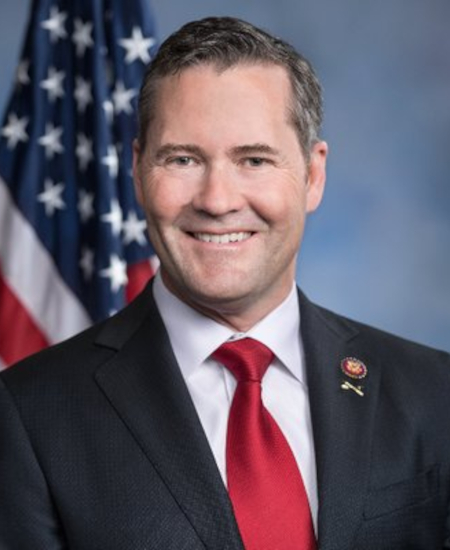
Rep. Michael Waltz
Sponsored bills
Ulysses S. Grant Bicentennial Recognition Act This joint resolution authorizes the President to posthumously appoint Ulysses S. Grant to the grade of General of the Armies of the United States, effective on April 27, 2022.
This bill requires each federal research agency with an annual extramural research expenditure of over $100 million to establish a requirement that, as part of a proposal for a research and development award from such agency each covered individual listed in the proposal certify that they are not a party to a malign foreign talent recruitment program from a foreign country of concern, such as China or Russia, in their proposal submission and annually afterwards for the duration of the award; and each institution of higher education or other organization applying for such an award certify that each covered individual who is employed by the institution of higher education or other organization has been made aware of this requirement. A covered individual means an individual who contributes in a substantive, meaningful way to the scientific development or execution of a proposed research and development project; and is designated as a covered individual by the federal research agency.
This bill requires each federal research agency with an annual extramural research expenditure of over $100 million to establish a requirement that, as part of an application for a research and development award from the agency each covered individual listed on the application for a research and development award certify that they have completed research security training that meets the training guidelines developed pursuant to the authority of the Office of Science and Technology Policy (OSTP) under this bill, and each institution of higher education or other organization applying for such an award certify that each covered individual who is employed by the institution or organization and listed on the application has been made aware of such requirement. The OSTP must develop guidelines for institutions of higher education and other organizations receiving federal research and development funds for use in developing their own training programs to address their unique needs, challenges, and risk profiles, including the adoption of training modules developed under this bill. The OSTP shall enter into an agreement or contract with a qualified entity for the development of online research security training modules for the research community, including modules focused on international collaboration and international travel, foreign interference, and rules for proper use of funds, disclosure, conflict of commitment, and conflict of interest.
Foreign Robocall Elimination Act This bill requires the Federal Communications Commission to establish an interagency task force to study the most effective ways to combat unlawful robocalls made into the United States from foreign sources.
This resolution expresses the sense of the House of Representatives that the United States shall recognize kind actions in our country, encourage kindness, spread love, and foster a culture of being kind to one another.
Protecting Access to Lifesaving Screenings Act of 2021 or the PALS Act This bill makes a series of changes relating to health insurance coverage of screening mammography. Specifically, the bill requires that any provision of law referring to current recommendations of the U.S. Preventive Services Task Force (USPSTF) with respect to breast cancer screening mammography be administered as if (1) the provision referred to USPSTF recommendations last issued before 2009; and (2) those recommendations applied to any screening mammography modality, including any digital modality of such a procedure. This requirement shall also apply to the Veterans Health Administration's policy on mammography screening for veterans. In addition, the bill preserves Medicare coverage for screening mammography, without a requirement for coinsurance, and expands the definition of screening mammography to include any digital modality of such a procedure. Further, the Centers for Medicare & Medicaid Services may not decrease the frequency with which screening mammography may be paid by Medicare for a woman over 39 years of age. In 2009, the USPSTF updated its guidelines to recommend against routine screening mammography for women between 40 to 49 years of age and to recommend biennial, instead of annual, screening mammography for most women between 50 to 74 years of age. In 2015, through the appropriations process, a three-year moratorium was placed on implementing the guidelines; the moratorium was subsequently renewed until January 1, 2023.
Improving Veterans Access to Congressional Services Act of 2021 This bill requires the Department of Veterans Affairs (VA) to permit a Member of Congress (upon request) to use a VA facility to meet with constituents. The VA and the General Services Administration must jointly identify available spaces in VA facilities for such purposes. The VA must prescribe regulations regarding such use of a VA facility by a Member of Congress.
National Commission on United States Involvement in Afghanistan Act of 2021 This bill establishes the independent National Commission on United States Involvement in Afghanistan. The commission shall assess and report on issues related to U.S. involvement in Afghanistan since 2001, specifically (1) U.S. strategic goals and interests and whether such goals were achieved, (2) U.S. assessments of the situation and whether those assessments were accurately communicated to policymakers and the public, (3) efforts by the United States and its allies to withdraw from Afghanistan, (4) U.S. efforts to evacuate U.S. citizens and Afghan allies, and (5) recommendations for corrective measures for future foreign policy endeavors. The commission terminates 60 days after submitting its final report to Congress.
Curriculum Review of Teachings Transparency Act or the CRT Transparency Act This bill requires a local educational agency, in order to receive certain federal education grants, to post on a publicly accessible website the curriculum for each grade level of its elementary and secondary schools.