

Inspire to Serve Act of 2021 This bill establishes new and expands existing military and national service programs, and revises federal personnel provisions. The bill establishes programs relating to civic education and service learning, including by providing grants supporting these programs for grades K-12 and at institutions of higher education. The bill also establishes the Council on Military, National, and Public Service which must coordinate executive branch policies to promote and expand opportunities for military service, national service, and public service. The Office of Management and Budget must create an online recruitment portal for service organizations. Additionally, the bill expands military service programs, including by expanding the Junior Reserve Officers' Training Corps, establishing pre-service tuition grants in exchange for enlisted service commitments, and creating a pilot program for military departments to partner with community colleges and vocational schools to provide service members with access to technical education programs. Service programs are expanded by increasing the number of specified national service positions, increasing certain living allowances and stipends, and creating new fellowship programs. Federal personnel provisions are revised to, among other things, provide certain national service alumni with noncompetitive eligibility for federal employment.
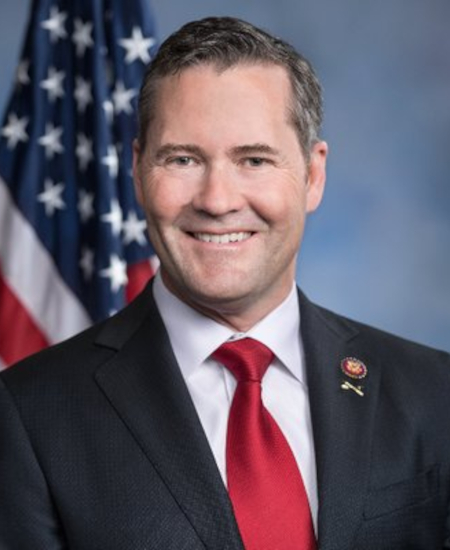
Rep. Michael Waltz
Sponsored bills
No Meddling in American Elections Act of 2021 This bill establishes a new criminal offense involving the public disclosure of false information by a federal officer or employee. Specifically, the bill prohibits the public disclosure of false information by a federal officer or employee (1) in any manner prejudicial to the safety or interest of the United States or for the benefit of any foreign government to the detriment of the United States, except with the approval of the President; or (2) for the purpose of influencing a federal election. A violation is punishable by a statutory maximum prison term of 10 years.
Extending Limits of U.S. Customs Waters Act This bill extends the customs waters territory of the United States. Under current law, customs waters means waters within four leagues of the coast of the United States. This bill revises the definition to include (1) the territorial sea of the United States to the limits permitted by international law in accordance with Presidential Proclamation 5928, dated December 27, 1988, that extended such limits to 12 nautical miles from the baselines of the United States; and (2) the contiguous zone of the United States to the limits permitted by international law in accordance with Presidential Proclamation 7219, dated September 2, 1999, that extended such limits to 24 nautical miles from the baselines of the United States.
Preserving Recreation, Oceans, Tourism, Environment, and Coastal Towns in Florida Act or the PROTECT Florida Act This bill prohibits oil and gas exploration and leasing on the Outer Continental Shelf in certain areas off the coast of the Gulf of Mexico and Florida. Specifically, the bill extends the moratorium until June 30, 2032, on oil and gas exploration, preleasing or leasing in certain areas of the Gulf of Mexico. Additionally, the bill establishes a moratorium until June 30, 2029, on oil and gas exploration, preleasing or leasing, or any related activity (including seismic testing) in the (1)Straits of Florida Planning Area, and (2) the area in the South Atlantic Planning Area that is south of the northernmost lateral seaward administrative boundary of Florida.
This bill designates the the Federal Building and United States Courthouse located at 111 North Adams Street in Tallahassee, Florida, as the Joseph Woodrow Hatchett United States Courthouse and Federal Building.
Original National Domestic Violence Awareness Month Resolution of 2021 This resolution supports the goals and ideals of National Domestic Violence Awareness Month. Further, it expresses the sense of the House of Representatives that Congress should continue to raise awareness of and support programs to end domestic violence.
State, Local, Tribal, and Territorial Fiscal Recovery, Infrastructure, and Disaster Relief Flexibility Act This bill allows states, tribes, territories, and localities to use certain COVID-19 relief funds for new categories of spending, including for natural disasters and infrastructure projects. It also makes changes to expenditure deadlines and other aspects of this funding. Specifically, recipients may use funds for emergency relief from natural disasters and associated negative economic impacts of natural disasters. In addition, recipients may use a portion of their COVID-19 relief funds for designated infrastructure projects, such as nationally significant freight and highway projects. Furthermore, the bill allows recipients to expend COVID-19 relief funds on these types of infrastructure projects until September 30, 2026. Under current law, recipients must expend the funds by December 31, 2024. Other changes in the bill include (1) modifying eligibility and allocation requirements for funding set aside for counties and Indian tribes that are near public lands, (2) allowing Indian tribes an additional year to expend their COVID-19 relief funds, and (3) establishing a process for government entities to decline COVID-19 relief funds and requiring any declined funds to be used to reduce the federal deficit.
This resolution recognizes the ultimate sacrifice of the unknown soldiers interred at Arlington National Cemetery and expresses gratitude and appreciation of all the members of the Armed Forces who have served during wars and peacetime. Additionally, the resolution commends all members of the 3d Infantry Regiment, specifically those who guard the Tomb of the Unknown Solider.
Clean Water Allotment Modernization Act of 2021 This bill revises the formula the Environmental Protection Agency (EPA) uses to determine how to distribute funds from the Clean Water State Revolving Fund (SRF) program. Under the program, the EPA allocates funding to states for water quality infrastructure projects, such as wastewater systems and stormwater management projects. In FY2022-FY2026, the EPA must provide an initial allotment to each state that is equal to the amount the state received in FY2023. The EPA must also provide an additional allotment to each state that is based on its share of the U.S. population. In FY2027 and each subsequent fiscal year, the EPA must use an updated allotment formula, which is based on the needs of states as identified in the most recently available clean watersheds needs survey. Beginning in FY2022, the formula must also provide allotments for Indian tribes and territories. In addition, the formula must provide an allotment for EPA's oversight of SRF projects to ensure they use American iron and steel.
Gold Star Spouses Non-Monetary Benefits Act This bill addresses certain federal benefits for surviving spouses of members of the Armed Forces, including those who have remarried. For purposes of noncompetitive appointment to government employment, a surviving spouse of a member of the Armed Forces who was married to such member at the time they died while on active duty may be appointed as a military spouse, regardless of remarriage. Additionally, widows or widowers of certain veterans who served on active duty must be considered preference eligible for purposes of government employment, regardless of remarriage. A surviving spouse who is eligible for the gold star lapel button is entitled to commissary and exchange privileges to the same extent and on the same basis as the surviving spouse of a retired member of the uniformed services. Such spouses are also entitled, upon request, to medical and dental care provided in facilities of the uniformed services. A surviving spouse who is eligible for a gold star lapel button must be permitted to use commissary stores and certain retail facilities on the same basis as a dependent of a member of the Armed Forces on active duty. In regard to Department of Veterans Affairs (VA) benefits, the remarriage of a surviving spouse of a veteran does not bar the furnishing of non-monetary benefits to a surviving spouse who is eligible for a gold star lapel button. Such surviving spouses who are eligible for a gold star lapel button are also eligible for certain VA home loan programs.