

Maddy summaryHR 287, the CRT Transparency Act, requires states and local school districts to publicly post all curriculum materials for every elementary and secondary school grade level on accessible websites. Specifically, it amends the Elementary and Secondary Education Act to mandate that states ensure local agencies post curricula online, and that local agencies themselves must make their grade-level curricula publicly available. This directly affects all public K-12 schools and their governing bodies by creating a new transparency requirement for teaching materials. The bill focuses solely on making curriculum content publicly accessible online, without specifying content types or subject areas. It does not alter curriculum content itself but requires existing materials to be posted online for public review.
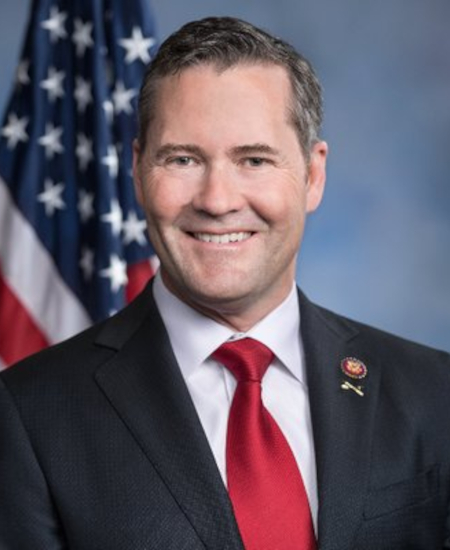
Rep. Michael Waltz
Sponsored bills
ADA Compliance for Customer Entry to Stores and Services Act or the ACCESS Act This bill establishes certain procedural requirements in relation to complaints under the Americans with Disabilities Act of 1990 (ADA) regarding access to public accommodations (i.e., businesses and nonprofits that are open to the public, such as stores, restaurants, and hotels). It also requires educational outreach and studies by federal agencies to promote ADA compliance. Specifically, the bill establishes a notice and cure period before a claimant may file a civil action against a public accommodation for failing to remove a barrier to access. Claimants must first provide the owner or operator of the public accommodation with a written notice specific enough to identify the barrier and the circumstances under which access was denied. An owner or operator then has 60 days to respond with a description of forthcoming changes and another 60 days after providing the description to make the changes, or show substantial progress in making the changes, before the claimant may proceed with a civil action. The bill also requires (1) the Department of Justice (DOJ) to develop a program to educate state and local governments and property owners on strategies to promote ADA compliance, (2) the Judicial Conference of the United States to develop a model program to promote alternative dispute resolution to resolve claims, and (3) the DOJ to study whether certain web content accessibility standards and telephone services provide reasonable accommodations under the ADA.
Maddy summaryThis bill requires colleges and universities receiving federal funding to ban TikTok (and related ByteDance apps) on all school-owned electronic devices - including computers, tablets, and smartphones - within 90 days of enactment. It prohibits federal funding for institutions that fail to implement such a ban, with an exception for research related to national security, law enforcement, or cybersecurity. The policy directly affects all public and private higher education institutions that accept federal funds, including grants and student aid programs. It does not restrict TikTok use on personal devices or apply to non-federal funding sources.
Maddy summaryHJRES 8 proposes a constitutional amendment to permanently set the Supreme Court's size at nine justices. The bill would require any future changes to the Court's composition to follow this specific number, locking in the current structure. It does not alter the existing Court size (which has been nine since 1869) but aims to prevent future adjustments through legislative action. The amendment must be ratified by three-fourths of state legislatures within seven years to take effect. This is a procedural proposal focused on constitutional structure, not a direct policy affecting citizens or programs.
Maddy summaryThis bill amends the tax code to prevent abortion expenses from being counted as deductible medical costs. It directly affects taxpayers who pay for abortions, as they can no longer include these expenses when calculating their medical deduction on federal tax returns. The key provision adds a new rule to the Internal Revenue Code stating that "amounts paid for abortion shall not be taken into account" under medical expense deductions. This change applies to tax years beginning after the bill's enactment date.
Maddy summaryHR 59, the SAVE Act, prohibits the sale of petroleum products drawn from the U.S. Strategic Petroleum Reserve (SPR) to entities headquartered in specific countries listed in federal regulations or to any entity based in Russia. This policy change directly affects energy companies and organizations operating in those designated countries or Russia, restricting their access to the government's emergency oil stockpile. The bill amends the Energy Policy and Conservation Act by adding a new section (170) that mandates this sales prohibition, with minor updates to existing law to reflect the change. The key mechanism is a direct ban on SPR petroleum sales to the specified entities, effective upon the bill's enactment.
Maddy summaryThis bill establishes nationwide recognition for valid concealed carry permits. It allows permit holders from any state to carry concealed handguns in states that either issue such permits or don't ban concealed carry, provided they carry a photo ID and their valid permit. Key provisions include making presentation of a valid permit and ID prima facie evidence of compliance, shifting the burden of proof to prosecutors if challenged, and requiring courts to award attorney fees to successful defendants. It does not override state laws prohibiting concealed carry on private property or government lands, nor does it affect restrictions on federal lands like national parks.
Maddy summaryThis bill would block federal funding to any state or local government that permits non-citizens to vote in federal, state, or local elections. States and localities seeking federal funds must certify they do not allow non-citizen voting as a condition of receiving those funds. The rule applies only to new funding agreements entered into after the bill's enactment, not existing contracts. It directly affects state and local government budgets by tying federal financial assistance to compliance with citizenship requirements for voting.
Jurists United to Stop Trafficking Imitation Child Exploitation Act of 2023 or the JUSTICE Act of 2023 This bill broadens the federal criminal prohibition on importation or transportation of obscene materials. Specifically, the bill makes it a crime to import, or knowingly use a common carrier or interactive computer service to transport, a child sex doll.
Maddy summaryHR 130, the Thin Blue Line Act, amends federal death penalty law to add a new consideration for sentencing. It specifies that killing or targeting a law enforcement officer (including firefighters and other first responders) while they are performing official duties, because of their duties, or due to their status as a public official qualifies as an aggravating factor. This change directly affects defendants convicted of such killings, making the death penalty a potential sentence in these specific cases. The bill does not alter sentencing ranges but adds this circumstance as a factor judges must weigh during sentencing.