

Maddy summaryThis bill extends funding for the existing Public Health Service Act program focused on raising public awareness about Alzheimer's disease and related dementias. It authorizes $33 million annually for fiscal years 2025 through 2029 to support public health education and outreach initiatives. The program directly affects public health organizations and community groups that develop and distribute educational materials about Alzheimer's prevention, diagnosis, and care. The key provision is the multi-year funding extension, ensuring continued support for nationwide awareness efforts without altering the program's core structure.
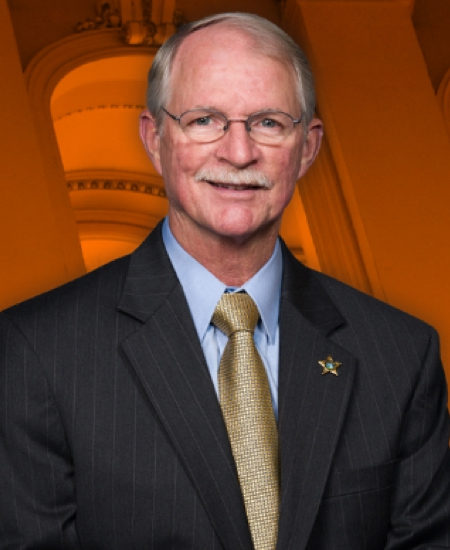
Rep. John H. Rutherford
Sponsored bills
Maddy summaryThis bill designates the U.S. Customs and Border Protection Air and Marine Operations Marine Unit at 101 Km 18.5 in Cabo Rojo, Puerto Rico, as the "Michel O. Maceda Marine Unit" to honor Marine Interdiction Agent Michel O. Maceda, who was mortally wounded during a 2022 drug interdiction operation. The bill ensures all future government documents, maps, and references will use this new name for the unit. It does not change policies, funding, or operations - only commemorates Agent Maceda's service and sacrifice.
Maddy summaryHR 8704 establishes a $10 million grant program administered by the National Fish and Wildlife Foundation to reduce harmful interactions between ocean users (like fishermen, tourism operators, and shipping companies) and North Atlantic right whales and other large cetaceans. The program funds research on avoidance technologies, awareness campaigns about existing whale protections, and infrastructure to share management information. Eligible recipients include states, nonprofits, businesses in maritime sectors, and tribal governments, with priority given to projects that reduce whale harm, involve collaboration among ocean users, and support U.S. small businesses. The bill also freezes existing vessel strike reduction rules until 2030 and requires biennial reports on grant effectiveness.
Maddy summaryThe FEMA Loan Interest Payment Relief Act requires FEMA to reimburse local governments and electric cooperatives for interest paid on qualifying disaster recovery loans. A qualifying loan must be used for FEMA-covered activities with at least 90% of proceeds dedicated to those purposes. Reimbursement covers the lesser of actual interest paid or what would have been paid at the prime interest rate, as defined by the Federal Reserve. This relief applies to interest accrued in the seven years preceding the bill's enactment.
Maddy summaryThis bill allows livestock producers and their employees to take black vultures (Coragyps atratus) that are harming or threatening livestock, bypassing the usual protections under the Migratory Bird Treaty Act. It directly affects ranchers and farm workers in areas where black vultures cause livestock deaths or injuries. The key provision requires annual reporting to the U.S. Fish and Wildlife Service about any vultures taken, using a simplified form similar to existing reporting for permitted bird take. This creates a specific, limited exception to federal bird protections for livestock protection, with no new restrictions on vulture populations.
Maddy summaryHR 5349, the "Crucial Communism Teaching Act," requires the Victims of Communism Memorial Foundation to develop a high school curriculum and oral history resources about communism. The bill directs this foundation to create materials for social studies, history, and government classes that teach students: (1) communism caused over 100 million deaths worldwide, (2) communism and similar ideologies pose dangers to democracy, and (3) 1.5 billion people still live under communist systems. The curriculum must include comparative discussions of political ideologies and feature personal stories from individuals who experienced communist regimes. This bill directly affects high school students and educators in public schools by mandating specific content for civic education.
Maddy summaryHR 10274, the POD Act of 2024, requires the Department of Homeland Security (DHS) and Department of Health and Human Services (HHS) to allow immediate or timely access for Members of Congress (or their designated staff) to inspect detention facilities housing immigrants or alien minors. The bill mandates that Congress members must be permitted to enter DHS facilities within 24 hours of requesting access, and HHS facilities housing minors within two business days, without temporary modifications that alter what can be observed during visits. It prohibits facilities from making any last-minute changes to hide conditions during congressional oversight visits. This bill directly affects all DHS and HHS detention facilities, including those operated by private contractors, by strengthening congressional oversight authority.
Maddy summaryHR 1505, the "No Stolen Trademarks Honored in America Act of 2023," modifies a law to prevent U.S. courts from recognizing trademark, trade name, or commercial name rights tied to business assets that were confiscated. It specifically affects individuals or entities claiming such rights who knew or should have known the mark was connected to confiscated assets, unless the original owner or successor gave consent. The bill requires courts to deny recognition of these claims unless the claimant had no knowledge of the confiscation at the time of acquisition. This change applies to all U.S. courts and executive branch entities handling such cases.
Maddy summaryThis bill designates the Department of Veterans Affairs medical center in West Palm Beach, Florida, as the "Thomas H. Corey VA Medical Center." The change updates all federal references - including laws, regulations, maps, and documents - to reflect the new name. It directly affects the facility's official identity and veteran services documentation. The bill is procedural and does not alter healthcare services or funding.
Maddy summaryThe Working Dog Commemorative Coin Act (HR 807) directs the U.S. Treasury to mint three types of commemorative coins honoring working dogs' service: $5 gold coins, $1 silver coins, and half-dollar coins with specific weight and composition requirements. Each coin will carry a surcharge ($35 for $5 coins, $10 for $1 coins, $5 for half-dollars) that will be paid directly to America's VetDogs to support their programs providing service dogs for veterans, the disabled, and others. The coins will be issued in 2027 with designs reflecting working dogs' roles in military, detection, therapy, and assistance work. The legislation specifies that all surcharge revenue must fund America's VetDogs' operations without creating new government programs. This is a commemorative measure focused on honoring working dogs' contributions through coin sales, with all surcharge funds going to a specific nonprofit organization.