Nicaragua Free Trade Review Act of 2021 This bill requires the U.S. Trade Representative to submit a report on the manner and extent to which Nicaragua is in compliance with the Dominican Republic-Central America-United States Free Trade Agreement.
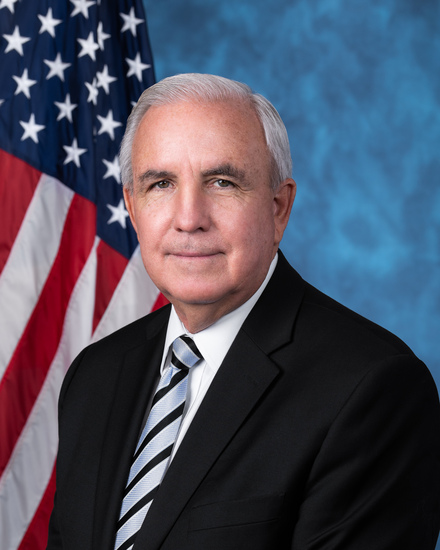
Rep. Carlos A. Gimenez
Sponsored bills
Defending Domestic Produce Protection Act This bill establishes a process by which a core seasonal industry may petition for countervailing and antidumping duties. A core seasonal industry means the producers (1) of a domestic like product that is a raw agricultural product, (2) whose collective output constitutes a majority of the total production in any state or group of states that accounts for a major portion of the total production during a discrete season or cyclical period of time, and (3) that make substantially all of their sales during that season or time period. The bill also provides that this process shall apply with respect to goods from Canada and Mexico.
Shark Fin Sales Elimination Act of 20 21 This bill addresses the sale of shark fins and the inclusion of rays and skates in the Seafood Traceability Program. The Seafood Traceability Program has data reporting and recordkeeping requirements at the time of entry for imported fish or fish products entered into U.S. commerce. The bill makes it illegal to possess, buy, or sell shark fins or any product containing shark fins, except for certain dogfish fins. A person may possess a shark fin that was lawfully taken consistent with a license or permit under certain circumstances. Penalties are imposed for violations under the Magnuson-Stevens Fishery Conservation and Management Act. The Department of Commerce must revise its regulations to include rays and skates as species that are subject to the Seafood Traceability Program.
This bill designates the community-based outpatient clinic of the Department of Veterans Affairs in Middleburg, Florida, as the A.K. Baker VA Clinic.
Puerto Rico Statehood Admission Act This bill establishes a process for the admission of Puerto Rico into the union as a state, on an equal footing with all other states, based on a majority vote of the people of Puerto Rico.
Trillion Trees Act This bills establishes a variety of requirements and incentives to plant trees and conduct other land management practices for the purposes of capturing and storing carbon in domestic and international trees and forests. Additionally, the bill provides incentives to research or develop other carbon sequestration tools. Specifically, the bill directs the Department of Agriculture (USDA) to set targets to increase forest carbon stock through January 1, 2100, for the purposes of sequestering and storing carbon in U.S. forests. It also establishes and provides funding for the Trillion Trees Challenge Fund to provide grants to nonfederal entities for activities related to reforestation efforts on public or private lands. In addition, it raises the cap on the Reforestation Trust Fund to enhance forest health in the National Forest System and requires the USDA to establish a Tree City USA Grant Program. The bill also allows the U.S. Agency for International Development to enter into an agreement with a nonprofit organization to establish an International Forest Foundation to promote reforestation and prevent deforestation. Additionally, it establishes requirements and incentives to address seedling shortages and support nurseries. Finally, the bill provides market incentives to research or develop other carbon sequestration tools relating to biochar, sustainable building practices, biochemical and bioplastic products, and biomass energy.
Accessing America's Critical Minerals Act of 2021 This bill establishes deadlines to complete the environmental review of critical mineral projects on federal land and sets forth related requirements to expedite the review of such projects under the National Environmental Policy Act of 1969 (NEPA). If an environmental assessment or environmental impact statement is required for such project, then all necessary federal review and permit considerations must be completed within 18 or 24 months, respectively. However, the review may exceed the time limit if the project sponsor agrees. The lead agency of the environmental review of such project must allow a state or local government, an Indian tribe, a project sponsor, or another appropriate entity to assume certain federal responsibilities regarding the environmental review of the project upon the request of such entity. Further, the bill authorizes a lead agency to determine that the requirements of NEPA have been satisfied if a state or federal agency acting under state or federal law has addressed specified factors, such as the environmental impact of the action to be conducted under the permit. If the lead agency does not make such a determination, then the agency must enter into an agreement with the project sponsor to set time limits for each part of the permitting process.
Hamas International Financing Prevention Act This bill imposes sanctions targeting Hamas, the Palestinian Islamic Jihad, and any affiliate or successor groups. The President shall periodically report to Congress a list of each foreign person or instrumentality that knowingly assists, provides significant support or services to, or is involved in a significant transaction with a senior member or supporter of any of the targeted groups. The President shall impose two or more sanctions on the named persons. Specifically, the person may be (1) denied credit and services from the Export-Import Bank, (2) barred from purchasing certain controlled defense articles, (3) denied exports of items on the U.S. Munitions List, (4) prevented from receiving exports of certain goods or technology controlled for national security reasons, (5) prohibited from receiving financing of more than $10 million from any U.S. financial institution, or (6) subject to property-blocking restrictions. The President shall periodically report to Congress a list of foreign governments that have repeatedly provided material support for the targeted groups' terrorist activities. The President shall bar these governments from receiving for one year (1) U.S. assistance, or (2) exports of controlled munitions. The Department of Treasury shall instruct U.S. leadership of international financial institutions to oppose the provision of assistance to an identified government for one year. The bill provides for certain exceptions and waivers, such as for transactions that would serve U.S. national interests. The President shall report to Congress and periodically provide briefings on other specified topics related to the targeted groups, such as where these groups secure financing and surveillance equipment.

Surface Transportation Research and Development Act of 202 1 This bill addresses provisions related to surface transportation research, development, and deployment programs of the Department of Transportation (DOT). Among other provisions, the bill reauthorizes through FY2026 DOT highway research and development programs, including highway safety, technology and innovation deployment, training and education, and intelligent transportation systems; sets forth a program to provide awards to institutions of higher education or nonprofit research organizations to establish regional road weather research and development centers; reauthorizes through FY2026 the University Transportation Centers Program, the Bureau of Transportation Statistics, the public transportation research and development program, the National Cooperative Rail Research Program, the hazardous materials research and development program, and the National Cooperative Freight Transportation Research Program; establishes Centers of Excellence to advance research and development that improves the resilience of regions of the United States to natural disasters, extreme weather, and the effects of climate change on modal and multimodal transportation and infrastructure; directs DOT to carry out and publish the results of a study for the purpose of informing land use and transportation planning for accessible health, food, education, and other essential services and activities; and requires DOT to establish a multimodal national cooperative freight transportation research program, a Heavy Freight Automated Trucking Research Initiative, and an Advanced Transportation Research and Innovation Program.
This resolution strongly commends Lithuania for refusing to ratify the Political Dialogue and Cooperation Agreement between the European Union (EU) and Cuba. It also calls on other EU members to follow Lithuania's footsteps and annul their ratification of the agreement.