

Prohibition of Agricultural Land for the People's Republic of China Act This bill requires the President to prohibit nonresident aliens, foreign businesses, and agents associated with China's government from (1) purchasing agricultural (including ranching) real estate located in the United States, or (2) participating in Department of Agriculture programs that are unrelated to food and safety regulatory requirements.
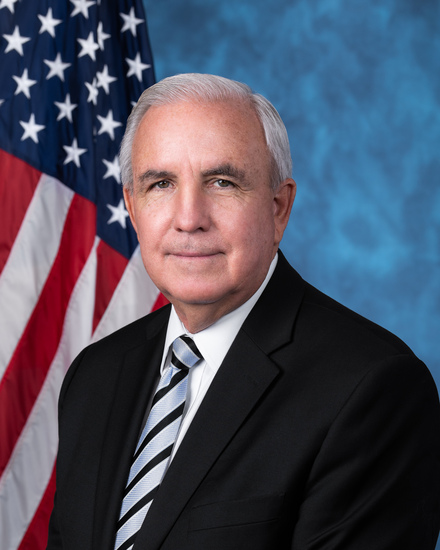
Rep. Carlos A. Gimenez
Sponsored bills
Maddy summaryThis bill helps new car dealers affected by pandemic-era supply chain disruptions by changing tax rules for inventory sales. It allows dealers using LIFO accounting to treat certain sales of unsold vehicles (liquidations) between March 2020 and December 2021 as "qualified" for tax purposes. Dealers can defer recognizing income from these sales and have until 2026 to replace the sold vehicles before potential tax adjustments apply. The provision specifically targets dealers who couldn't replenish inventory during the supply chain crisis.
Maddy summaryThis bill establishes an EPA program to protect and restore South Florida's waterways, ecosystems, and coastal habitats. It creates two grant programs: one for restoration projects (like wetlands, coral reefs, and the Everglades) and another for environmental education in schools. Eligible recipients include state/local governments, tribes, universities, and nonprofits. The bill authorizes $50 million annually (2024-2028) for these efforts, with specific rules ensuring funds support projects in defined areas like the Everglades, Florida Bay, and Indian River Lagoon.
Ceasing Age-Based Trucking Restrictions Act This bill exempts drivers who transport goods from a port of entry and another place within the same state from age restrictions and other requirements that apply to federal commercial driver's licenses.
Maddy summaryHRES 68 is a symbolic resolution supporting National Catholic Schools Week, which recognizes Catholic schools' educational and community contributions. It does not create new policies or funding but formally endorses the week's goals - highlighting Catholic schools' academic achievements, diverse student enrollment, and role in fostering moral development. The resolution was introduced by multiple House members and passed without opposition, focusing on acknowledgment rather than legislative action. It directly affects Catholic schools by affirming their nationwide impact, though it has no binding effect on federal programs or resources.
This resolution recognizes and appreciates the dedication and devotion demonstrated by the men and women of law enforcement. It also condemns calls to defund, disband, dismantle, or abolish the police.
Maddy summaryThis bill requires manufacturers of internet-connected toys (targeted at children) to clearly label packaging and include simple explanations in privacy terms about how personal data is collected, stored, and shared. Specifically, labels must state if the toy connects to the internet and collects children's information (like voice recordings or location), and privacy terms must detail what data is gathered, how it's used, and whether parents can disable data collection. It directly affects toy companies selling such products in the U.S. and is enforced by the FTC under existing laws for deceptive practices. The goal is to give parents clear, upfront information about data handling without restricting toy functionality.
Maddy summaryThe Educational Choice for Children Act creates tax credits for individuals and corporations that contribute to scholarship granting organizations providing education scholarships. Individuals can claim a credit up to $5,000 or 10% of their income, while corporations can claim up to 5% of taxable income. The scholarships are available to students from households with income up to 300% of the area median income, and can be used for private school tuition, tutoring, and other educational expenses at elementary and secondary schools. The bill includes strict requirements for scholarship organizations to verify income, conduct audits, and prevent misuse of funds, while also prohibiting government control over these organizations and protecting private and religious schools from discrimination in the program. It establishes a $10 billion annual cap on the total tax credits available.
Maddy summaryHR 572, the Ensuring Workers Get PAID Act of 2023, establishes a permanent Payroll Audit Independent Determination (PAID) program based on a successful 2018-2019 pilot. It allows private-sector employers to voluntarily self-audit payroll for Fair Labor Standards Act (FLSA) violations (minimum wage, overtime), submit detailed records to the Department of Labor, and resolve unpaid wages. Affected employees (excluding those covered by H-1B/H-2B visa programs or Davis-Bacon/Service Contract Acts) receive settlement offers; they can accept (waiving private lawsuits) or decline. The program aims to increase efficiency - showing in the pilot that self-audits paid more back wages per case and per enforcement hour than traditional methods.
This concurrent resolution calls on the President to abandon the One China policy in favor of one that recognizes Taiwan as an independent country that is not a part of China. The resolution also urges the President to bolster diplomatic and economic relations between the United States and Taiwan through specified means.