

Maddy summaryHRES 905 is a House resolution commemorating the 200th anniversary of the Monroe Doctrine, first articulated by President James Monroe in 1823. The resolution formally recognizes the doctrine's historical significance in establishing U.S. policy against foreign colonization in the Western Hemisphere and its enduring influence on U.S. foreign policy. It resolves that the House will "commemorate" the anniversary, "reassert" the U.S. position against foreign malign influence threatening Western Hemisphere democracies, and "recognize" the doctrine's principles as a foundational element of U.S. foreign policy. This is a purely ceremonial resolution with no new policy or funding implications.
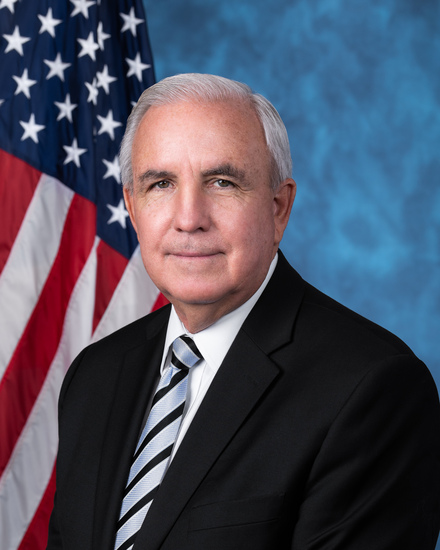
Rep. Carlos A. Gimenez
Sponsored bills
Maddy summaryThis bill allows state and local governments to divest public funds (including pensions and endowments) from entities investing in China, specifically targeting those listed on U.S. government sanctions or restrictions. It defines "covered entities" as Chinese companies or their subsidiaries on lists like the OFAC Specially Designated Nationals List, military-industrial complex lists, or entities linked to forced labor. Governments must provide 90 days' notice, allow written comments, and verify an entity’s inclusion on these lists before enforcing divestment. The law explicitly excludes ERISA-covered employee benefit plans from these requirements and ensures state actions don’t conflict with federal law.
Maddy summaryHR 6511, the "Justifiable Use of Money for Peace Act," waives repayment for U.S. citizens and lawful permanent residents evacuated from Israel following the Hamas terror attacks. It invalidates any repayment agreements or promissory notes for travel expenses covered by the State Department during this evacuation period and prohibits officials from seeking reimbursement or conditioning transportation on repayment. The bill directly affects individuals repatriated to the U.S. under this evacuation effort. It makes these evacuation costs fully covered by the government with no financial obligation to the affected individuals.
Maddy summaryHRES 793 is a resolution passed by the U.S. House of Representatives calling on Hamas to immediately release all 199 hostages taken during Hamas' October 7, 2023 attack on Israel. The resolution condemns Hamas for the attack, the taking of hostages, and threats against hostages, while stating that holding hostages violates international humanitarian law under the Geneva Conventions. It demands the immediate release of all hostages and expresses sympathy for victims and their families. As a symbolic resolution, it does not create legal obligations but formally expresses the House's position.
Maddy summaryHR 6466, the AI Labeling Act of 2023, requires developers of AI tools that create images, video, audio, multimedia, or text content to add clear, permanent labels identifying the content as AI-generated. It mandates that labels include metadata (like the AI tool used and creation time) and prevents removal through contractual requirements for platforms and users. The bill directly affects AI developers, social media platforms, and content-sharing services by imposing labeling obligations and enabling FTC enforcement for violations. A working group will develop technical standards for detecting AI content within one year, but the core requirement is the mandatory labeling of AI-generated material to help users recognize it.
Maddy summaryThis bill appropriates $14.3 billion in supplemental security funding to Israel following the October 7, 2023 attacks. The funding includes $4 billion for Iron Dome and David's Sling defense systems, $1.35 billion for the Iron Beam defense system development, and $3.5 billion for foreign military financing. The bill requires regular reporting to Congress on security assistance provided to Israel and designates all funds as "emergency requirements" under federal budget law. It also modifies existing laws to facilitate the transfer of defense articles and services to Israel, aiming to strengthen Israel's defense capabilities against rocket threats.
Maddy summaryThis resolution (HRES 859) is a ceremonial House measure honoring U.S. veterans on Veterans Day 2023. It formally recognizes veterans' service and sacrifice, calling on the American public to observe Veterans Day to acknowledge their role in protecting U.S. freedoms. The resolution does not create new policies, allocate funds, or affect specific groups - it is purely symbolic. It was introduced by 33 bipartisan House members and passed by the House without committee action.
Maddy summaryThe PRICE Act establishes a federal grant program to improve affordable manufactured home communities. It provides competitive grants to eligible recipients - including resident-owned cooperatives, local governments, and nonprofits - to fund repairs, infrastructure upgrades, weatherization, energy efficiency, and services like eviction prevention in communities serving low- and moderate-income residents. The program prioritizes projects that preserve long-term affordability and protect residents' health and safety, with specific restrictions allowing replacement of pre-1976 manufactured homes. Grants may also support community resiliency activities and land acquisition, ensuring these communities remain accessible to vulnerable residents.
Maddy summaryThis bill would authorize the U.S. government to confiscate Russian sovereign assets held in U.S. jurisdiction and use those funds to support Ukraine's reconstruction and humanitarian needs following Russia's invasion. It prohibits releasing these blocked assets until Russia fully compensates Ukraine or agrees to an international compensation mechanism. The bill establishes a "Ukraine Support Fund" to hold confiscated assets and requires regular congressional reporting on how these funds are allocated for Ukraine's recovery. It also includes provisions for international coordination with allies on sanctions and asset management related to Russia's invasion of Ukraine.
Maddy summaryThe SHIP Act imposes sanctions on foreign entities that knowingly handle Iranian petroleum, targeting those involved in port operations, transportation, refining, or ship-to-ship transfers of Iranian oil. Starting 90 days after enactment, the President must block assets, deny visas, and impose penalties on individuals or companies engaging in these activities, including family members or owners of sanctioned entities. It requires annual reports tracking Iran's oil exports, revenues, and key players like shipping companies and ports. The sanctions terminate if the President certifies Iran has stopped supporting terrorism and dismantled weapons programs.