

Maddy summaryHR 1321, the "More Homes on the Market Act," increases the tax exclusion for gains from selling a primary residence. It doubles the exclusion amount from $250,000 to $500,000 for single filers and from $500,000 to $1,000,000 for married couples filing jointly. The bill also adds automatic annual inflation adjustments to these amounts starting in 2023, ensuring the exclusion keeps pace with rising costs. This change directly affects homeowners who sell their primary residence and meet the ownership and use requirements under current tax law. The policy modifies the Internal Revenue Code to make selling a home less financially burdensome for qualifying homeowners.
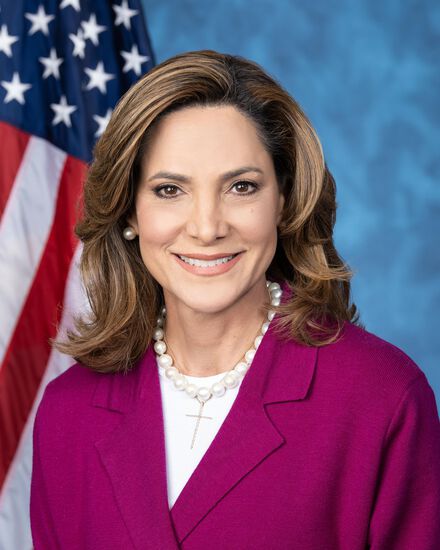
Rep. Maria Elvira Salazar
Sponsored bills
Maddy summaryHR 1247 would award a Congressional Gold Medal to the Freedom Riders collectively, honoring their pivotal role in challenging segregation in interstate travel during the Civil Rights movement. The medal, to be struck by the U.S. Mint and displayed at the Smithsonian Institution, recognizes their nonviolent protests that led to the 1961 federal ban on segregation in interstate public facilities. This is a symbolic tribute with no legal effect, as the bill does not create new policies or alter existing laws.
Maddy summaryThis bill (HR 1239) renames a specific street segment in Washington, D.C., between 16th Street NW and Fuller Street NW to "Oswaldo Payá Way." It also redesignates the address 2630 16th Street NW as 2630 Oswaldo Payá Way for all official references. The bill is procedural, with no policy changes beyond the symbolic renaming to honor Cuban dissident Oswaldo Payá Sardiñas. The change affects District of Columbia street signage and official records referencing that location.
Maddy summaryHR 1218, the Expediting Israeli Aerial Refueling Act of 2023, requires the U.S. Air Force to train Israeli pilots and ground personnel to operate KC-46 aircraft within 60 days of enactment, including participation in the U.S. Military Personnel Exchange Program. The bill mandates the rotational deployment of U.S. KC-46 aircraft to Israel for up to five years or until Israel commissions its own KC-46s, with each deployment lasting at least 270 days annually. It directly affects the Israeli Air Force by enabling their use of U.S. refueling capabilities and the U.S. military through specific training and deployment obligations. The law expires ten years after enactment.
This resolution condemns Russia for committing acts of genocide against the Ukrainian people. It also calls on the United States, in cooperation with North Atlantic Treaty Organization and European Union allies, to undertake measures to support the Ukrainian government to prevent further acts of Russian genocide against the Ukrainian people.
Maddy summaryHR 1194, the "Fighting Presidential Budget Waste Act," requires the President and the Office of Management and Budget (OMB) to consider findings from the most recent GAO report on reducing government waste when preparing the annual federal budget. The bill specifically directs them to review the GAO report titled "Additional Opportunities to Reduce Fragmentation, Overlap, and Duplication and Achieve Billions of Dollars in Financial Benefits" (or a successor report). This mandate applies to all budget submissions under Section 1105 of Title 5, U.S. Code. The law does not create new spending or programs but changes the budget preparation process by requiring federal officials to factor in GAO recommendations for cost savings.
Maddy summaryHR 1007, the Nuclear Assistance for America’s Small Businesses Act, delays collection of nuclear regulatory fees for small businesses applying for permits to build or operate advanced nuclear reactors. It allows eligible small businesses (defined as those with NAICS code 221113 that responded to NRC's RIS-20-02) to delay up to 50% of pre-application fees and 35% of post-application fees. The delayed fees must be repaid over 10 years at 10% annually, or accelerated to 25% if the business fails to submit a covered application within 5 years, withdraws it, or faces denial. This applies specifically to applications for construction permits, operating licenses, or combined licenses for advanced nuclear reactors under NRC oversight.
Maddy summaryHR 1008 adds harmful algal blooms to the list of qualifying events for federal disaster assistance under the Stafford Act, enabling affected communities to access emergency aid. It also requires the CDC to conduct a study on health effects from airborne toxins during blooms within one year of enactment, to be shared with relevant congressional committees. The bill establishes a framework for federal response but does not provide new funding or directly regulate pollution sources. It primarily affects coastal and lake communities where blooms threaten public health, tourism, and local economies through potential beach closures, fishing restrictions, and property value declines.
Transparent and Accessible Sanctions Coordinating Office Act or the TASCO Act This bill requires the President to ensure that all materials related to the imposition of sanctions are available in a consolidated, machine-readable database. The bill also establishes the Transparent and Accessible Sanctions Coordinating Office (TASCO) within the executive branch. TASCO must set up a publicly available database of individuals and entities subject to U.S. sanctions. The database must include sanctions data from various federal agencies, including the Department of the Treasury, Department of Commerce, and Department of State.
Maddy summaryThe DEMOCRACIA Act (HR 1120) imposes sanctions on foreign entities and individuals providing financial, material, or technological support to Cuba's military, security, or intelligence sectors, or who are responsible for human rights abuses in Cuba. It would block property of foreign persons engaging in these activities and deny visas to those determined to support Cuba's repressive sectors. The bill also requires the President to provide unrestricted internet service to Cuban citizens that is not censored by the Cuban government. These provisions target foreign entities supporting Cuba's authoritarian regime rather than directly affecting Cuban citizens. The bill aims to pressure the Cuban government to end human rights abuses and move toward democratic reforms.