

Maddy summaryHR 3533, the "Home Advantage for American Families Act," primarily targets foreign purchases of residential property in major U.S. cities and adjusts housing tax credits. It requires foreign buyers to report transaction details (including funds source and buyer identification) to the Treasury when purchasing homes in the 15 largest metro areas, aiming to combat money laundering. The bill also doubles the federal tax withholding rate from 15% to 30% on foreign sales of residential property. Additionally, it expands low-income housing tax credits by creating a new allocation set-aside for single-family homes in designated census tracts, with changes effective for future credit allocations.
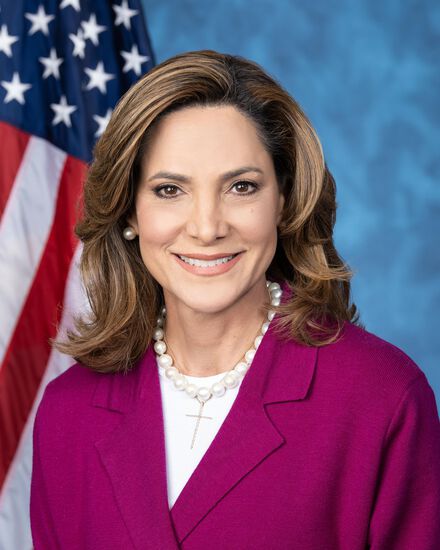
Rep. Maria Elvira Salazar
Sponsored bills
Maddy summaryHR 3491, the POJA Act of 2023, amends the Age Discrimination in Employment Act to explicitly prohibit age discrimination against *job applicants* (not just current employees) in hiring. It requires the Equal Employment Opportunity Commission to study age discrimination claims from 2015 onward, including closed cases, and report findings and recommendations to Congress within one year of enactment. The bill directly affects job seekers aged 40 and older who face potential age bias during the hiring process. Key provisions include updating the legal definition of protected individuals and mandating a comprehensive study to identify patterns and improve prevention strategies.
Maddy summaryThis bill establishes federal standards for labor-management cooperation between public safety employers (state and local governments) and public safety workers (law enforcement officers, firefighters, and emergency medical services personnel). It requires the Federal Labor Relations Authority to determine if states substantially provide rights like collective bargaining, union representation, and binding arbitration for these workers. States found lacking would need to follow federal bargaining procedures after a two-year transition period or following the next legislative session. The bill explicitly respects existing state laws that provide comparable or better rights to public safety workers. It also prohibits strikes or work stoppages that would disrupt emergency services.
Maddy summaryHR 3537 authorizes the minting of commemorative coins to mark the 100th anniversary of the U.S. Foreign Service, established by the 1924 Rogers Act. The bill specifies three coin types ($5 gold, $1 silver, and half-dollar clad) with limited mintage (50,000 gold, 400,000 silver, 750,000 half-dollars) to be issued in 2025, featuring designs honoring diplomatic history. A surcharge on each coin sale ($35 for gold, $10 for silver, $5 for half-dollars) will fund the Association for Diplomatic Studies and Training (ADST) to support its oral history program and diplomatic preservation efforts. The coins will be legal tender, sold at cost-plus-surcharge, with all revenue directed to ADST per the bill's provisions.
Walter Patterson and Werner Foerster Justice and Extradition Act This bill directs the President to report annually to Congress on fugitives and other individuals with respect to whom the United States is seeking extradition from other countries. The report shall contain information on the number of such individuals, U.S. diplomatic efforts to secure their return, and the factors that have prevented the resolution of outstanding cases.
This resolution expresses support for Israel's efforts of self-determination and collective security against external forces, recognizes Jerusalem as the legitimate capital city of Israel, and condemns actions by Hamas against the people of Israel.
Maddy summaryHR 3442, the America’s CHILDREN Act of 2023, creates a pathway to permanent residency for certain college graduates who entered the U.S. as children on specific work visas. It directly affects individuals who were lawfully present as dependents of nonimmigrant visa holders (like H-4 or L-2) for at least 8 years, graduated from a U.S. college, and have lived in the U.S. for 10+ years total. Key provisions include protecting applicants from "aging out" of eligibility by basing age calculations on when their parent’s visa petition was filed (not current age), and allowing them to retain their original visa application date ("priority date") if they later switch to a different visa category. The bill aims to provide stability for young adults who grew up in the U.S. but face immigration barriers due to visa status.
Maddy summaryThis bill allows utility companies (like electricity, gas, and internet providers) and landlords to report payment history for essential services to credit bureaus, expanding credit reporting beyond traditional loans. It directly affects consumers who pay these bills regularly but may lack traditional credit history, potentially helping them build credit. Key provisions limit reporting to actual payment behavior (not usage data) and prevent utilities from reporting late payments if a consumer is on a valid payment plan. The bill also requires a government study to assess the impact of this reporting on consumers within two years.
U.S.-Israel Cooperation Expansion Act This bill provides that it is U.S. policy to (1) support bilateral training between U.S. and Israeli law enforcement for sharing best practices related to anti-terrorism, community policing, and managing mass casualties; and (2) continue to counter threats to U.S. and Israeli security and embassy protection posed by illicit cross-border tunneling and unmanned aerial systems.
Maddy summaryThis bill amends the Fly America Act to allow U.S. federal employees, dependents, and Peace Corps volunteers to use foreign airlines for transporting up to three domesticated animals (dogs or cats) when no U.S. carrier is willing or able to provide that service. It requires that the cost paid to the foreign airline not exceed what a U.S. carrier would charge for the same transport, with the traveler covering any difference if the foreign airline is cheaper. The provision applies only to pet transportation during travel between locations outside the U.S., or to/from the U.S., and does not change general travel requirements. It directly affects federal personnel traveling with pets who face limited U.S. carrier options.