

Secure E-Waste Export and Recycling Act This bill prohibits the export or reexport of electronic waste, such as computers, televisions, and consumer electronics, subject to certain exemptions (e.g., items that meet specific criteria designed to ensure they do not become the source of counterfeit products).
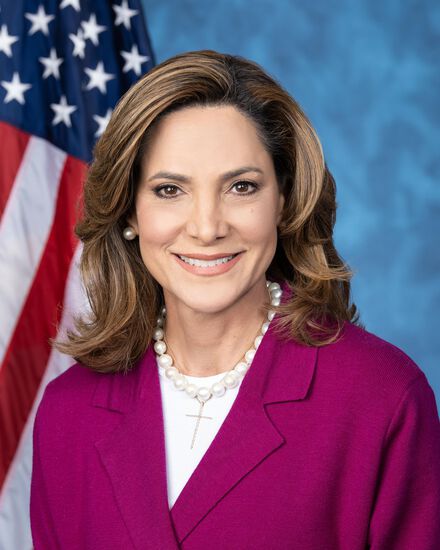
Rep. Maria Elvira Salazar
Sponsored bills
Maddy summaryHR 4076 establishes a joint U.S.-Israel program to fund health technology development, authorizing $4 million annually (2024-2026) through the U.S. Health and Human Services Department. It requires Israel to match U.S. funding and focuses on collaborative projects in artificial intelligence, vaccines, telemedicine, diagnostic tests, and data-driven personalized medicine for emerging infectious diseases. The program can either build on an existing U.S.-Israel agreement or create a new one under a 2008 science cooperation framework. This bill directly affects U.S. federal health agencies and the Israeli government, with funds restricted to joint projects meeting specific technological and health priorities.
Maddy summaryThe American Dream and Promise Act of 2023 would create two pathways to permanent residency for certain immigrants. The "Dream Act" portion would provide conditional permanent resident status to individuals who entered the U.S. as children, have lived continuously in the U.S. since January 1, 2021, and meet educational requirements (such as completing high school, earning a degree, or enrolling in education programs). The "American Promise Act" portion would provide permanent residency to individuals eligible for Temporary Protected Status (TPS) or Deferred Enforced Departure (DED) as of specific dates (January 1, 2017, or January 20, 2021). The bill includes provisions for background checks, fee exemptions for low-income applicants, and processes for removing conditional status after meeting specific criteria like completing higher education or earning income.
Maddy summaryHJRES 72 proposes a constitutional amendment to remove the exception in the Thirteenth Amendment that allows slavery and involuntary servitude as punishment for a crime. If ratified, this amendment would ban the use of forced labor in prisons as a criminal penalty, directly affecting how the U.S. criminal justice system handles sentencing. The resolution clarifies it does not interfere with voluntary work programs in correctional facilities, existing employment protections for incarcerated people, or community service alternatives. This change aims to eliminate a historical loophole that has disproportionately impacted Black Americans since the 1860s.
Maddy summaryHR 3099 establishes a new Special Envoy for the Abraham Accords within the State Department, directly affecting U.S. diplomatic efforts and coordination. The envoy, appointed by the President with Senate confirmation, will coordinate U.S. government activities to expand diplomatic, economic, and security ties between Israel and Muslim-majority countries, including encouraging nations without formal relations with Israel to establish them. Key duties include strengthening existing Accords partnerships, fostering regional cooperation on issues like trade and water security, and providing diplomatic support for Israel’s regional engagement. The envoy must submit annual reports to Congress detailing specific diplomatic efforts and progress with partner countries.
Maddy summaryThis House resolution (HRES 377) calls for the immediate release of Evan Gershkovich, a U.S. citizen and Wall Street Journal reporter wrongfully detained by Russia since March 2023. It urges the U.S. government to press Russia for his release, demands consular access for him, and condemns Russia's detention of journalists. The resolution specifically references Gershkovich’s arrest on espionage charges without public evidence, aligning with Secretary Blinken’s designation of his detention as wrongful. It also extends similar calls for the release of other detained Americans, including Paul Whelan.
This bill includes phosphate and potash on the Department of the Interior's final list of critical minerals. (Under current law, Interior and other departments are required to conduct a variety of efforts to ensure a secure and reliable supply chain of critical minerals.) Interior must evaluate current policies relating to permitting and leasing of projects to develop critical minerals and issue recommendations to Congress to support domestic production of such commodities.
Maddy summaryHR 4086 directs the U.S. government to use its influence at the United Nations to extend the mandate of the UN Human Rights Council's independent fact-finding mission on Venezuela. The bill requires the Secretary of State to support efforts to continue this mission until Venezuela holds free elections, ends authoritarian rule, restores democracy, frees political prisoners, and allows humanitarian aid. It also directs the U.S. to urge the UN to condemn Venezuela's use of political prisoners, support humanitarian aid for vulnerable Venezuelans, and assist in releasing detained individuals. The bill mandates annual reports to Congress on these diplomatic actions. This legislation directly affects the UN mission's work and U.S. diplomatic engagement regarding Venezuela's human rights situation.
Maddy summaryThis bill would allow Venezuelans already living in the U.S. since before December 31, 2021, to apply for permanent residency. Eligible individuals must have lived continuously in the U.S. for at least one year (with limited absences) and cannot have certain serious criminal convictions. It waives some immigration barriers that would normally block permanent status and provides work permits while applications are processed. Family members (spouses, children, or unmarried adult children) of eligible applicants would also qualify. The bill does not change overall visa numbers or create new immigration pathways.
Maddy summaryHR 4015 updates the U.S. strategy for engagement with Caribbean nations by adding specific policy goals to the existing 2016 Act. It directs the U.S. government to reduce illicit firearm trafficking to the region, combat lottery scams targeting Americans, and support Caribbean security forces. The bill also requires enhanced cooperation on energy security (promoting renewable power), climate resilience, public health infrastructure, food security, and expanding internet access - especially for marginalized communities. The updated strategy must involve agencies like Defense, Justice, and Treasury, and will guide U.S. efforts to strengthen partnerships across these areas. This affects Caribbean nations partnering with the U.S. on security, climate, health, and economic initiatives.