

Maddy summaryThis bill requires stricter background checks and monitoring for sponsors caring for unaccompanied migrant children. It mandates fingerprint checks, sex offender registry reviews, criminal history checks, and child abuse screenings for all adult household members before a child can be placed with them. The bill also prohibits placing children with undocumented sponsors (except biological parents or legal guardians), requires pre-release home visits, and mandates multiple unannounced post-release visits over two years. Additionally, it requires monthly reports to Congress tracking child placements, vetting status, and missing children cases since January 2021. These changes directly affect unaccompanied migrant children and their sponsors, aiming to prevent trafficking through enhanced safety protocols.
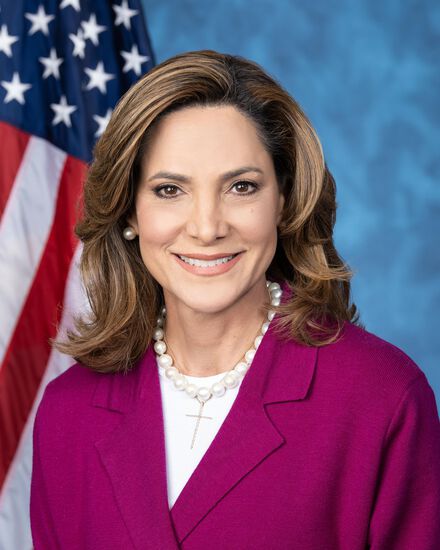
Rep. Maria Elvira Salazar
Sponsored bills
Maddy summaryHR 4942 extends and modifies the Conrad State 30 program, which allows states to sponsor foreign medical graduates to work in medically underserved areas in exchange for a commitment to practice for three years. The bill directly affects foreign medical graduates seeking to work in the U.S., states that sponsor them, and health facilities in underserved communities. Key provisions include creating mechanisms for physicians to change employers or states if they face issues with their current employment, adding requirements for employment agreements (including prohibitions on non-compete clauses), and establishing exceptions to the three-year work requirement under certain circumstances. The bill also creates a process for states to recapture waiver slots when physicians leave their employment and requires annual reporting on the program's usage. These changes aim to improve physician retention in underserved areas by providing more flexibility and protections for foreign medical graduates.
Maddy summaryThis bill modifies the Arms Export Control Act to streamline defense trade between the U.S., United Kingdom, and Australia under the AUKUS security partnership. It removes licensing requirements for defense exports and transfers between these three nations, specifically for items related to the multilateral cooperation announced in September 2021. The President must submit semiannual reports to Congress on these transfers and provide 90-day post-transfer notifications for defense items moving among the three countries. This directly affects U.S. defense companies exporting to the U.K. and Australia and simplifies trade under the AUKUS framework.
Maddy summaryThis bill authorizes the U.S. President to sell up to two nuclear-powered attack submarines (Virginia-class) from the U.S. Navy inventory to Australia over a 15-year period to support the AUKUS security partnership. It requires Australia to cover all costs, including repairs performed at U.S. shipyards, and mandates detailed certifications to Congress on national security impacts, U.S. industrial capacity, and Australia's ability to operate the submarines. The bill also requires annual reports for 15 years on submarine transfers, defense service exports, and production schedules. This directly affects Australia's naval capabilities and U.S.-Australia defense cooperation under the AUKUS framework.
Maddy summaryHR 1776, the End Tuberculosis Now Act of 2023, would amend U.S. foreign assistance law to strengthen global tuberculosis (TB) programs. The bill requires U.S. assistance to align with the World Health Organization's End TB Strategy, aiming to reduce TB deaths by 95% and incidence by 90% by 2035. It mandates annual reporting on TB diagnosis and treatment progress, prioritizes research for new diagnostics and treatments, and emphasizes integrating TB services into primary health care. The legislation affects U.S. government agencies, global health partners, and countries with high TB burdens, particularly focusing on low- and middle-income nations.
Maddy summaryHR 1684 requires the U.S. State Department to submit annual reports to Congress detailing connections between Haitian criminal gangs (such as G9 Family and 400 Mawozo) and Haitian political or economic elites. The reports must identify specific gangs, list elites with gang ties, and explain how these relationships threaten Haiti’s security and U.S. interests. Within 30 days of each report, the President must impose U.S. sanctions on identified individuals under existing laws, with lists of sanctioned persons made publicly available. The requirement lasts for five years, ending on the date the bill is enacted plus five years.
Maddy summaryThis bill directs the U.S. Treasury to mint commemorative coins marking the Marine Corps' 250th anniversary in 2025. It authorizes three coin types: $5 gold coins (max 50,000), $1 silver coins (max 400,000), and half-dollar coins (max 750,000), with surcharges of $35, $10, and $5 respectively. The surcharge proceeds will fund the Marine Corps Heritage Center's educational programs, with no net cost to taxpayers as the Treasury must recover all minting costs through the surcharges. The coins can only be issued during 2025, and the Treasury must ensure all costs are covered before distributing funds to the Heritage Foundation.
Strategy To Oppose Purposeful CCP Aggression at the United Nations Act of 2023 or the STOP CCP at UN Act of 2023 This bill requires actions to address efforts by China to expand its influence on the United Nations. Specifically, the bill requires the Department of State to establish the Office of Multilateral Strategy, which must implement a strategy to counter China at the United Nations. The office must report on its work to Congress. The State Department must also increase the number of U.S.-sponsored junior professional officers at the United Nations to match or exceed the number of such officers sponsored by China. Furthermore, the State Department and the U.S. Permanent Representative to the United Nations must report to Congress annually about China's actions to expand its influence on the United Nations, including through coercion, intimidation, and other illegitimate means.
Maddy summaryHR 4865, the IDB Transparency Act, requires the U.S. Treasury Secretary to submit a detailed report within 180 days of enactment on China's influence at the Inter-American Development Bank (IDB). The report must include all projects funded by China or Chinese companies since 2009, assess risks like corruption or human rights issues, and analyze how China uses the IDB to advance its diplomatic and economic interests. It also mandates that the U.S. Executive Director at the IDB actively reduce China's influence by reviewing high-risk projects, voting against certain projects, and opposing China's increased shareholding. The U.S. must submit updated reports every two years for a decade, with summaries made public 60-90 days after submission.
Doctors in our Borders Act This bill increases the number of Conrad 30 waivers available each year from 30 to 100. Typically, a J-1 visa holder (nonimmigrant exchange visitor) must leave the United States for two years after finishing the exchange visitor program, including J-1 visa holders who entered the United States to receive graduate medical training. The Conrad 30 waiver program waives this requirement for eligible foreign medical graduates who agree to practice medicine in an underserved area or for an underserved population in the United States.