

Maddy summaryThe Abraham Accords Expansion Act of 2026 updates the legal framework for the Special Envoy to include Central Asia and the Caucasus in normalization efforts alongside existing regions. This change formally recognizes Kazakhstan as the first Central Asian nation to join the Abraham Accords and defines specific countries within the Caucasus and Central Asia regions. The bill requires the Special Envoy to coordinate with other federal agencies like Defense and Commerce while implementing these goals using existing authorities without requesting new funding. Additionally, the act allows the Special Envoy to appoint a Deputy Special Envoy with relevant regional expertise to assist in these expanded diplomatic activities.
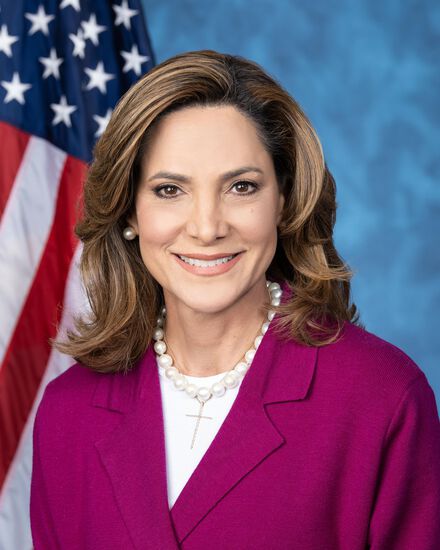
Rep. Maria Elvira Salazar
Sponsored bills
Maddy summaryThis bill appropriates $3.5 billion to help Florida farmers and growers recover from the severe freeze that occurred in March 2026. The funds are distributed as block grants specifically to cover losses in crops, trees, bushes, and vines caused by the cold weather, including compensation for multi-year crops. Assistance is restricted to counties officially designated as disaster areas by the Secretary of Agriculture on March 4, 2026, and requires a request from a state agriculture department to release the money. The Secretary of Agriculture must also submit quarterly reports to Congress detailing how the funds are being used until the budget is exhausted.
Maddy summaryThe Community Flood Resilience Act allows states and communities to use up to 15 percent of their federal flood mitigation grants for five years to pay for private, community-based flood insurance. This type of insurance automatically provides payouts when specific flood metrics are met, offering faster financial relief without requiring detailed damage assessments. The bill also requires the Federal Emergency Management Agency to promote these policies and mandates that communities educate residents about the differences between this new coverage and traditional flood insurance. Additionally, the law requires regular reports to Congress on how these programs affect insurance enrollment and the speed of claim payments.
Maddy summaryThe Small Business Workforce Pipeline Act of 2026 directs the Small Business Administration to help small businesses create and improve training programs for their employees. This bill requires the agency to share information from the Department of Labor and other federal sources on setting up work-based learning, registered apprenticeships, pre-apprenticeships, and job training initiatives. By amending the Small Business Act, the legislation aims to strengthen the workforce development resources available to small business owners.
Medal of Sacrifice Act of 2025 This act directs the President to issue a medal of sacrifice for eligible law enforcement officers and first responders who are killed in the line of duty. The act also directs the President to establish a commission on the medal of sacrifice and appoint its members. The act sets forth responsibilities of the commission, including to advise on the design of the medal and determine how the medal will be presented. Under the act, eligible law enforcement officers and first responders include federal, state, local, tribal, or territorial law enforcement officers or first responders who are not subject to an official act of wrongdoing (e.g., a determination that the officer or first responder acted outside the scope of their duties or in a manner that was not in accordance with official policies or procedures). A law enforcement officer or first responder who is subject to an official act of wrongdoing is generally not eligible for the medal of sacrifice. However, in the case of such an officer or first responder, the act requires the commission to investigate the circumstances surrounding the officer or first responder's cause of death and issue a final determination on their eligibility.
Maddy summaryThis bill, known as the Sex Trafficking Demand Reduction Act, modifies how the United States evaluates foreign countries' efforts to combat human trafficking. It requires these nations to demonstrate serious and sustained actions, such as banning the purchase of commercial sex acts, educating buyers about exploitation, and reducing international sex tourism. These new criteria will be used in future annual reports to determine whether a country meets the minimum standards for eliminating trafficking. Consequently, the bill directly affects how the U.S. government assesses and categorizes the anti-trafficking progress of other nations.
Maddy summaryThe PANA Act of 2026 creates a new fund in the U.S. Treasury to support democratic governance, human rights, independent media, and anti-corruption efforts in Venezuela. This fund will be financed by assets forfeited from individuals or entities linked to the regimes of Hugo Chávez or Nicolás Maduro after the bill is enacted. The money can be used by the State Department without needing additional annual approval from Congress, and officials must report annually to Congress on how the funds are being used.
Maddy summaryThis bill, titled the Assuring the Future of Tibet Act of 2026, expresses the sense of Congress that the Tibetan people should be recognized as a distinct group with rights to self-determination and cultural preservation. It formally acknowledges the Central Tibetan Administration as the legitimate representative of Tibetans and asserts that the Gaden Phodrang Trust holds the sole authority to recognize future Dalai Lamas. To support these positions, the legislation directs the President and Secretary of State to advocate for the Central Tibetan Administration's observer status at the United Nations and to extend appropriate diplomatic courtesies to its leaders during visits to the United States. Additionally, the bill mandates that the Secretary of State lead efforts to engage with Tibetan officials at senior levels and requires annual reports to Congress on the implementation of these diplomatic and advocacy measures.
Maddy summaryThis bill authorizes the U.S. Development Finance Corporation to make investments in Venezuela, a country previously designated as a "country of concern" under the BUILD Act. By removing Venezuela from this specific list, the legislation lifts the restrictions that had barred the agency from providing financial support to the nation. The measure directly affects the Development Finance Corporation by expanding its scope of eligible countries and impacts potential investors and businesses seeking opportunities in Venezuela. Essentially, it changes the legal status of Venezuela to allow for new economic engagement through this federal development finance entity.
Maddy summaryThis bill would add pharmacist services to Medicare Part B coverage for beneficiaries, specifically covering pharmacist-led testing and treatment for illnesses like flu, COVID-19, or strep throat during public health emergencies. It defines covered services as those performed under state law, often requiring collaboration with a physician, and sets payment at 80% of the lesser of the actual charge or 85% of physician payment rates. Pharmacists would be prohibited from balance billing for these services, ensuring Medicare beneficiaries pay only their standard copayment. The changes would take effect January 1, 2026.