

Maddy summaryThis bill amends the tax code to allow certain unpaid family caregivers to access IRA catch-up contribution rules. It defines a "qualified family caregiver" as someone who provided at least 500 hours of in-home care (for children or adults with special needs, including elderly adults) while working fewer than 500 hours in paid employment during the same year. Eligible individuals can then contribute more to their IRAs in the same way as people aged 50+, subject to a maximum 5-year total eligibility period. The change applies to taxable years starting after December 31, 2024, and relies on self-certification by caregivers.
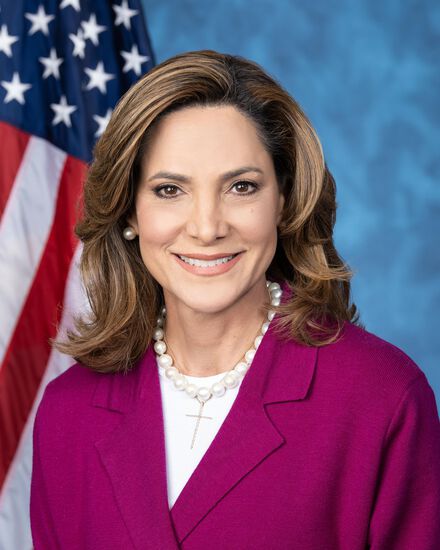
Rep. Maria Elvira Salazar
Sponsored bills
Maddy summaryHR 9765, the Improving Retirement Security for Family Caregivers Act of 2024, allows certain unpaid family caregivers to contribute to Roth IRAs at the standard annual limit. It directly affects unpaid caregivers who provided at least 500 hours of in-home care (e.g., bathing, meal prep, medication management) for a child or an adult with special needs (including elderly adults with age-related conditions) while working fewer than 500 hours paid during the year. The bill amends tax rules to treat these caregivers as if they meet the standard Roth IRA contribution income limits, enabling them to build retirement savings without being disqualified due to low paid employment. This change applies to taxable years beginning after December 31, 2024.
Maddy summaryHRES 1480 is a symbolic resolution recognizing Hispanic Restaurant Week (September 22-October 3, 2024) and honoring Hispanic restaurant owners and employees. It acknowledges their economic contributions to the U.S. restaurant industry, citing data that 25.9% of restaurant workers are Hispanic and Hispanic-owned restaurants represent the second-highest number of Hispanic-owned businesses. The resolution does not create new policies or funding but formally celebrates their role during Hispanic Heritage Month. It was introduced by 14 House members and referred to the Energy and Commerce Committee.
Maddy summaryHR 9745, the Lifesaving Gear for Police Act of 2024, removes barriers for state and local law enforcement agencies to access existing federal equipment. It prohibits federal agencies from enforcing any regulations (since May 15, 2015) that limit the transfer of Department of Defense or other federal equipment to police departments, unless Congress passes those rules into law. The bill also requires agencies to return or replace equipment recalled since 2015 under those regulations, provided the agency requests it, meets existing eligibility rules, and the equipment is available. This directly affects police departments that previously had equipment seized or denied under the blocked regulations. The law focuses on restoring access to current equipment-sharing programs, not creating new funding or gear.
Maddy summaryHR 9677, the Modernize the Au Pair Program Act of 2024, ensures only federal law - not state laws - regulates the au pair program. It requires the State Department to revise a proposed rule within 90 days to adjust the weekly payment formula for host families, balancing affordability with program costs like room, board, and childcare hours. This update aims to maintain the program’s accessibility for American families, including military households, shift workers, and single parents who rely on au pairs for childcare. The bill preserves the program’s cultural exchange purpose and economic benefits without expanding its scope or creating new requirements.
Maddy summaryHR 9692, the STOP MADURO Act, authorizes a $100 million reward for information leading to the arrest and conviction of Venezuela's President Nicolás Maduro Moros. The reward would be funded exclusively by assets already frozen from Maduro and his regime under existing U.S. sanctions, including those from the Foreign Narcotics Kingpin Designation Act. The bill specifically targets Maduro based on U.S. criminal charges related to drug trafficking and narco-terrorism conspiracy. It modifies the State Department's rewards program without creating new sanctions or funding sources.
Maddy summaryHR 9605, the "No Censors on our Shores Act," amends U.S. immigration law to bar entry and allow deportation of foreign government officials who censor U.S. citizens within the United States. Specifically, it adds new grounds for inadmissibility and deportability if a foreign official, while in office, directly suppressed a U.S. citizen's speech in the U.S. in a manner that would violate the First Amendment if done by a U.S. official. The bill targets foreign officials' actions against U.S. citizens' free speech rights within U.S. territory, not general censorship or actions abroad. It does not affect U.S. citizens, organizations, or non-governmental actors. This is a policy change to immigration enforcement, not a new free speech law.
Maddy summaryThis bill requires the Department of Veterans Affairs (VA) to commission an independent review of its notices sent to veterans applying for benefits. The review, to be completed within 30 days of the bill's enactment, must assess whether notices can be made clearer for claimants while reducing paper use and government costs. The VA must then implement the recommended changes within 90 days and report the findings to Congress. This directly affects veterans receiving VA claims communications by aiming to make those notices more understandable and efficient.
Maddy summaryThis bill directs the Joint Committee on the Library to procure a statue of Benjamin Franklin and place it in the U.S. Capitol. The committee must secure the statue within two years of the bill's enactment and install it in a public-accessible location by January 1, 2026, for viewing during Capitol Visitor Center guided tours. It is a procedural measure with no policy changes or direct impact on constituents or legislation.
Maddy summaryHRES 1456 is a symbolic resolution designating September 17, 2024, as "Constitution Day" to honor the signing of the U.S. Constitution on September 17, 1787. It calls for the people of the United States to observe the day with ceremonies and activities, recognizing the Constitution's historical significance and foundational role in American governance. This resolution does not create new laws or affect any individuals or policies; it is purely a non-binding expression of support by the House of Representatives.